


The fastest way to get more BrickLink orders is to fix the three things buyers actually judge you on before they ever click "buy": your pricing versus the current market, your photos and part condition notes, and your shipping speed. I've run a store on BrickLink for years, and in my experience almost every slow month traces back to one of those three levers being off, not to some mysterious algorithm working against you.
BrickLink isn't like Whatnot or eBay, where a big audience or a promoted listing can paper over a mediocre store. It's the Wall Street of LEGO. Buyers there are comparing your price against ten other stores in the same search results, so small store-level improvements compound fast. Below I'll walk through the pricing, listing, inventory, and reputation habits that I've seen actually move order volume, plus a checklist you can run through this week.
- Price competitively against the current market average, not last year's guide price
- Write real condition notes for used parts and minifigures instead of copying a generic template
- Keep your shipping method and handling time honest and fast
- Stock the boring, cheap parts that eBay sellers won't ship for under $5
- Use feedback, store policies, and coupons to turn one order into a repeat buyer
Why Are Your BrickLink Orders So Slow?
Your BrickLink orders are probably slow because your prices, photos, or shipping times are quietly pushing buyers to the next store in the search results. BrickLink is a comparison-shopping platform first. Buyers open five or six stores with the same part or minifigure, sort by price plus shipping, and click the one that looks most trustworthy. If you're not in that shortlist, the order never happens, no matter how good your inventory actually is.
I'm not saying this to be discouraging. It's actually good news, because it means order volume is mostly in your control. Unlike Whatnot, where growth depends partly on your on-camera presence and show consistency, or eBay, where promoted placement can push your true take rate close to 25% of the sale, BrickLink rewards the boring fundamentals: fair pricing, honest condition grading, and fast handling. Fix those and orders follow.
How Do You Price Parts and Minifigures to Actually Sell?
Price a little below the current average sold price for your part's exact condition and completeness, not the highest asking price you see in search. In my experience, new sellers anchor to the top listing on the page and wonder why nothing moves, when that top listing has been sitting there for eight months.
Check current sold data on the BrickLink marketplace before you price anything, and cross-reference against BrickEconomy's market data when you want a second read on where a set or figure's value has trended. I personally re-check pricing on anything I haven't sold in 90 days, because LEGO values shift as sets retire and demand for a theme rises or falls. When you're pricing a whole bin at once instead of one part at a time, running the lot through brick'em's haul calculator is a lot faster than pricing item by item by hand.
Heads up: This is not financial or legal advice. We're sharing what we've learned from the LEGO reselling community.
What Should a Winning BrickLink Listing Photo Look Like?
A listing photo that actually converts shows the real item in good lighting with any wear, fading, or missing stickers clearly visible, not a stock image pulled from LEGO's catalog. Buyers on BrickLink are pickier about condition than most other resale platforms, since many are completing sets or minifigures piece by piece and can't afford a surprise.
I've seen sellers lose repeat business over a single listing where the photo didn't match the part that showed up in the mailer. When I sort through a new lot, I photograph anything with visible wear separately and note it in the item comments field. It takes an extra minute per listing and it's the reason my return rate stays low. If you're unsure what a figure or part is actually called before you list it, running it through the brick'em minifigure database first saves you from mislabeling it, which is its own source of bad feedback.
Should You Stock Cheap Parts or Only Chase Rare Minifigures?
You should stock both, but don't ignore the cheap common parts just because the margin per item looks small. A lot of the demand BrickLink captures exists specifically because other platforms can't serve it profitably. eBay sellers, for instance, often can't justify shipping an order under $5 once you account for packaging and their time, which is exactly the gap BrickLink's lower fee structure and per-order flexibility fills.
Rare minifigures are still where the emotional pull and bigger dollar amounts are, and I'd never tell a seller to ignore them. But a store that only lists the exciting stuff looks thin, and thin stores get skipped by buyers assembling long parts lists. I recommend listing your full lot, boring parts included, and letting your store's total selection do some of the selling for you. See LEGO's official Collectible Minifigures pages for reference on what's currently in circulation versus retired, which affects how much demand a figure realistically has left.
This is also why store size compounds over time. I've noticed larger BrickLink sellers occasionally roll up smaller stores outright, paying somewhere around 30% to 50% of market value for an entire inventory just to add scale and catalog depth in one move. You don't need to sell your store to benefit from that same logic. A wider, well-priced catalog simply gets found more often than a narrow one.
How Fast Should You Ship to Keep Orders Coming?
Ship within one to two business days of payment, and set your store's stated handling time to match reality instead of padding it "just in case." Buyers comparing stores on BrickLink can see your combine-shipping terms and your feedback history, and slow, unpredictable handling shows up in both.
In my view, handling time is the most underrated lever in this whole list because it costs nothing to fix and buyers notice immediately. A seller I know batches orders twice a week and still keeps excellent feedback, simply because she's upfront about her schedule in her store terms. Set expectations, then beat them slightly, and repeat orders take care of themselves.
Can Other Marketplaces Send Buyers to Your BrickLink Store?
Yes, other marketplaces can absolutely feed your BrickLink store if you use them as sourcing and audience-building channels instead of treating every platform as a closed silo. I've built inventory by buying discounted or incomplete lots off Facebook Marketplace, sorting the good minifigures out, and listing the leftover parts on BrickLink where per-piece buyers actually want them.
The reverse works too. Whatnot's LEGO category and eBay's LEGO minifigures listings build an audience and reputation that you can point toward a BrickLink store for the deeper catalog. I've also seen sellers list overflow inventory on Mercari's LEGO minifigures search when a piece doesn't fit their BrickLink store's theme. None of this replaces doing the fundamentals well on BrickLink itself, but it widens the funnel feeding it.
How Do You Turn a Bulk Lot Into BrickLink-Ready Inventory Fast?
The fastest path from a bulk lot to live BrickLink listings is identifying and sorting everything before you touch pricing, since guessing at part names and figure IDs is where most of the time gets wasted. I started doing this the slow way, matching loose minifigures against catalog photos one at a time, and it ate entire weekends.
These days I scan a lot in bulk, get identification and pricing back in minutes, and export straight into a listing-ready format instead of typing part numbers by hand. If you want to try that workflow yourself, brick'em's sign up page walks through getting the app set up, and if you're curious what your existing shelf of loose figures and sets adds up to before you decide what to list first, the collection value calculator gives you a fast read. Learn more about BrickLink's fee structure directly on BrickLink's help pages so you know what your real margin looks like once you scale a workflow like this up.
A BrickLink Order-Boosting Checklist
Here's the shortlist I actually run through when a store's orders slow down. Fix these in order, since pricing and photos matter more than anything further down the list.
| Area | What to check | Why it matters |
|---|---|---|
| Pricing | Compare against current sold prices, not asking prices | Buyers sort by price first |
| Photos | Real photos showing actual wear and condition | Reduces returns and bad feedback |
| Condition notes | Written comments on any flaws or missing pieces | Builds trust with piece-by-piece buyers |
| Handling time | Matches your actual shipping schedule | Shows up in store terms and feedback |
| Inventory breadth | Common parts listed alongside rare figures | Captures buyers assembling full lists |
| Store terms | Clear combine-shipping and return policy | Removes buyer hesitation before checkout |
Frequently Asked Questions
How long does it take to build a BrickLink store with steady orders?
Most sellers I've talked to see a meaningful pickup in orders within two to three months of consistent listing and fair pricing, though it depends heavily on how many items you have live and how competitive your prices are. Stores that add new inventory weekly tend to see steadier growth than ones that list once and stop.
Does feedback score actually affect how many orders I get?
Yes, feedback score is one of the first things buyers glance at when comparing similar listings across stores, especially for higher-dollar minifigures. A strong feedback history won't fix bad pricing, but it does break ties when your price is close to a competitor's and can tip a hesitant buyer toward you.
Should I lower my prices to get more orders faster?
Only if your current price is genuinely above the market, not just to chase volume for its own sake. A lot of sellers I know found that shaving a small amount off overpriced items moved them, while items already priced fairly didn't need a discount to sell within a reasonable window.
Is it worth selling on BrickLink if I already sell on eBay or Whatnot?
Yes, in my experience BrickLink complements rather than competes with those platforms because it captures buyers looking for specific parts and minifigures rather than browsing broadly. Many resellers use eBay and Whatnot for visibility and audience building, then use BrickLink for the deep, piece-level catalog that other platforms don't serve well.
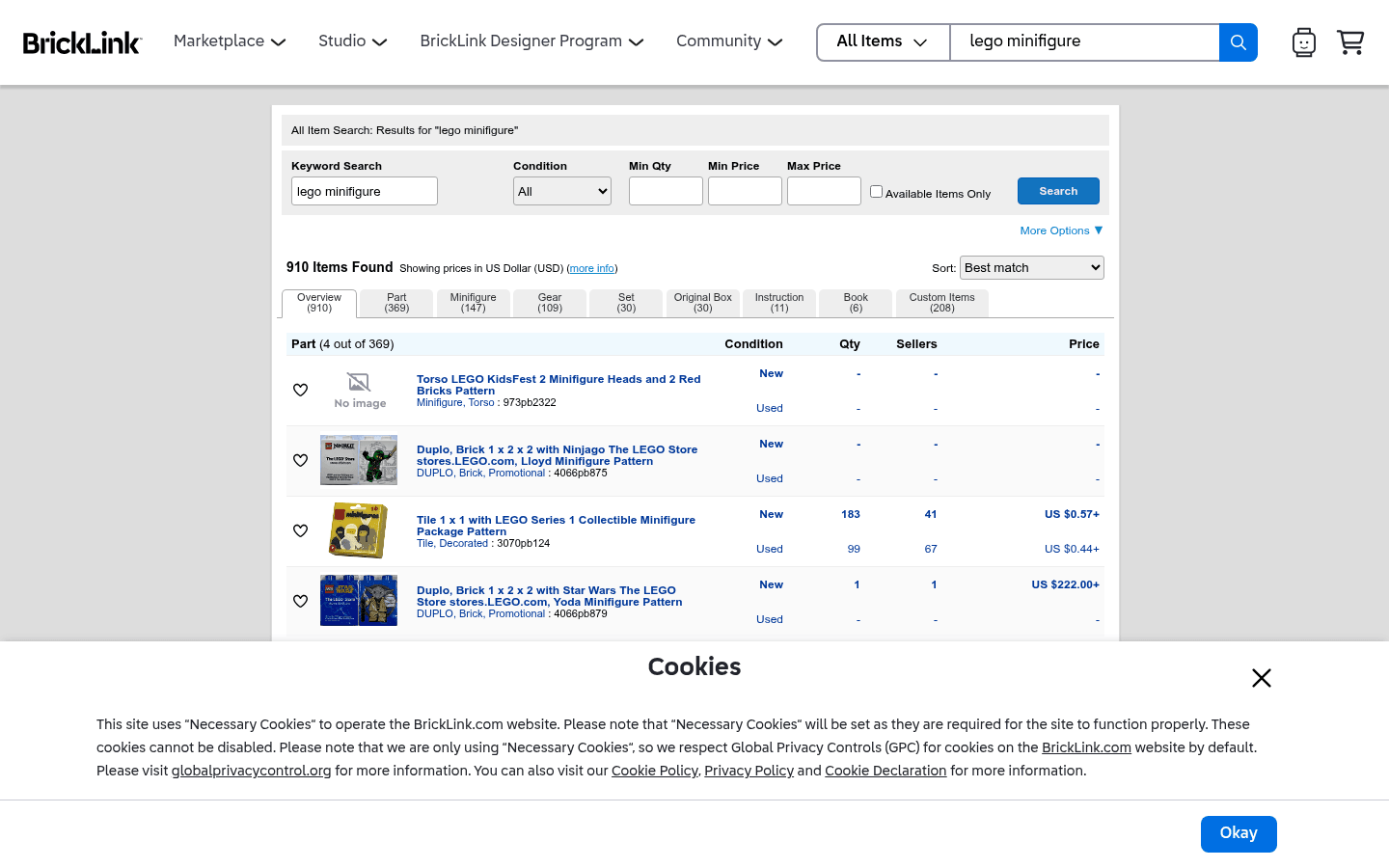
What Do These LEGO Selling Platforms Look Like?
Before choosing where to sell, it helps to see the difference between a live-selling marketplace, a broad search marketplace, a LEGO-native catalog, and a social or local channel. These screenshots are visual references only. Platform interfaces, fees, and rules can change.
CTA(Identify%20and%20Price%20100%2B%20Figures%20With%20One%20Pic).png)

