


If you've got a box of loose LEGO parts and you're trying to figure out where to actually sell them, the honest answer is it depends on what you're holding. Loose parts sell differently than sets or minifigures, and eBay and BrickLink serve pretty different buyers even though people lump them together. In my experience, the fastest way to lose money on a parts lot is picking a platform based on habit instead of what's actually in the box.
eBay gives you the biggest audience and often the fastest sales on parts buyers recognize immediately, but you're competing with promoted listings and higher fees along the way. BrickLink is where serious builders and part-out sellers go specifically because they need one piece in one color, and it's built for exactly that kind of precise, low-dollar transaction. Neither platform is universally better. They're built for different kinds of sales.
Key takeaways:
- eBay works best for recognizable, higher-demand parts and bigger lots where you want fast exposure to a huge buyer pool.
- BrickLink is built for buyers hunting a specific part in a specific color, which makes it the default for low-dollar, high-precision sales.
- Fees, shipping thresholds, and buyer intent all push toward different platforms depending on what you're selling.
- Most serious part-out sellers I know end up using both platforms, not picking one forever.
What's the Real Difference Between eBay and BrickLink for Parts Sellers?
eBay is a general marketplace with massive traffic where LEGO parts compete alongside everything else being sold that day, while BrickLink is a LEGO-only marketplace built around exact part numbers and colors. That structural difference is why the same 20 gray 2x4 bricks can sell in an hour on one platform and sit for weeks on the other.
On eBay, buyers browse and search loosely. They might search "LEGO parts lot" or "LEGO bulk bricks" and grab whatever looks like a good deal. On BrickLink, buyers usually know exactly what they need down to the part number, sometimes because they're one piece short of finishing a set. That's a completely different kind of shopper, and it changes how you should list, price, and describe what you're selling.
How Do eBay and BrickLink Fees Compare on Parts Sales?
eBay's standard selling fees plus optional promoted listings can eat a meaningful chunk of a sale, and in my experience leaning on promoted listings to get seen can push your total cost close to 25% of what the buyer paid. BrickLink's fee structure tends to run lower for straightforward part sales, though exact rates shift over time and by seller volume, so it's worth checking the current fee schedule on each platform before you commit.
I've personally sold over $100,000 worth of LEGO through eBay over the years, and fees have always been the line item that surprises new sellers most, since promoted listings are optional but often necessary to get real visibility on a crowded search page. I don't publish exact percentages here because fee schedules change, and you should always confirm current rates directly on each platform before you price a listing.
Heads up: This is not financial or legal advice. We're sharing what we've learned from the LEGO reselling community.
Where Do Serious Buyers Actually Go to Find LEGO Parts?
Buyers who need a specific part in a specific color almost always start on BrickLink, because it's searchable by part number and color in a way general marketplaces aren't built for. Casual buyers looking for a fun bulk lot or a recognizable piece are more likely to stumble onto your listing on eBay while browsing something else entirely.
I've noticed this split hold up over and over. If someone is missing one 1x2 tan tile to finish a set, they're not scrolling eBay hoping to get lucky, they're searching BrickLink by part number. If someone just wants a fun grab bag of parts for a kid or a mosaic project, eBay's broader browsing behavior works in your favor.
Is eBay Better for Selling LEGO Parts in Bulk?
Yes, for mixed bulk lots eBay usually wins, because bulk buyers on eBay are often other resellers or hobbyists who want volume and are comparing your lot against dozens of similar ones in a fast-moving search. That competition actually helps you when your listing photos and description are solid.
In my experience, bulk lots do best on eBay when you're upfront about weight, approximate piece count, and whether the lot is sorted by color or type. Buyers pay a premium for lots that save them sorting time. A lot described as "mixed bulk, untouched from storage" sells differently than one described as "pre-sorted by color, mostly 2x4 and 1x2 bricks," even when the parts inside are nearly identical.
Free tool
Part it out, or sell it complete?
Enter any set number and see what the minifigures and parts are worth sold separately, next to the complete set price. Priced from completed sales. No account needed.
Type a set number like 75192 or search by name.
Why Do Part-Out Sellers Lean on BrickLink Instead?
Part-out sellers, the people who buy incomplete or used sets specifically to break them down and sell the individual pieces, lean on BrickLink because it lets them list hundreds of distinct parts efficiently and reach buyers who are actively hunting for exactly those parts. That kind of precision is hard to replicate on a general marketplace.
A seller I know part-outs older, incomplete sets almost exclusively through BrickLink because the platform's part-number system does most of the identification work for the buyer. eBay doesn't have that infrastructure, so listing 200 individual parts there one by one usually isn't worth the time it takes.
What About Shipping Costs on Small, Low-Dollar Parts?
Shipping is often the deciding factor on where a low-dollar part actually sells, because eBay sellers frequently can't justify packing and shipping an order worth less than about $5, while BrickLink's buyer base is used to paying separate shipping on small orders since that's standard practice on the platform.
This is why you'll see a single rare part sell for a dollar or two on BrickLink with the buyer covering a few dollars in shipping, something that would barely be worth listing on eBay once you account for packaging time and fees. If you're sitting on a box of odds and ends worth under a dollar each, BrickLink is usually the more realistic home for them.
Can You Sell the Same Parts on Both Platforms?
Yes, and most experienced sellers do exactly that, cross-listing common, recognizable parts on eBay for bulk exposure while listing rare or specific parts on BrickLink where buyers are already searching by part number. The two platforms end up complementing each other more than competing.
I personally sort incoming lots into two piles before I even think about which platform to use: parts that are common enough to bulk-sell fast, and parts specific or rare enough that a BrickLink buyer will pay for exactly what they are. That single sorting step saves a lot of wasted listing time later.
A Quick Checklist: Should This Lot Go to eBay or BrickLink?
Use this checklist before you decide where to list a batch of parts, since the right platform usually comes down to how specific, rare, and heavy the lot is rather than any single factor on its own.
- Is it a big, mixed, or unsorted lot? Lean eBay.
- Is it a specific part in a specific color someone might be missing? Lean BrickLink.
- Is each piece worth more than about $5 individually? eBay shipping math works better.
- Is each piece worth a dollar or two and buyers might still pay for shipping? BrickLink.
- Do you want fast, broad exposure this week? eBay.
- Are you fine with a slower sale to a buyer who wants exactly that part? BrickLink.
How brick'em Fits Into a Parts-Selling Workflow
Before you decide where to list anything, it helps to know what you're actually holding, and that's where sorting and identifying inventory upfront saves the most time. I started using a scan-first approach on incoming lots specifically because guessing at part and figure identities wastes far more time than a quick scan does.
If you're working through a mixed bulk lot, brick'em's minifigure database is a fast way to identify figures before you decide whether they belong in a BrickLink listing, a Whatnot show, or an eBay lot. For sets you're weighing whether to part out, running the numbers through brick'em's LEGO collection value calculator first can tell you whether it's worth breaking apart at all, or whether it's worth more sold whole. And if you're regularly buying bulk lots and need to estimate what a haul is actually worth before you buy it, the haul calculator is built for exactly that gut-check.
I've seen too many sellers spend hours listing a lot that wasn't worth breaking down in the first place. A few minutes of checking value upfront usually pays for itself, and you can create a free brick'em account to try it on your own inventory.
Frequently Asked Questions
Is BrickLink better than eBay for selling LEGO parts?
It depends on what you're selling. BrickLink tends to work better for specific, rare, or low-dollar individual parts because buyers search by exact part number and color. eBay usually works better for bulk lots and recognizable parts where you want fast exposure to a much larger, more general buyer pool.
Do LEGO parts sell better in bulk or individually?
Bulk lots generally move faster on eBay because buyers are often resellers who value volume and are willing to sort through mixed inventory themselves. Individual parts, especially rare or specific ones, tend to do better on BrickLink where a buyer is searching for exactly that piece and color.
What fees should I expect selling LEGO parts online?
Fees vary by platform and change over time, so you should always check current rates before listing anything. In my experience, eBay's fees climb fastest once you add promoted listings, while BrickLink's fees tend to stay lower for straightforward part sales, though you should confirm both before pricing anything.
Is it worth shipping a single LEGO part that sells for a dollar?
On BrickLink, yes, because buyers there expect to pay separate shipping on small orders and are searching for that exact part anyway. On eBay, a single dollar part usually isn't worth listing on its own since packaging and fees can outweigh the sale, which is why those pieces do better bundled into a lot.
Can I use the same LEGO parts inventory on both eBay and BrickLink?
Yes, and a lot of sellers I know split their inventory this way on purpose. Common, easily recognized parts go into bulk eBay lots, while rare, specific, or single pieces get listed individually on BrickLink where the right buyer is already searching for them.
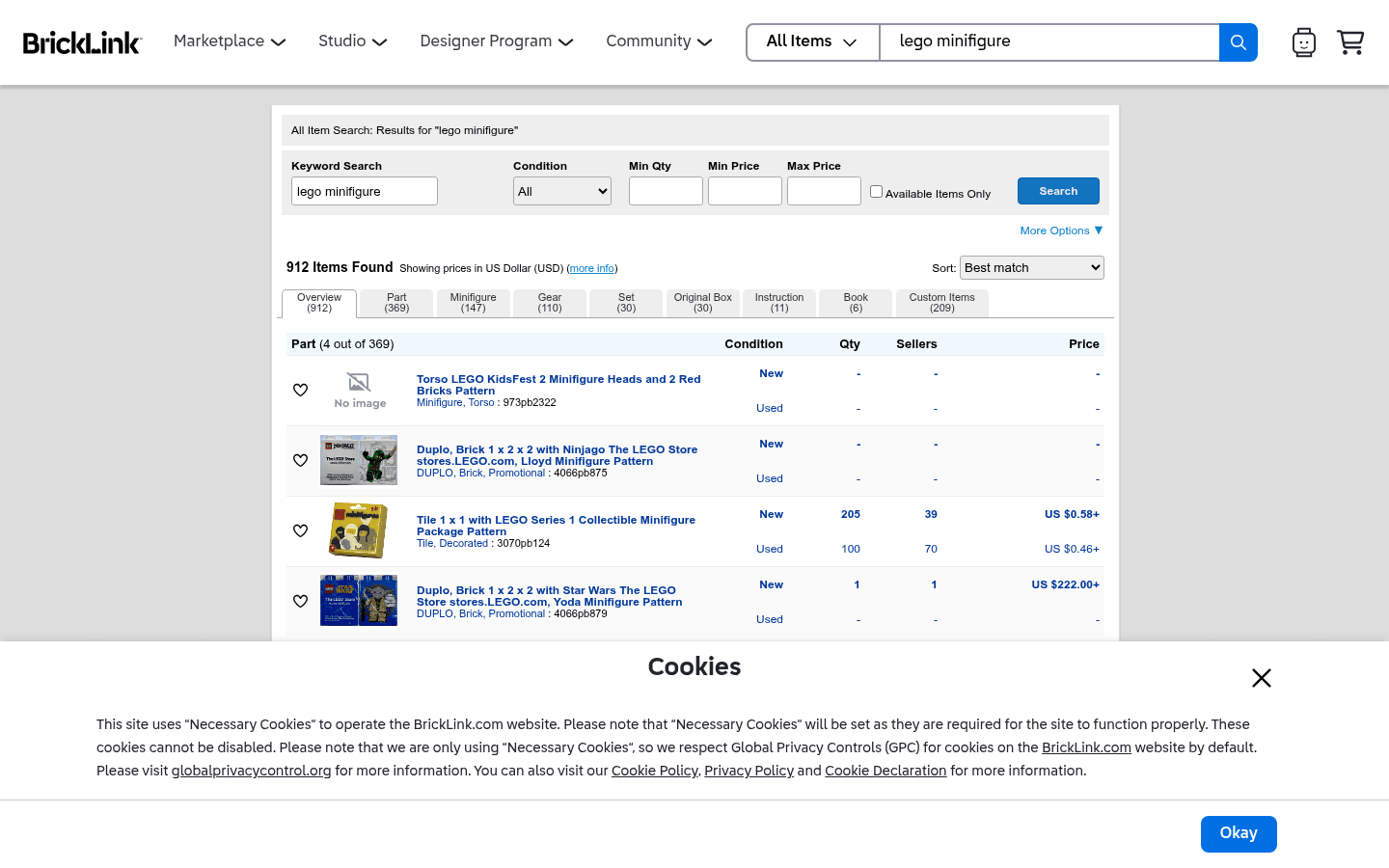
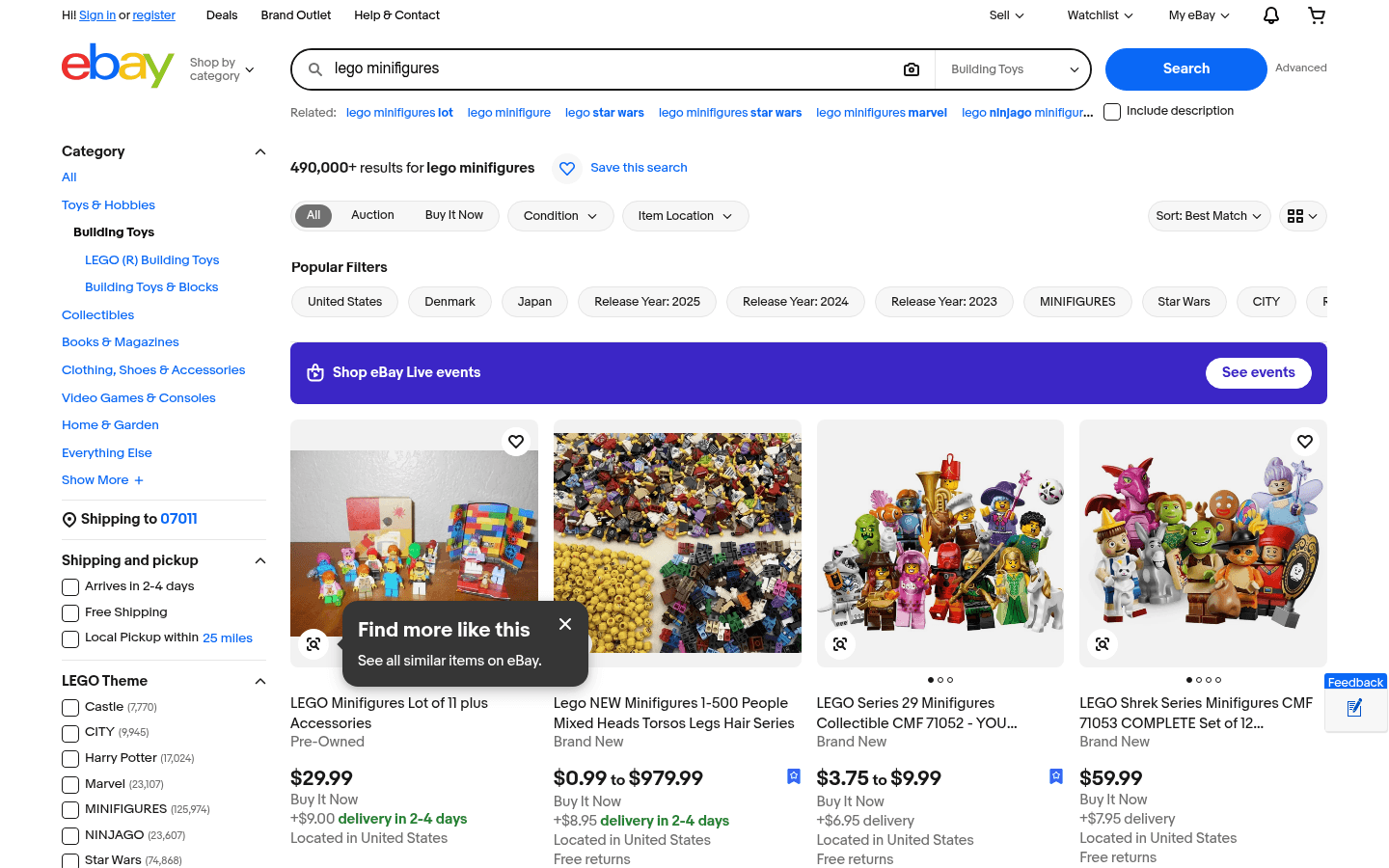
What Do These LEGO Selling Platforms Look Like?
Before choosing where to sell, it helps to see the difference between a live-selling marketplace, a broad search marketplace, a LEGO-native catalog, and a social or local channel. These screenshots are visual references only. Platform interfaces, fees, and rules can change.
.png)

