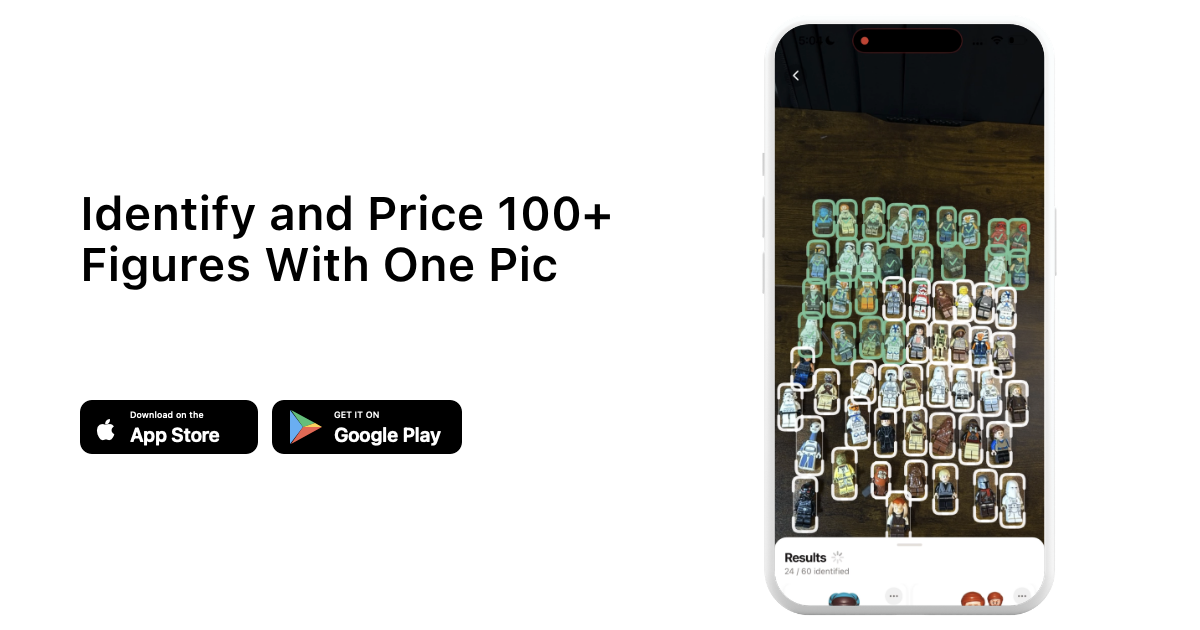


Short answer: LEGO minifigure prices can swing 20 to 40 percent or more depending on where you list, because every marketplace has a different buyer pool, fee structure, and sense of urgency. A figure that sells for market price on BrickLink might go for a premium on Whatnot during a hot live show, or sit untouched on Facebook Marketplace for weeks. I've sold minifigures on all of these platforms, and the differences are not small enough to ignore if you're trying to run a reselling business instead of just clearing out a shoebox.
This isn't a theoretical comparison. It's built from what actually happens when the same figure gets listed on BrickLink, eBay, Whatnot, Mercari, and Facebook Marketplace: who's buying, what they're willing to pay, and what each platform quietly takes off the top before you see your payout. Pricing data on LEGO moves fast, so always check current sold listings before you lock in a number for anything you're about to list.
- BrickLink functions as the reference price for individual minifigures, but it's slow and most listings sit at or near market value.
- eBay has the biggest buyer pool and can move inventory fast if you're priced 30 to 50 percent under market, though promoted listings can push your effective fee rate close to 25 percent.
- Whatnot can produce above-market sales once you build a following, but new sellers should expect a learning curve and some early losses.
- Mercari and Facebook Marketplace are strongest for sourcing cheap inventory and local, no-fee deals rather than top-dollar sales.
- Tracking your own numbers across platforms, not just gut feel, is what separates a hobby seller from someone running an actual LEGO reselling business.
Why Do LEGO Minifigure Prices Differ So Much by Marketplace?
LEGO minifigure prices differ by marketplace because each platform attracts a different buyer, moves at a different speed, and charges different fees. BrickLink buyers are price-conscious collectors comparing listings side by side. eBay buyers are shopping the widest possible pool. Whatnot buyers are reacting emotionally in a live show. Those different mindsets produce real price gaps on the exact same figure.
In my experience, the gap isn't random noise, it's structural. A BrickLink buyer can open five tabs and compare your price to four competitors before clicking buy, so prices cluster tightly around market value. A Whatnot buyer is watching a live auction with other bidders in the chat, and that competitive energy can push a price above what the same figure would fetch sitting quietly in a BrickLink store. Fees matter too. A platform that takes a smaller cut gives a seller more room to price competitively while still keeping margin, and a platform with higher effective fees pushes sellers to price higher just to break even.
How Does BrickLink Pricing Work for Minifigures?
BrickLink pricing works like a public price-comparison engine. It's the closest thing the LEGO resale world has to a stock ticker, since every seller's price is visible and searchable by part and figure number. I'd call it the Wall Street of LEGO, because serious sellers and buyers both use it to check what something is actually worth before transacting anywhere else.
Because every listing is visible, most sellers price at market, a dollar below market, or occasionally a little above market if their figure is in better condition or comes with original accessories. That transparency keeps prices stable but also means it's hard to find a steal, and it's just as hard to get a premium unless your figure is genuinely scarce. brick'em uses BrickLink-integrated pricing data specifically because it's the most trusted baseline figure-for-figure, and I'd recommend checking the LEGO minifigure database before you price anything you're unsure about.
BrickLink's fee structure is also lower than most live-commerce platforms, which is why it works well even for low-dollar items. Sellers can profit on a $3 or $4 minifigure here in a way that's much harder on a platform where a bigger chunk of that sale goes to fees and shipping subsidies.
What Should You Expect From eBay Minifigure Prices?
eBay minifigure prices tend to land close to market value or below it, because the platform's biggest strength is sheer buyer volume rather than premium pricing. eBay is genuinely the love of my life as a sourcing and selling platform. I've personally sold over $100,000 worth of LEGO there, and it remains one of the most reliable ways to move inventory in volume.
The catch is promoted listings. To get real visibility on a crowded search page, a lot of sellers end up paying for promotion, and once you stack that on top of standard selling fees, your effective take rate can creep close to 25 percent of the sale. Even with that cost, eBay puts a listing in front of millions of buyers, and in my view that reach is worth the fee if you're moving volume rather than chasing the single highest sale price.
From what I've seen, if you price a figure 30 to 50 percent below current market value, it's almost certain to sell within 24 to 48 hours in a liquid niche like LEGO. eBay buyers love a steal, and that pricing strategy works especially well for clearing bulk-sourced inventory quickly. Getting a true premium on eBay is rare unless the figure is extremely scarce, so I wouldn't rely on it as your top-dollar outlet.
Is Whatnot Actually Better for LEGO Minifigure Prices?
Whatnot can produce better-than-market prices for minifigures, but only once a seller has an engaged following and a consistent show schedule. It's not an instant premium, it's something you build. Early on, prices can actually run below market while you're still growing an audience and learning the format.
I started on Whatnot the way most sellers do: small. My first show had about 10 people watching and did a little over $500 in sales, which felt like a big win at the time even though it wasn't a huge number in isolation. From there, consistency mattered more than any single show. I reached more than 3,000 followers and over $30,000 in total sales within five months, without ever showing my face on camera, just by running shows regularly and engaging people in the chat.
Once that audience exists, the upside is real. A seller with a loyal following and an engaging live style can sell items for 30 percent or more above typical market value, because buyers are bidding against each other in real time and buying into the show experience, not just the plastic. Whatnot also runs no-seller-fee days periodically, which is worth watching for if you're planning bigger sales. I'd recommend budgeting roughly $20 per show on boosted promotion early on to help a new show get discovered while you're building that base.
The honest caveat: new sellers should expect a learning curve, and it's common to lose a little money on early shows while you figure out pacing, pricing, and how to keep a chat engaged. Star Wars, Marvel, and Ninjago minifigures tend to perform especially well in this format because the buyer base is broad and emotionally invested in the characters.
Where Does Mercari Fit Into Minifigure Pricing?
Mercari generally lands between BrickLink and eBay for minifigure prices, with a smaller but still active buyer base shopping for deals. It's not usually where I'd expect to get a premium, but it's another channel worth testing if you have overlapping inventory and want more total exposure without much extra listing effort.
a seller I know who runs a mixed-platform shop treats Mercari as a secondary listing destination rather than a primary one, cross-posting the same figures that are already live on eBay or BrickLink. The buyer intent there tends to skew toward casual shoppers rather than serious collectors, so pricing a bit below your BrickLink reference point is usually the move if you want it to actually sell there instead of just sit.
What About Facebook Marketplace and Local Sales?
Facebook Marketplace is less useful for getting top dollar on individual minifigures and far more useful as a sourcing platform. It's a genuine gold mine for finding people clearing out old LEGO who have no idea what they're sitting on, and since FBM doesn't charge the seller a cut, local deals can be very profitable on the buying side.
Haggling is common and expected on FBM, so don't be afraid to make an offer below the asking price. If you do sell there, meet in a safe, public location, I'd suggest a police station parking lot or somewhere similarly visible, since incidents involving valuable collectibles, while rare, do happen. Many resellers use FBM purely as a feeder: buy local lots cheap, then run them through proper identification and pricing before relisting on BrickLink, eBay, or Whatnot where the buyer pool actually pays attention to individual figure value.
How Do the Marketplaces Compare at a Glance?
Here's a quick-reference view of how each platform tends to behave for LEGO minifigure sales, based on typical seller experience rather than any single transaction.
| Marketplace | Typical price vs. market | Fee pressure | Best used for |
|---|---|---|---|
| BrickLink | At or near market | Low | Reference pricing, low-dollar items, serious collectors |
| eBay | At or below market | Moderate to high with promotion (up to ~25%) | Fast volume, bulk-sourced inventory |
| Whatnot | Below market early, above market with an audience | Low, with periodic no-fee days | Building a following, live-selling rare or character-driven figures |
| Mercari | Slightly below market | Moderate | Secondary exposure, cross-listing overflow inventory |
| Facebook Marketplace | Varies widely, negotiable | None | Sourcing cheap lots locally, not top-dollar sales |
How Should Resellers Decide Which Marketplace to Use?
Resellers should match the marketplace to the goal: use BrickLink to find your reference price, eBay when you need speed and volume, and Whatnot once you're ready to invest in building an audience. Trying to be everywhere at once before you understand any one platform's rhythm is how a lot of new sellers burn out in the first few months.
A simple way to sort inventory before you list:
- Check the figure's current market value using a trusted pricing source before choosing a platform.
- If it's common and low-dollar, list on BrickLink where fees stay low.
- If it needs to sell fast or you're clearing bulk-sourced inventory, price it under market on eBay.
- If it's rare, character-driven, or part of a themed collection, save it for a Whatnot show once you have any kind of following.
- If you're still sourcing rather than selling, work Facebook Marketplace and local networks first.
Keeping that inventory organized matters more than people expect once you're running multiple platforms at once. I use a running log of what's listed where and at what price, because it's easy to lose track of a figure that's technically live in three places at a discount on one and full price on another. If you're building out a collection or a haul and want to see what it's actually worth across your holdings, the LEGO collection value calculator is a faster starting point than trying to tally everything by hand.
What Mistakes Hurt Resellers When Comparing Prices Across Marketplaces?
The biggest mistake is anchoring to one platform's price and assuming it applies everywhere. I've seen sellers list a figure at BrickLink market value on eBay and wonder why it sits for weeks, when dropping 30 to 40 percent under that same number would have sold it in a day or two given eBay's buyer behavior.
The second mistake is ignoring fees when comparing offers. A $25 sale on BrickLink and a $25 sale on eBay with promoted listings are not the same $25, once you account for what each platform actually takes. I recommend running the math on effective take-home, not just the sticker price, before deciding a platform "pays better." The third mistake, especially with a fresh haul or bulk lot, is skipping proper identification and pricing before listing anything. Running a new haul through the haul calculator first gives you a much clearer read on where the real value sits before you decide which pieces go to which platform.
Heads up: This is not financial or legal advice. We're sharing what we've learned from the LEGO reselling community.
None of this is a guarantee of what any specific figure will sell for. Market conditions shift, sold listings move around, and rare figures especially can jump based on demand spikes tied to new movies, shows, or sets. Always check current sold prices on your platform of choice before you commit to a number, and treat this comparison as a starting framework rather than a fixed rulebook. For more reseller-focused breakdowns like this one, the brick'em blog covers platform strategy, pricing, and inventory workflows on an ongoing basis.
Frequently Asked Questions
Which marketplace pays the most for LEGO minifigures?
There's no single marketplace that always pays the most, it depends on the figure and your audience. Whatnot can pay above market once you've built a following, and BrickLink is the most reliable reference price. eBay usually sits at or below market, while Facebook Marketplace is best for sourcing, not top-dollar sales.
Why do eBay LEGO prices feel lower than BrickLink?
eBay prices often look lower because the platform rewards competitive pricing with faster sales and more buyer traffic, especially once promoted listing fees are factored in. BrickLink buyers compare listings closely and expect prices near market value, while eBay buyers respond strongly to deals, pushing successful listings toward the lower end of the range.
Is Whatnot worth it for selling LEGO minifigures?
Whatnot can be very worth it, but mostly after you've put in time building a show schedule and an audience. Early shows may sell below market while you learn the format, in my experience, but consistent sellers with engaging shows can eventually sell above market value, especially for character-driven figures from popular themes.
How do I find the real market value of a LEGO minifigure before listing it?
Start with a trusted pricing reference like BrickLink-integrated data rather than guessing from memory, since prices shift often. Checking a dedicated lookup tool before you price anything helps you avoid underselling a figure that's actually in demand or overpricing one that's common and slow-moving.
Do fees really change which marketplace is better for minifigures?
Yes, fees change the real comparison more than most sellers expect. A platform with higher effective fees, like eBay with promoted listings pushing close to 25 percent, needs a higher sale price just to match the take-home from a lower-fee platform like BrickLink, so comparing sticker prices alone can be misleading.