

Direct answer: If you need cash fast, price your LEGO minifigure at or slightly under the median recent sold price on BrickLink or eBay, something that can move within 24 to 48 hours. If you want maximum profit, price closer to the top of recent sold comps, list on Whatnot where engaged buyers chase upside, or hold the figure for a BrickLink buyer willing to pay full market rate. In my experience the right call depends on how badly you need the cash this week versus how much upside you're willing to sit on for a month or two.
I've sold LEGO minifigures across BrickLink, eBay, Whatnot, Facebook Marketplace, and Instagram, and the pricing decision never comes down to just "what's it worth." It comes down to what you need from the sale. A reseller clearing out a bulk lot to fund the next buy wants speed. A collector sitting on a rare Star Wars or Marvel figure wants the ceiling. This guide breaks down both strategies so you can pick the right one for each item in your inventory instead of pricing everything the same way.
Key takeaways:
- Quick sale pricing means listing at or below the median sold price, usually moving inventory in 24 to 48 hours on eBay or BrickLink.
- Maximum profit pricing means pricing at or above the top of recent comps and accepting a longer hold, often weeks, especially on Whatnot or for rare figures.
- Platform choice changes the math: eBay rewards undercutting, Whatnot can pay above market for the right audience, BrickLink rewards patience.
- Bulk lots and common figures almost always do better with quick sale pricing. Rare, character-driven figures can justify holding for maximum profit.
Why Does the Same Minifigure Need Two Different Prices?
The same minifigure can carry two legitimate prices because quick sale pricing and maximum profit pricing are solving different problems. One optimizes for turning inventory into cash fast, the other optimizes for extracting the most dollars out of a single item, and the two goals pull your listing price in opposite directions.
When I sort through a new lot, I'm not asking "what is this worth." I'm asking "what do I need this item to do for my business right now." A common prequel-era Star Wars trooper that I've got fifteen of is doing a different job than a rare Castle-era knight I only have one of. In my experience, treating every figure like it needs the same pricing approach is one of the most common mistakes new resellers make, and it's why a lot of sellers end up with stale inventory sitting for months.
What Is Quick Sale Pricing and When Should You Use It?
Quick sale pricing means listing at or just under the median recent sold price for that exact figure, which is the price point most likely to move within 24 to 48 hours on a high-traffic marketplace. It works because buyers on broad platforms are price-sensitive and will almost always choose the cheaper of two comparable listings.
eBay is the clearest example of this dynamic. I personally think of eBay as the love of my life in this business, I've sold over $100,000 worth of LEGO there, and the pattern holds every time: if you list a figure 30 to 50 percent below the going market rate, in a strong niche like LEGO it is almost certain to sell within 24 to 48 hours. eBay buyers love a steal, and the platform's search and sort-by-price behavior rewards sellers who undercut. The tradeoff is real though. Once you factor in standard fees plus promoted listings, which many sellers need just to get eyeballs on a listing, your total take rate can creep close to 25 percent of the sale.
Quick sale pricing makes the most sense when you're clearing a bulk lot, funding your next buy, working through common figures with low rarity, or simply need the cash velocity more than the extra ten or fifteen dollars a slower sale might bring. If you're not sure where a specific figure sits in your inventory's priority order, running it through a tool like brick'em's minifigure database first will tell you how common or rare it actually is before you decide how aggressively to price it.
What Is Maximum Profit Pricing and When Does It Pay Off?
Maximum profit pricing means listing at or above the top of recent sold comps and accepting that the sale might take days, weeks, or longer. It pays off on rare figures, character-driven themes with strong collector demand, and on platforms where an engaged audience will pay above typical market rate for the right item.
Whatnot is the best example I can point to. It took time to build, my first show only had about 10 people watching, but it still did over $500 in sales, and that felt like a real win at the time. Five months later I'd crossed 3,000 followers and $30,000 in total sales, without ever showing my face on camera. Once you've built a consistent show schedule and an audience that trusts you, Whatnot buyers will regularly pay 30 percent or more above typical market value for figures they're excited about, especially in liquid, character-driven themes like Star Wars, Marvel, and Ninjago.
BrickLink is the other side of maximum profit pricing, just slower. I think of BrickLink as the Wall Street of LEGO, it's the market standard for accurate pricing data, and brick'em's own pricing tools lean on BrickLink-integrated data for that reason. The catch is that most BrickLink sellers price at market, a dollar under market, or a little over, so finding or getting a steal is rare. If you're willing to list at the high end and wait for the right buyer, BrickLink will usually get you there eventually, especially for rare minifigures where I've seen individual figures, each one roughly two-thirds the size of an index finger, trade for $2,000 to $3,000.
How Do You Decide Between Quick Sale and Maximum Profit for a Given Figure?
Decide by weighing rarity against urgency. A common figure you have multiples of and need cash from now should go out at quick sale pricing. A rare, character-driven figure you only have once, and don't urgently need the cash from, is worth pricing for maximum profit and giving time to find the right buyer.
| Factor | Favors Quick Sale | Favors Maximum Profit |
|---|---|---|
| Rarity | Common, high supply figure | Rare or retired, low supply figure |
| Theme demand | Niche or illiquid theme (like City) | High-demand theme (Star Wars, Marvel, Ninjago) |
| Your cash need | Need cash this week to fund next buy | Can afford to hold for weeks or months |
| Best platform fit | eBay, Facebook Marketplace, Mercari | Whatnot (with an audience), BrickLink |
| Inventory volume | Bulk lot or duplicate figures | Single rare figure, no duplicates |
How Does Your Choice of Platform Change the Pricing Math?
Platform choice changes pricing math because every marketplace has a different buyer mindset, fee structure, and patience level. eBay and Facebook Marketplace reward undercutting and speed, Whatnot rewards relationship and showmanship, BrickLink rewards accurate pricing and patience, and Mercari sits somewhere in between.
On Facebook Marketplace, you're avoiding platform selling fees entirely, which gives you more room to negotiate, and a lot of sellers I know treat it as a sourcing platform first and a selling platform second. I always recommend meeting buyers somewhere safe, a police station parking lot works well, since the LEGO resale business can occasionally attract the wrong kind of attention even though serious incidents are rare. Mercari functions similarly to eBay for pricing purposes, broad audience, price-sensitive buyers, so quick sale logic generally applies there too.
Instagram deserves a mention even though it's not a traditional marketplace. Once you've built trust and a following, even a small one, you can move inventory fast at prices close to what you'd ask on Whatnot. I posted a single story to about 700 followers and sold $700 worth of LEGO to three different buyers in 20 minutes, using PayPal Goods and Services for safety. That's not quick sale pricing in the undercut sense, it's fast because of trust, not because of discounting.
How Should You Price Bulk Lots Versus Individual Rare Figures?
Price bulk lots for quick turnover and individual rare figures for maximum profit, because they're fundamentally different inventory types. A bulk lot's value comes from volume and the labor of sorting it, while a rare figure's value comes from scarcity and story, so mixing the two pricing strategies on the wrong item type leaves money on the table either way.
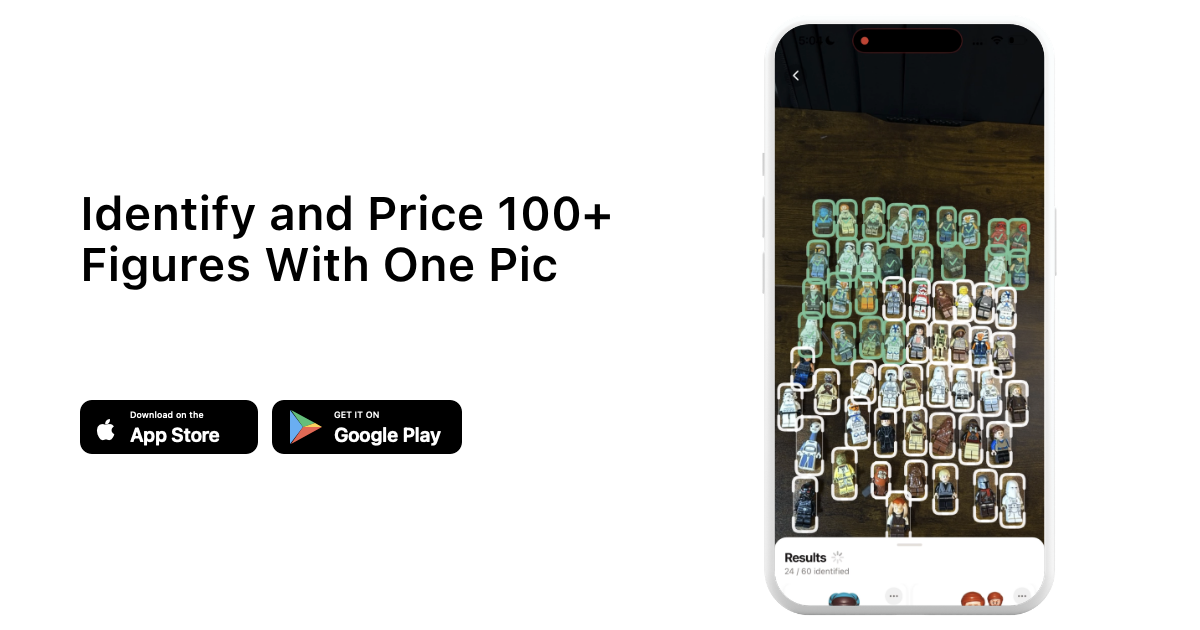
I found that the fastest way to turn a bulk lot into cash is to identify what's actually inside it first, then split the obvious keepers from the filler. Scanning a lot before you price anything saves a lot of guesswork, and it's exactly the workflow I built brick'em's bulk scanning and pricing tools around. Once you know what you're holding, you can run quick, aggressive pricing on the common figures to move volume, and pull the handful of genuinely rare pieces aside for maximum profit treatment instead of burying them in a $3 lot listing.
If you're trying to figure out what an entire collection is worth before deciding how to split your pricing strategy across it, brick'em's collection value calculator and haul calculator are built for exactly that gap between "I have a box of minifigures" and "I know what I'm actually sitting on."
Which Themes Are Worth Pricing for Maximum Profit?
Star Wars, Marvel, and Ninjago are generally worth pricing for maximum profit because they combine high liquidity with strong character demand, meaning buyers exist at the top of the price range, not just the bottom. City minifigures, by contrast, almost always do better with quick sale pricing because the category is highly illiquid.
In my view Marvel is underrated relative to how liquid and large its buyer base actually is, which makes it a good candidate for patient, maximum profit pricing rather than a rush to the bottom. Ninjago benefits from an ongoing show that keeps character demand alive, so it holds up well even at higher asking prices. City figures are the opposite story, they rarely sell for more than a couple dollars each in my experience, so trying to hold out for a premium price on generic City minifigures usually just means a longer wait for the same low number. Collectible Minifigures, especially sealed and unopened, also tend to support higher asking prices because of the mystery factor, even though scanning tools have made it easier for buyers to know what's inside before they bid.
Heads up: This is not financial or legal advice. We're sharing what we've learned from the LEGO reselling community.
What Mistakes Push a Minifigure's Price Down for Everyone?
The biggest mistake is pricing without checking recent sold comps first, which leads sellers to either underprice rare figures out of uncertainty or overprice common ones out of wishful thinking. Both mistakes cost money, just in different directions, and both are avoidable with a quick pricing check before you list anything.
I've seen sellers list a figure worth holding for maximum profit at quick sale prices simply because they didn't realize it was scarce, and I've seen the opposite too, common figures sitting unsold for months because the seller assumed every minifigure appreciates like the rare ones do. I recommend checking actual recent sold prices, not just active listings, since active listings are full of sellers hoping for a number that never actually clears. If you're building out a reselling business and want pricing and inventory tracking in one place instead of jumping between five tabs, starting your brick'em 14-day free trial gets scanning, identification, and pricing in a single workflow, and the brick'em blog has more breakdowns like this one on specific themes and platforms.
Frequently Asked Questions
Should I always price LEGO minifigures below market value?
No. Pricing below market makes sense for quick sales of common figures or bulk inventory, typically moving items in 24 to 48 hours on eBay. For rare or character-driven figures in high demand themes like Star Wars, pricing at or above recent sold comps and waiting for the right buyer usually nets more money overall.
How much more can I get by holding a figure for maximum profit instead of selling fast?
It varies by figure and platform, but sellers with an engaged Whatnot audience have reported getting 30 percent or more above typical market value on figures buyers are excited about. On BrickLink, patient pricing near the top of comps can also outperform a quick eBay sale once fees are factored in.
What is the fastest platform to sell LEGO minifigures for cash?
eBay and Facebook Marketplace are typically the fastest for cash, especially when priced 30 to 50 percent below market on eBay or negotiated directly on Facebook Marketplace. Whatnot can also move inventory quickly once you've built an audience, but it takes time upfront to get there.
Is BrickLink or eBay better for maximum profit pricing?
BrickLink tends to be better for maximum profit on rare individual figures since it's the pricing benchmark for the LEGO resale market, though most listings cluster near market rate already. eBay can still work for maximum profit on very rare items with broad demand, but promoted listing fees can eat into that extra margin.
How do I know if a minifigure is rare enough to price for maximum profit?
Check recent sold prices and supply on a pricing tool before deciding. A figure with few recent sales, strong character demand, and a retired or limited release is usually worth pricing for maximum profit, while a figure with many recent sales at low prices is almost always better off priced to move quickly.