


If you want to know how to price a LEGO lot you plan to part out, the short answer is this: estimate the resale value of the individual pieces first, especially the minifigures, then offer somewhere between 30 and 50 percent of that total for the whole lot. That gap is what covers your time, your listing fees, and the pieces that never sell. I've bought and broken down enough bulk lots to know that guessing at a single "fair" number for the whole box almost always loses money somewhere.
Parting out means buying a mixed LEGO lot, whether it's a garage-sale tub, a Facebook Marketplace pickup, or a bulk pallet, and reselling the contents as separate minifigures, sets, and parts instead of as one bundle. In my experience the profit isn't in the plastic itself. It's in the handful of minifigures and rare pieces hiding inside a pile of otherwise ordinary bricks, and pricing the lot correctly means finding those pieces before you pay for them.
- Value the minifigures and standout pieces individually before you value the lot as a whole.
- Use BrickLink sold listings, not asking prices, as your baseline for what things actually sell for.
- Offer roughly 30 to 50 percent of estimated resale value to leave room for fees, time, and dead stock.
- Treat incomplete sets and dirty or damaged pieces as fixable inventory, not dead weight, once you price in the extra work.
- Decide where you'll sell before you buy. BrickLink, eBay, Whatnot, and Facebook Marketplace all reward different kinds of lots.
Free tool
Part it out, or sell it complete?
Enter any set number and see what the minifigures and parts are worth sold separately, next to the complete set price. Priced from completed sales. No account needed.
Type a set number like 75192 or search by name.
What Does It Mean to "Part Out" a LEGO Lot?
Parting out a LEGO lot means buying a mixed collection of sets, loose bricks, and minifigures as one purchase, then breaking it apart and selling the pieces separately for more than you paid overall. Instead of reselling the whole tub as a single listing, you sort it into minifigures, complete sets, loose parts, and instructions, then price and list each category on the marketplace where it sells best.
This is the classic engine behind a lot of LEGO reselling businesses. Someone is clearing out a basement, a garage sale box, or an old collection on Facebook Marketplace, and they just want it gone. You buy the whole thing at a discount, sort it at home, and sell the individual pieces for more than the lot cost you combined. It's simple in concept and genuinely hard to do well, because the pricing math depends on what's actually inside the box, not what it looks like from the outside.
How Do You Estimate the Part-Out Value of a LEGO Lot Before You Buy It?
You estimate part-out value by identifying every minifigure and standout piece in the lot, checking recent sold prices for each one, adding those numbers together, and treating that total as the ceiling for what the whole lot is worth. From what I've seen, most of the real value in a mixed lot sits in a small number of minifigures and rare parts, not in the bulk brick pile.
When I'm sorting through a new lot, I start with the minifigures because they move the needle fastest. A tool like brick'em's minifigure database makes it much faster to identify exactly which figure you're holding and pull up recent value, instead of guessing from memory or scrolling through old catalogs. Once the figures are identified, I move to complete sets, then loose parts, and I only spend real time pricing bulk brick once the higher-value categories are accounted for.
If you want a rough estimate of an entire haul before you commit to sorting piece by piece, running the lot through a tool like brick'em's haul calculator gives you a starting number you can sanity check against your own manual review. I use that as a first pass, not a final answer, especially on lots with a lot of minifigures or rare sets mixed in.
What Percentage of Market Value Should You Pay for a Bulk LEGO Lot?
As a starting rule, I recommend offering somewhere between 30 and 50 percent of the estimated resale value for an unsorted bulk lot, and adjusting from there based on condition, completeness, and how confident you are in your value estimate. That range leaves enough margin to cover marketplace fees, the pieces that never sell, and the hours it takes to sort and list everything individually.
This isn't a number I invented in a vacuum. It lines up with how larger BrickLink sellers actually operate when they buy out smaller stores. In my view, when bigger sellers roll up entire inventories from smaller sellers, they're often paying somewhere around 30 to 50 percent of market value for the whole store, which tells you that even people buying in volume with strong pricing data still build in that same cushion. If experienced buyers with better tools than most of us protect that much margin, a newer reseller pricing a random garage-sale lot should protect at least as much.
Heads up: This is not financial or legal advice. We're sharing what we've learned from the LEGO reselling community.
Why Do Minifigures Usually Drive the Real Value in a Parted-Out Lot?
Minifigures usually drive most of the profit in a parted-out lot because they carry character and story value on top of their plastic value, and they take up almost no storage space compared with sets or bulk brick. A single rare figure can be worth more than the rest of the box combined, which is why identifying figures correctly matters more than almost anything else in this process.
I've noticed that people who are new to reselling tend to focus on the sets in a lot because they look impressive, while the real money is quietly sitting in a sandwich bag of loose figures nobody sorted through yet. It's a little wild that something about two thirds the size of your index finger can be worth hundreds or, for the rarest figures, thousands of dollars. That gap between what a lot looks like it's worth and what it's actually worth is exactly where part-out profit comes from.
How Does BrickLink Sold Data Help You Price a Lot Accurately?
BrickLink sold data helps you price a lot accurately because it shows what individual parts, figures, and sets actually sold for recently, instead of what sellers are hoping to get. Asking prices are aspirational. Sold prices are reality, and reality is what you should be pricing against when you're deciding how much to pay for a lot upfront.
A lot of people in this space call BrickLink the Wall Street of LEGO, and I think that's fair. It's the closest thing the hobby has to a real order book for individual pieces, and brick'em leans on BrickLink-integrated pricing specifically because asking-price guesswork leads to overpaying for lots and underpricing what you eventually sell. When I'm pricing a lot, I'm always checking sold comps, not current listings, and I'd recommend anyone doing this seriously build that habit early.
Should You Factor In Incomplete Sets and Missing Parts When Pricing a Lot?
Yes, you should factor incomplete sets in, but as a discount on labor rather than a reason to walk away, since most incomplete sets can be finished by sourcing the missing pieces on BrickLink and are worth meaningfully more complete than broken apart. A lot of the used sets people sell aren't 100 percent complete, and that's normal, not disqualifying.
When I run into a set that's missing a handful of parts, I treat it as a small project rather than dead inventory. The brick'em Chrome extension workflow helps match your missing parts against stores that actually carry them, which saves a lot of the manual searching that used to make completing sets feel like more trouble than it was worth. Price the lot as if those sets need extra work, not as if the missing parts make them worthless.
What About Damaged or Dirty Inventory in the Lot?
Damaged and dirty inventory should usually be priced low but not written off, because cleaning and restoring pieces is one of the most overlooked profit centers in LEGO reselling. A lot of buyers see a grimy figure or a scuffed set and assume it's worthless, when in reality it just needs cleaning and, sometimes, a replacement part or two.
I personally build in extra discount for anything visibly dirty or damaged, then account for cleaning time and any replacement parts I'll need to source separately. One thing worth being upfront about: if you restore or replace parts on a figure or set, disclose that clearly in your own listings later. Buyers care about honest condition descriptions, and a seller I know learned that lesson the hard way after an undisclosed repair led to a return.
Where Should You Sell the Pieces Once You've Parted Out a Lot?
Where you sell each piece depends on what it is. Individual parts and low-dollar minifigures generally do best on BrickLink because its fee structure makes small sales worthwhile, while eBay's massive buyer base is strong for sets and figures with broad demand, and Whatnot can work well for building an audience around live LEGO selling over time.
In my experience, eBay is a gold mine for both sourcing and selling minifigures specifically, partly because it puts your listing in front of a huge number of buyers. The tradeoff is that promoted listings, which a lot of sellers end up needing just to get visibility, can push your total eBay take rate close to 25 percent of the sale once everything is added up. I've sold over $100,000 worth of LEGO on eBay over the years, and that fee reality is exactly why I don't treat eBay's sticker price as my actual margin.
Whatnot works differently. Growth can be slow at first, and I started with a show that had about 10 people watching and did just over $500 in sales, which felt like a big deal at the time. It took building a consistent show schedule and real audience engagement before things picked up, but sellers who stick with it can eventually sell pieces for well above typical market value to a loyal audience. Facebook Marketplace, meanwhile, is more useful as a sourcing channel for finding lots in the first place than as your primary place to sell parted-out pieces, though it works for local, no-fee sales too. Mercari is worth checking for extra reach on sets and larger pieces as well.
How Do You Actually Calculate a Fair Offer for a Lot?
To calculate a fair offer, add up the estimated resold value of every identifiable minifigure, set, and notable part in the lot, then multiply that total by roughly 0.3 to 0.5 depending on condition and your confidence in the pricing. The result is the maximum you should be willing to pay for the whole lot.
| Step | What to do | Why it matters |
|---|---|---|
| 1. Identify | Sort and identify every minifigure and notable set in the lot | Most of the value hides in a small number of items |
| 2. Price | Check BrickLink sold data for each identified item | Sold prices reflect reality, not wishful asking prices |
| 3. Total | Add up every individual estimated value | Gives you the theoretical ceiling for the lot |
| 4. Discount | Multiply the total by 0.3 to 0.5 | Covers fees, unsold stock, sorting time, and cleaning |
| 5. Adjust | Lower further for incomplete sets or heavy damage | Missing parts and cleanup add real labor cost |
If you'd rather not build this out manually every time, running the numbers through brick'em's collection value calculator can speed up the totaling step, and it's worth comparing your manual estimate against it until you trust your own instincts on pricing.
What Are the Most Common Mistakes When Pricing a LEGO Lot to Part Out?
The most common mistake is pricing the whole lot off its size or the sets visible on top, instead of identifying the individual pieces inside first. Big, impressive-looking sets can be worth less than a handful of correctly identified minifigures buried at the bottom of the same box.
- Pricing by volume or box count instead of identifying individual items first.
- Using asking prices instead of sold prices as your comp.
- Forgetting to discount for sorting, cleaning, and listing time.
- Assuming every piece will sell instead of budgeting for dead stock.
- Ignoring minifigures buried in loose brick because they're harder to spot than complete sets.
I learned most of these the hard way, and I'd rather you skip that tuition. If you're serious about building a part-out business, it's worth tracking your estimated versus actual outcomes for your first several lots so you can see where your own pricing habits tend to drift.
Frequently Asked Questions
Is parting out LEGO lots actually profitable?
It can be, especially when a lot contains minifigures or sets that are easy to underprice as a bundle. Profitability depends on buying at a real discount to identified resale value, usually 30 to 50 percent below it, and on your willingness to sort, clean, and list items individually instead of reselling the lot whole.
How much should I offer for an unsorted LEGO lot?
A reasonable starting point is 30 to 50 percent of the estimated resale value of everything identifiable inside, adjusted down for incomplete sets, heavy damage, or low confidence in your pricing. Sellers who buy in volume tend to protect similar margins, which is a good signal for smaller buyers too.
Do I need to know every minifigure to price a lot well?
No, but identifying the standout figures matters most, since a small number of pieces usually carry most of the value. Tools built for identification and pricing can speed this up considerably, letting you focus your manual research on the pieces that look genuinely uncertain.
Should I avoid lots with incomplete or damaged sets?
Not necessarily. Incomplete sets and damaged pieces are often underpriced by casual sellers because buyers assume they're worthless. Pricing them lower to account for missing parts and cleanup time, rather than avoiding them entirely, is usually the more profitable approach.
Where should I sell items after I've parted out a lot?
It depends on the item. Low-dollar parts and figures tend to do well on BrickLink, broad-demand sets and figures move well on eBay, and building an audience on Whatnot can pay off over time for sellers willing to show up consistently.
What Do These LEGO Selling Platforms Look Like?
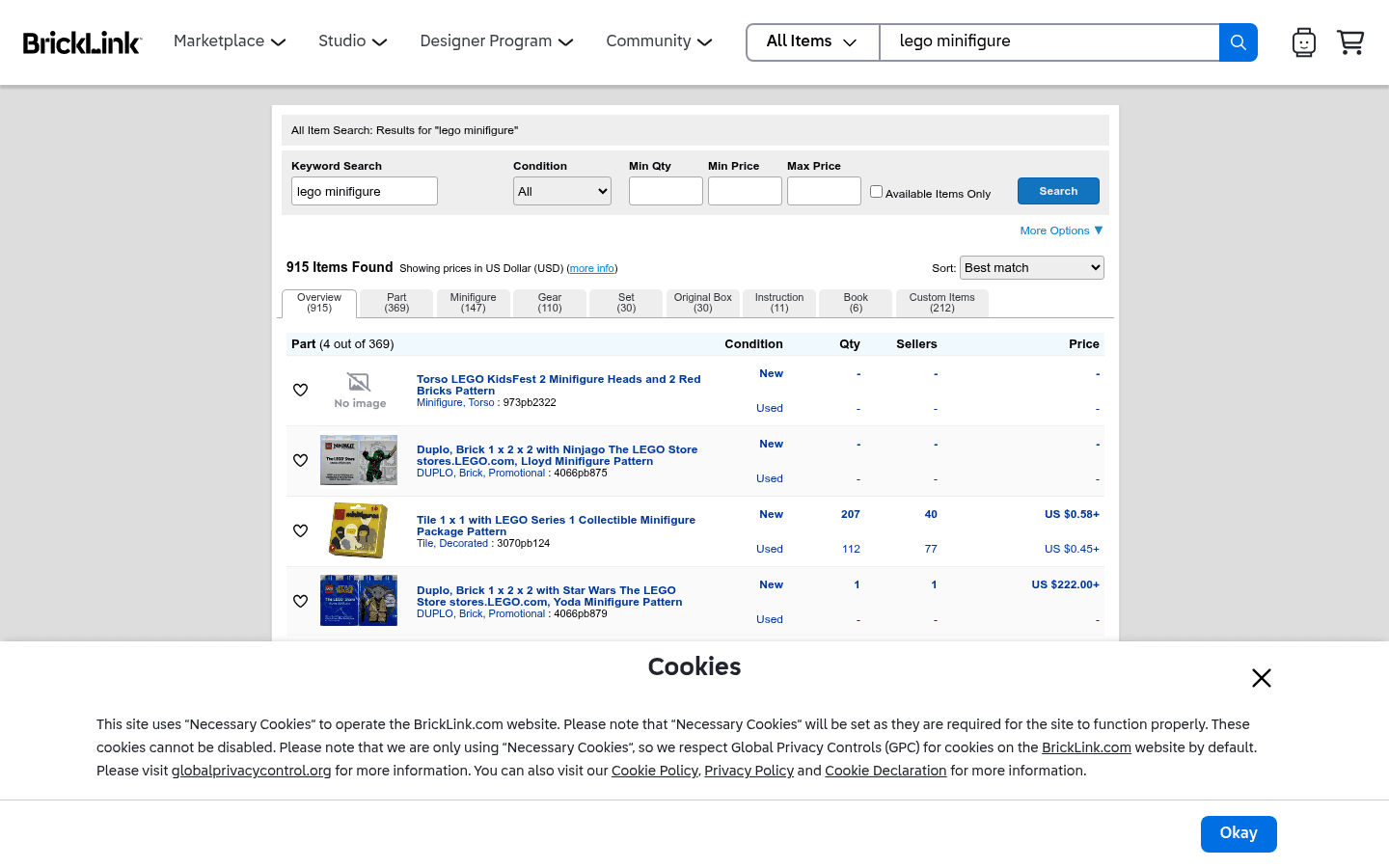
Before choosing where to sell, it helps to see the difference between a live-selling marketplace, a broad search marketplace, a LEGO-native catalog, and a social or local channel. These screenshots are visual references only. Platform interfaces, fees, and rules can change.
.png)

