LEGO minifigure prices are more stable than most collectibles, but they are not frozen in place. Over any six month stretch, common and mid tier figures tend to drift inside a fairly tight band on BrickLink, usually a small percentage move up or down, while rare, retired, or licensed figures can swing much harder depending on demand spikes, new set releases, or one big seller dumping a hoard. In my experience tracking inventory for brick'em, the "boring" middle of the market is actually where price stability lives.
That stability is part of why minifigures work so well as a reseller category in the first place. I've seen bulk lots where the headline rare figure barely moved over six months, while the common background figures in the same lot quietly lost a little ground because supply kept growing. If you're buying to flip fast, that gap matters more than any single headline price you see on a listing.
Key takeaways:
- Common LEGO minifigures usually hold within a narrow price band over six months on BrickLink.
- Rare, licensed, and retired figures are the most volatile group, in both directions.
- BrickLink prices tend to move slower and steadier than live marketplace prices on Whatnot or eBay.
- Tracking price movement over time matters more for resale decisions than trusting any single snapshot price.
What Does "Price Stability" Actually Mean for a LEGO Minifigure?
Price stability means a minifigure's sold price stays inside a fairly narrow range over time instead of spiking or crashing. For most common figures, that band is small, often just a modest percentage move in either direction across six months. For rare or licensed figures, the band widens a lot because fewer sales set the price, so a single high or low sale can swing the average noticeably.
When I look at a figure's price history, I'm not looking for a flat line. I'm looking for a trend that stays inside a predictable channel. A figure that goes from selling for roughly the same amount in January to roughly the same amount in June, with normal week to week noise in between, is what I'd call stable. A figure that triples because of a single collector bidding war, then drifts back down, is volatile even if the six month start and end points look similar.
From what I've seen, stability is really about sample size. The more a figure sells, the harder it is for one buyer or one seller to move the average. That's also why a healthy catalog like the brick'em minifigure database is useful. You're not just checking one number, you're checking how many data points back that number up.
How Much Do LEGO Minifigure Prices Actually Move Over Six Months?
Most common minifigures move in the low single digit percentage range over a six month window, while rare or licensed figures can move far more in either direction. The honest answer is that there is no single number, because "LEGO minifigures" covers everything from a one dollar City passenger to a figure that trades for thousands.
I personally think about this in tiers. Common City, Town, and background figures from large sets tend to barely move because new supply keeps entering the market every time LEGO releases another wave of similar sets. Mid tier licensed figures, think Marvel or Star Wars background characters, tend to hold steady with small seasonal bumps around holidays and new movie or show releases. The rare tier, retired exclusives, promotional figures, and anything tied to a hyped license, is where six month price charts get interesting, sometimes climbing noticeably, sometimes cooling off just as fast.
A seller I know who focuses heavily on Star Wars figures told me their average sale price barely changed over half a year, but the spread between their fastest and slowest sellers widened a lot. That lines up with what I'd expect. Stability at the category level can hide a lot of movement at the individual figure level, which is exactly why resellers need to check specific figures instead of assuming a theme is uniformly "safe."
Which Minifigure Categories Tend to Hold Their Price Best?
Star Wars, Ninjago, and Collectible Minifigures (CMF) tend to hold their price best because they combine broad name recognition with steady, ongoing demand instead of a one time hype cycle. These categories sell often enough that their prices stay anchored by a real, continuous stream of sales rather than a handful of outlier transactions.
Star Wars is one I'd call highly liquid almost across the board. It's one of the best categories for Whatnot specifically because buyers already know the characters, so a seller doesn't have to explain why a figure matters. Ninjago is similar in my view. The show has kept running long enough that there's a steady base of younger collectors and nostalgic older fans buying at the same time, which keeps prices from drifting too far in either direction.
CMF is a category I'd call underrated for price stability specifically because of the mystery factor. Packaged, unidentified CMF figures carry a premium because nobody knows exactly which figure is inside until it's opened or scanned. Once a figure is confirmed, whether by opening the pack or using a tool like a QR code scanner, that mystery premium goes away and the price settles into a more predictable range tied to the specific character. For official details on any current CMF series, LEGO.com is the best source to confirm what's actually in a wave before you price it.
Which Categories See the Most Price Volatility?
Retired exclusives, convention figures, and themes with thin, inconsistent demand see the most price volatility, because a handful of sales can move the average sharply in either direction. City minifigures are the clearest example on the low end. In my experience, most City figures rarely sell for more than a couple dollars each, so there isn't much room for a six month chart to look dramatic either way, it's just consistently low.
Harry Potter is a theme I'd call overrated for liquidity, and that shows up in pricing too. It's not that the figures are worthless, it's that sales happen less often, so prices can look stagnant for a while and then jump or drop when a buyer finally shows up. I've noticed Harry Potter figures tend to do better on BrickLink, where a patient buyer can find exactly what they want, than on faster moving, live formats where impulse buying drives price.
On the high end, retired or convention exclusive figures can see real volatility because collector attention comes in waves. A figure tied to a currently popular show or movie can spike, then cool off six months later once the cultural moment passes. That's the group I'd watch most closely if you're holding inventory rather than flipping it quickly.
Why Are BrickLink Prices Steadier Than Whatnot or eBay Prices?
BrickLink prices are steadier because it's a catalog driven marketplace where buyers compare listings side by side before paying, while Whatnot and eBay are built around real time bidding, promotions, and urgency that can push a single sale well above or below the going rate. Different buyer psychology produces different price behavior, even for the exact same figure.
BrickLink is sometimes called the Wall Street of LEGO, and I think that's fair. It's the place most resellers, myself included, check first for a reference price, which is part of why brick'em leans on BrickLink integrated pricing data. The catch is that most sellers on BrickLink price at market, a dollar under market, or a little over market, so it's genuinely hard to find a steal there. Prices move slowly because everyone can see everyone else's listing.
eBay sits in between. I've sold over $100k worth of LEGO through eBay over the years, and my experience is that listing 30 to 50 percent under BrickLink market value will usually move a figure within 24 to 48 hours, because eBay buyers love a steal. That's fast, but it's also a price you're choosing to accept, not a market consensus. Promoted listings can also push a seller's effective take rate on eBay close to 25 percent of the sale, which changes what "stable" even means once you account for what actually lands in your pocket.
Whatnot is the most emotionally driven of the three. Live auction energy, audience engagement, and a seller's personal following can push a figure's hammer price well above its BrickLink value, especially for sellers who've built a loyal audience. I reached a meaningful following and tens of thousands of dollars in sales within my first several months on Whatnot without ever showing my face on camera, and I'd put a chunk of that down to consistent shows and asking the audience questions on stream, not just inventory quality. That kind of demand is real, but it's tied to the show and the seller, not just the figure, which is exactly why it doesn't behave like a stable catalog price. Mercari and Facebook Marketplace sit closer to eBay's pattern for LEGO, driven mostly by whoever happens to be browsing that day rather than a live audience.
How Can Resellers Track Price Movement Without Losing Their Minds?
The simplest way to track price movement is to check a small set of representative figures on a regular schedule instead of trying to monitor your entire inventory every day. Consistency beats frequency when it comes to noticing real trends instead of normal day to day noise.
Here's roughly how I sort my own tracking routine when I sort through inventory:
| Marketplace | Typical price behavior | Best used for |
|---|---|---|
| BrickLink | Slow moving, catalog style reference price | Baseline pricing and spotting long term trends |
| eBay | Moderate movement, steal pricing sells fast | Quick liquidation, broad buyer reach |
| Whatnot | Can spike well above baseline with audience demand | Above market sales once you've built a following |
| Mercari / Facebook Marketplace | Inconsistent, buyer dependent | Local sourcing and casual flips |
A quick checklist I'd recommend for any reseller who wants to stay on top of this without obsessing over it:
- Pick 10 to 20 figures that represent your actual inventory mix, not just your most valuable pieces.
- Check their BrickLink sold prices monthly, not daily.
- Note any figure that moves more than you'd expect, and ask why before assuming it's a new trend.
- Track your total estimated collection value over time rather than individual figures in isolation.
For that last point, running your inventory through something like the LEGO collection value calculator every few months gives you a cleaner read on overall movement than staring at individual listings. If you're deciding whether a new bulk purchase is worth it before you commit, the haul calculator is built for exactly that gut check.
Heads up: This is not financial or legal advice. We're sharing what we've learned from the LEGO reselling community.
What Should Price Stability Mean for Your Buying and Selling Strategy?
Price stability should change how confident you feel holding inventory, not just how you price it. Common, stable figures are safe to buy and flip quickly because you're not betting on a trend, while volatile figures need more patience and a clearer exit plan before you commit real money.
In my view, this is where a lot of newer resellers get it backwards. They chase the rare figure with the exciting price history and ignore the steady, boring middle of the market that actually pays the bills. I started by buying bulk lots that were mostly common figures, sorting out the handful of valuable pieces, and selling the rest at fair, stable prices. That approach doesn't make for an exciting story, but it's a lot more repeatable than hoping a rare figure appreciates on your timeline.
If you are holding rarer, more volatile figures, treat them differently. Set a price range you'd be happy with based on recent sales, not the highest sale you've ever seen, and be willing to wait for the right buyer rather than panic selling into a quiet month. A lot of sellers I know who do well long term treat their rare figures almost like a separate, slower moving portfolio from their everyday flipping inventory.
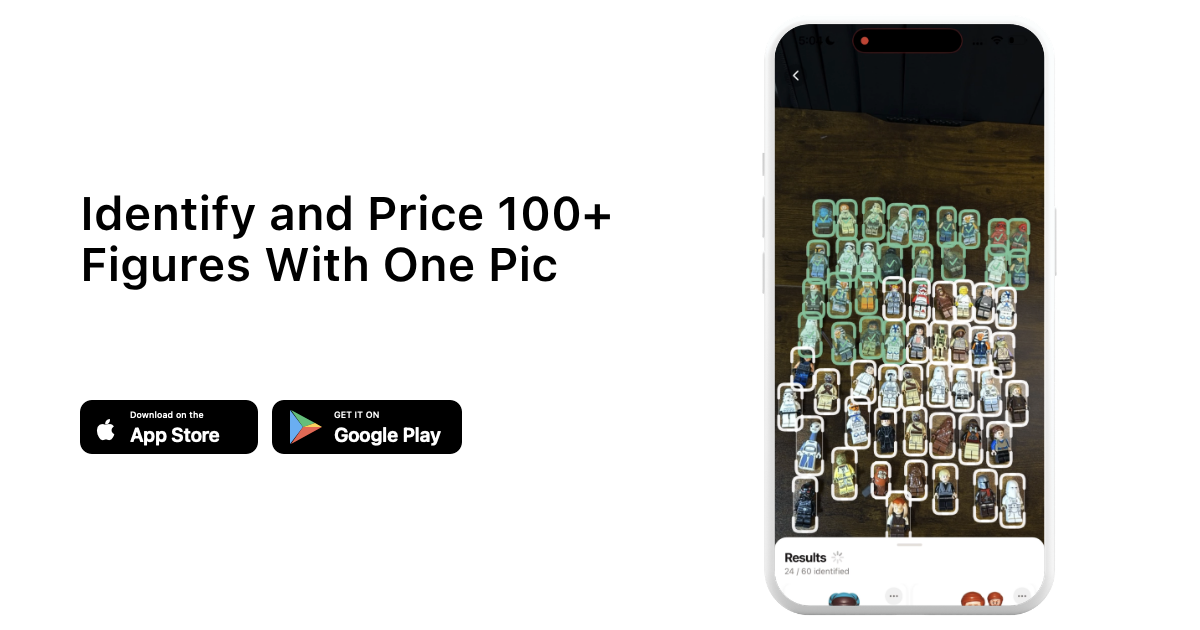
Whatever mix you land on, the habit that matters most is checking real sold data before you price anything, instead of guessing based on what a figure "feels like" it should be worth. If you want a faster way to identify and price a stack of figures at once instead of looking each one up individually, that's exactly the gap brick'em is built to close, and it's worth starting a 14-day free trial to see how it handles your own inventory.
Frequently Asked Questions
Do LEGO minifigure prices generally go up over time?
Common figures usually stay flat or drift down slightly as supply grows, while rare, retired, or licensed figures can rise noticeably if demand increases. There's no universal answer across the whole category, so it really depends on which specific figure, theme, and condition you're asking about before assuming any figure will appreciate.
Is BrickLink the most accurate source for minifigure prices?
BrickLink is widely treated as the reference point for LEGO pricing because of its sales history and catalog depth, which is why brick'em leans on BrickLink integrated data. It's not perfect for fast moving or newly released figures, but for most established minifigures it's the steadiest, most transparent baseline available.
How often should I check minifigure prices as a reseller?
Checking monthly is usually enough for most of your inventory, since daily price checking mostly just shows normal noise rather than a real trend. I'd check more often only for a small group of higher value or recently hyped figures where a quick shift could actually change your selling decision.
Are rare LEGO minifigures a safe investment?
Rare figures can appreciate, but they carry more risk and less liquidity than common figures, so I wouldn't call them "safe" in the way a lot of marketing language suggests. Treat them as a higher risk, higher patience category, and lean on verified sold data rather than asking prices before making any buying decision.