

A LEGO minifigure investment portfolio is a deliberately built collection of minifigures that you pick, track, and eventually sell with the same discipline you'd apply to any other asset class. Instead of grabbing whatever looks cool at a garage sale, you're sourcing specific figures, spreading risk across themes and rarity tiers, and watching value trends over time so you actually know when to hold and when to sell.
I've spent a lot of time inside the LEGO reselling world, and minifigures are, in my view, the most underrated entry point into serious collecting. They're small, they're liquid, and a figure about two thirds the size of your index finger can carry real character value tied to franchises like Star Wars or Marvel. In my experience, most new sellers either buy randomly or hoard everything they find, and both habits leave money on the table.
Here's what this guide covers before you build your first portfolio.
- Why minifigures work as a standalone investment category
- How to pick figures worth holding instead of flipping fast
- How to diversify across theme, rarity, and condition
- Where experienced resellers actually source inventory
- How to track ROI without guessing at values
What Makes LEGO Minifigures a Legitimate Investment Category?
LEGO minifigures qualify as a legitimate investment category because they combine small size, deep liquidity, and strong emotional demand tied to recognizable characters. Unlike bulky sealed sets, a few hundred minifigures fit in a shoebox, and because franchises like Star Wars and Marvel carry built in fan bases, demand for the right figures tends to stay durable year after year.
LEGO has made minifigures since 1978, so there's close to five decades of catalog history behind this hobby. That matters for investing because it means certain figures have already proven they hold or gain value over long stretches, not just during a hype cycle. I've noticed that a Luke Skywalker or Spider Man figure carries value that goes beyond the plastic itself. You're buying into a story and a character, and that narrative pull is a lot of why minifigures hold up as a collecting asset where something like loose City pieces generally don't.
Which Minifigures Should You Actually Buy First?
You should start with figures from highly liquid, broadly recognized themes rather than chasing the rarest piece you can find on day one. Star Wars, Marvel, and Ninjago figures tend to move quickly because the buyer pool is huge, while niche or low demand themes can sit in inventory for months even if the figure itself is technically scarce.
From what I've seen, Star Wars is one of the best categories for beginners precisely because demand is so broad and familiar. Marvel is a close second, and I'd actually call it underrated relative to how liquid it really is. Ninjago deserves a mention too, since the ongoing show keeps feeding fresh character demand. On the other end, I'd avoid building a portfolio heavy in City minifigures. City figures rarely sell for more than a couple dollars each, and that kind of illiquidity defeats the purpose of a portfolio built for growth.
How Should You Diversify a Minifigure Portfolio?
You diversify a minifigure portfolio by spreading purchases across theme, rarity tier, and condition instead of concentrating everything in one franchise or one price point. A healthy mix usually includes a base of liquid, easy to sell figures alongside a smaller allocation of rarer pieces that take longer to move but carry higher upside.
I personally like a rough split: the majority of a portfolio in liquid themes like Star Wars, Marvel, and Ninjago, a smaller slice in nostalgia heavy categories like Castle or Pirates where collectors pay up for the right piece, and a modest amount set aside for Collectible Minifigures, which sell very well and carry a mystery factor, especially when still sealed. Diversifying this way means you're not stuck waiting on a single theme to come back into fashion before you can turn inventory into cash.
Where Do Experienced Resellers Source Portfolio Grade Minifigures?
Experienced resellers source portfolio grade minifigures from a mix of marketplaces, each suited to a different part of the sourcing and selling process. BrickLink, eBay, Whatnot, Facebook Marketplace, and Mercari each play a distinct role, and leaning on just one of them usually means missing deals or leaving margin on the table.
BrickLink functions as the pricing backbone of the whole hobby. I use it constantly just to sanity check what a figure is actually worth before I commit to a purchase, which is why a lot of sellers treat it like the Wall Street of LEGO. eBay has been huge for me personally. I've sold over $100,000 worth of LEGO there over the years, and it's still one of the best places to source bulk lots that contain minifigures worth pulling out and reselling individually. Whatnot is where the real upside shows up. I built an account from scratch to over 3,000 followers and more than $30,000 in sales within about five months, without ever showing my face on camera, and figures in strong niches like Star Wars and Ninjago can sell there for well above typical market value once you've built an audience. Facebook Marketplace and Mercari round things out as solid sourcing spots, especially for people clearing out old bins who have no idea what they're sitting on.
Checklist: Building Your First Minifigure Investment Portfolio
Use this checklist as a starting framework. It's not a guarantee of returns, just a practical sequence I recommend when someone asks me how to start.
| Step | What to Do | Why It Matters |
|---|---|---|
| 1 | Pick 2 to 3 liquid starter themes (Star Wars, Marvel, Ninjago) | Keeps early inventory easy to sell while you learn pricing |
| 2 | Check current BrickLink pricing before buying | Avoids overpaying relative to real market value |
| 3 | Log every figure, cost, and condition in one tracker | Lets you calculate real ROI instead of guessing |
| 4 | Add a small allocation of nostalgia themes (Castle, Pirates) | Diversifies against shifts in current pop culture demand |
| 5 | Set a review cadence (monthly or quarterly) | Keeps you selling into demand instead of holding too long |
How Should You Track Value and ROI Over Time?
You should track value and ROI by recording purchase price, condition, and current market estimates for every figure in one place, then revisiting those numbers on a set schedule instead of only checking when you're curious. Without a system, it's easy to lose track of which figures are actually performing and which ones are quietly dragging down your returns.
When I sort through my own inventory, I rely on a running log rather than memory, because memory is unreliable once you own more than a few dozen figures. If you want to skip building a spreadsheet from scratch, brick'em's LEGO collection value calculator and LEGO investment calculator are built for exactly this, letting you see estimated portfolio value and track performance without manually pricing every single figure yourself.
What Role Does Condition and Completeness Play in Minifigure Value?
Condition and completeness play a major role in minifigure value because a figure missing even one small accessory can sell for a fraction of what a complete, clean version brings. Buyers paying collector prices expect every original piece present, so incomplete figures need to be either completed with the correct parts or priced accordingly.
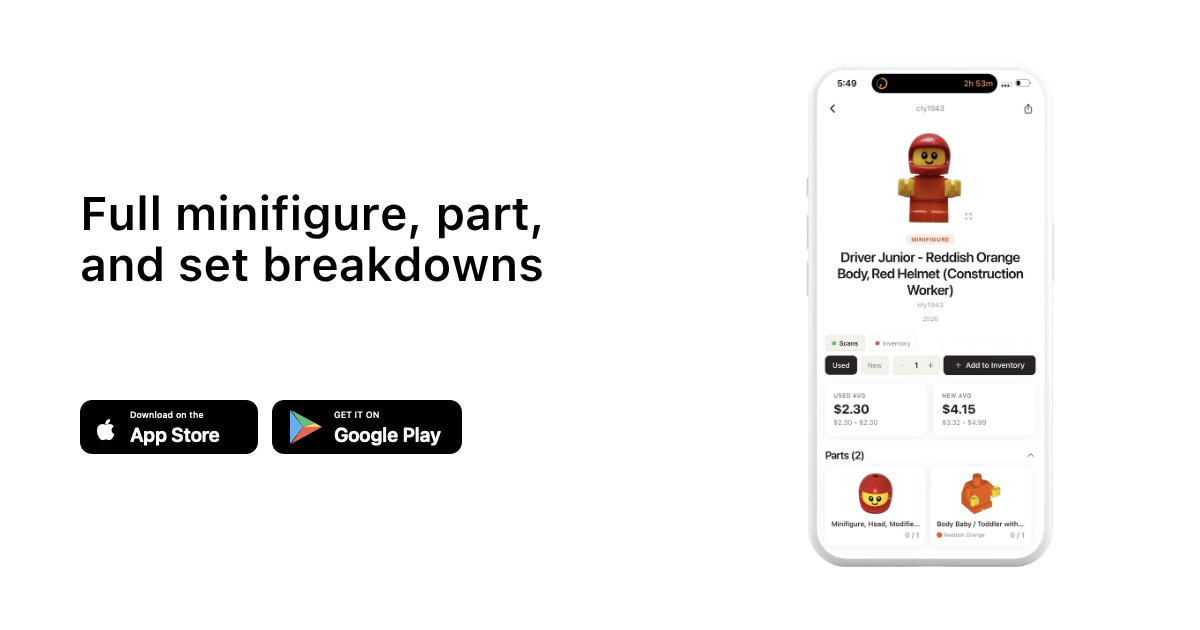
I learned early on that dirty or incomplete figures are one of the most overlooked opportunities in this hobby. A lot of sellers I know just toss or dump these at low prices instead of cleaning them up and tracking down the missing piece. BrickLink is useful here too, since you can usually find a store selling the exact part you need. Before buying or restoring anything, it's worth checking brick'em's LEGO minifigure database to confirm you've identified the figure and its correct original parts.
What Are the Biggest Mistakes New Minifigure Investors Make?
The biggest mistakes new minifigure investors make are buying based on hype instead of liquidity, failing to track cost basis, and holding everything indefinitely instead of selling into demand. These habits turn what should be an active, cash generating hobby into a pile of inventory that never actually gets converted into profit.
I've seen this pattern over and over. Someone gets excited about a figure because it looks rare, buys it without checking real sold prices, and then has no idea what it's actually worth a year later because nothing was logged anywhere. I'd also add overconcentration to this list. Putting most of your budget into one theme or one character, however popular right now, leaves you exposed if that specific demand cools off.
When Is the Right Time to Sell a Minifigure Investment?
The right time to sell is usually when a figure's price has clearly outpaced its historical range on platforms like BrickEconomy, or when you need to free up capital for better opportunities, rather than waiting indefinitely for a theoretical ceiling. Selling into real demand, especially around relevant movie releases or theme anniversaries, tends to beat holding forever and hoping.
In my experience, Whatnot rewards patience and audience building if you want above market pricing, while eBay is the faster route if you need liquidity now, often within 24 to 48 hours for correctly priced figures in a strong niche. Neither approach is wrong, it just depends on whether you're optimizing for price or for speed.
Heads up: This is not financial or legal advice. We're sharing what we've learned from the LEGO reselling community.
Frequently Asked Questions
Are LEGO minifigures a good investment for beginners?
LEGO minifigures can be a good starting investment for beginners because they're affordable to enter, easy to store, and highly liquid compared to sealed sets. Starting with broadly popular themes like Star Wars or Ninjago gives new investors faster feedback on pricing and demand than chasing rare, niche pieces right away.
How many minifigures should a starter portfolio include?
There's no fixed number, but many sellers I know start with somewhere between 20 and 50 figures spread across 2 to 3 liquid themes before expanding further. This gives you enough variety to learn pricing patterns and selling platforms without overcommitting money before you understand the market.
Where can I check current minifigure values before buying?
BrickLink is the most commonly used source for checking current minifigure values, since its sold listings reflect real market pricing rather than asking prices alone. BrickEconomy is another useful reference point, particularly for tracking longer term price trends on specific figures and sets.
Do sealed minifigures hold value better than loose ones?
Sealed or packaged minifigures, particularly Collectible Minifigures still in their original packaging, often hold a premium because of the mystery factor and because collectors value an unopened item. Loose figures can still perform well if they're complete and clean, but sealed condition generally commands the strongest prices.
How do I know if a minifigure is complete before buying it?
Checking a minifigure's complete part list against a reliable database before buying is the most reliable way to confirm completeness, since missing accessories or swapped parts aren't always obvious from photos alone. Comparing the listing against brick'em's LEGO minifigure database helps confirm you're paying for a genuinely complete figure.