

A LEGO estate sale is one of the best places to find a large, undervalued collection in one shot, but it's also where a lot of resellers lose money because they bid on gut feeling instead of a process. I've learned to walk into these sales with a short mental checklist: condition, completeness, category mix, and a price I won't go above before I even start talking to the family or the estate company running the sale.
In my experience, estate sales are different from a random Facebook Marketplace lot or a single eBay auction. You're usually looking at decades of accumulated sets, loose bins, and minifigures that nobody has sorted in years, sometimes belonging to a collector who passed away or downsized. That means more upside if you know how to evaluate it fast, and more risk if you don't.
- Inspect for missing pieces, yellowing, and water or smoke damage before you talk price
- Separate minifigures, sealed sets, and bulk parts mentally, since each category resells differently
- Set a maximum offer based on scrap or part out value, not retail value, and stick to it
- Bring a way to scan and sort fast, because slow evaluation costs you deals
- Always ask who else has seen the lot and whether other buyers are coming
What Is a LEGO Estate Sale and Why Do Resellers Care?
A LEGO estate sale is a sale of a deceased or downsizing collector's LEGO inventory, usually run by the family, an estate sale company, or an auction house clearing out a house. Resellers care because these lots are often large, untouched for years, and priced by people who don't know current resale values, which creates real opportunity if you show up prepared.
I started paying closer attention to estate sales after noticing how often they get listed as one flat price for "all the LEGO in this room" with no sorting at all. That's a very different situation than buying off BrickLink, where every piece already has a market price attached. When I sell afterward, the margin usually comes from the sorting and identification work nobody else wanted to do, not from finding one rare grail piece.
How Do You Find LEGO Estate Sales Before Other Resellers Do?
You find LEGO estate sales by watching local estate sale listing sites, Facebook Marketplace and estate sale groups, local auction houses, and word of mouth from other sellers in your area, then showing up early or contacting the organizer before the public sale date. Speed matters more than almost anything else in this category.
Estate sale companies usually post photos a few days before the sale opens, and the best LEGO lots get bought in the first hour by people who called ahead. I personally try to message the organizer directly and ask if LEGO is a significant part of the sale, since photos rarely show the full scope of a back room full of bins. A seller I know in the Midwest builds relationships with two or three estate sale companies and gets a text before lots go public, which is honestly the single biggest edge in this niche.
What Should You Look for When Evaluating a Large LEGO Collection?
You should look at completeness, condition, category mix, and signs of smoke, water, or pet damage before you look at anything else, because those four factors swing your resale value more than the specific sets or themes involved. A pristine sealed set is worth far more than the same set opened and missing half its pieces.
I personally check for yellowing on white and light gray pieces, which usually means long sun exposure and tells me the collection was displayed rather than stored properly. I also smell for smoke and mildew, since both are deal breakers for resale even if the pieces look fine. From what I've seen, a collection stored in sealed bins in a closet almost always beats one that sat loose in a garage, even if the garage collection looks bigger.
| Signal | What It Means | Action |
|---|---|---|
| Yellowed white or gray bricks | UV exposure, likely displayed for years | Lower your offer, expect slower resale on those pieces |
| Sealed, unopened boxes | Highest resale value if box condition is good | Prioritize these for sealed set buyers and collectors |
| Mixed loose bins, no sorting | Time cost to sort, but often underpriced by seller | Offer based on bulk weight or part out estimate |
| Smoke or mildew smell | Hard to remove, turns off most buyers | Walk away or offer scrap bulk pricing only |
| Instruction manuals included | Adds resale value, especially for retired sets | Keep manuals with their matching sets when reselling |
How Do You Price an Estate LEGO Lot Before Making an Offer?
You price an estate LEGO lot by estimating the part out and minifigure value of what you can identify, discounting heavily for what you can't verify, and then offering well below that number so you still profit after sorting time, platform fees, and the pieces that turn out to be damaged or incomplete. Never offer based on retail prices printed on old boxes.
Heads up: This is not financial or legal advice. We're sharing what we've learned from the LEGO reselling community.
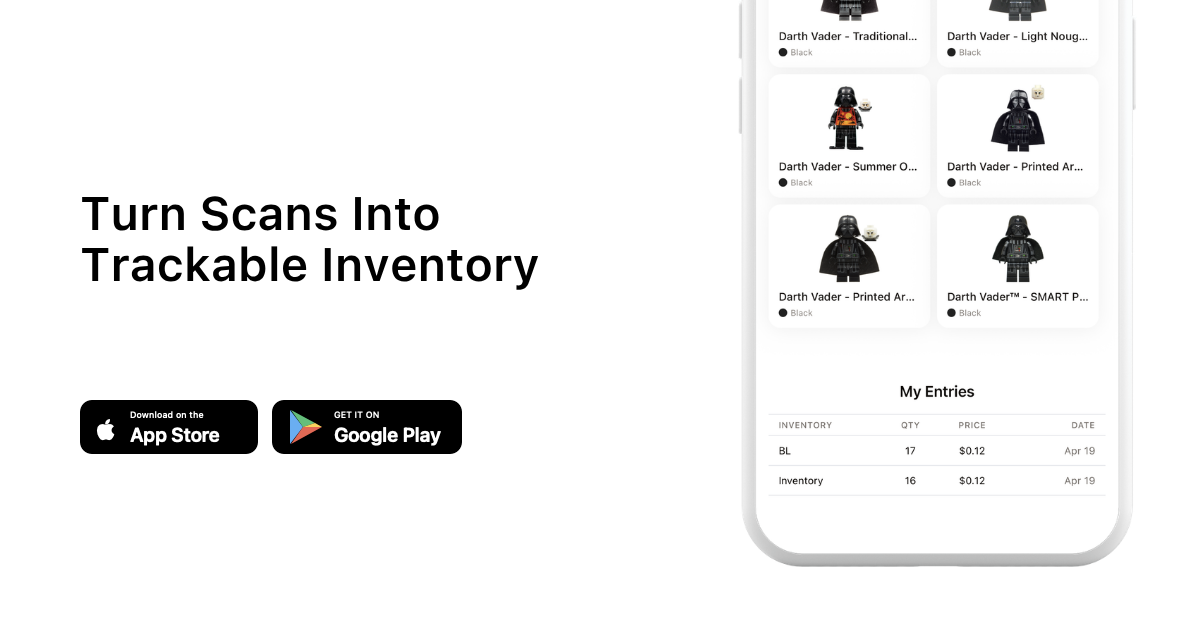
In my experience, the fastest way to get a realistic number is to scan what you can on the spot using a tool like brick'em's LEGO collection value calculator or a quick identification pass with the minifigure database to flag anything unusually valuable before you commit. I use that first pass to decide whether this is a $200 lot or a $2,000 lot, because those require completely different negotiating approaches.
eBay sellers I know, including myself, have found that items priced 30 to 50 percent below current market tend to sell within 24 to 48 hours, which is useful context when you're deciding how much margin to leave yourself. I've personally sold over $100,000 worth of LEGO through eBay over the years, and the lots that made the most money were almost always the ones I bought cheapest relative to BrickLink's listed market price, not the ones with the single rarest piece.
Minifigures vs Sealed Sets vs Bulk Parts: What Matters Most in an Estate Lot?
Minifigures usually matter most in an estate lot because they're compact, carry character and story value, and are the easiest category to resell quickly, followed by sealed sets for collectors and bulk parts as a slower but still profitable third category. I weight my offer heavily toward what minifigures I can identify in the lot.
I noticed early on that a shoebox of 200 loose minifigures from an estate sale can be worth more than a shelf of used, incomplete sets, simply because figures connecting to Star Wars, Marvel, or Ninjago carry demand that outlasts any single set's popularity. Sealed sets are a close second, especially from themes like Modular Buildings or Icons, since collectors pay a premium for factory sealed boxes in good shape. Bulk loose parts are the slowest to move but can still be a solid play if you have the patience to sell through BrickLink or Brick Owl over time.
What Are Red Flags That Mean You Should Walk Away From an Estate Lot?
Red flags include a strong smoke or mold smell, missing instruction books on high value sets with no way to verify completeness, a seller who won't let you inspect before paying, and a price that's already been shopped around to five other buyers who all passed. Trust your gut if something feels rushed or pressured.
I started walking away from lots the moment I smell cigarette smoke, because I learned the hard way that smell doesn't wash out of ABS plastic easily and buyers notice immediately. I also pass on sales where the family insists on an all or nothing price for a storage unit I haven't been allowed to open, since that's usually a sign they already know something is wrong with part of the inventory.
How Do You Negotiate With a Family or Executor Selling a Collection?
You negotiate respectfully, acknowledge that this is often an emotional situation involving a loved one's collection, and anchor your offer to actual resale realities rather than nostalgia pricing, while still leaving room to move up a bit if the seller pushes back. Overly aggressive lowballing tends to backfire in these situations.
From what I've learned, families selling a deceased relative's collection usually care more about it going to someone who will actually use or sell it responsibly than squeezing out the last dollar. I personally explain that I'll be sorting, cleaning, and reselling piece by piece, which helps justify why my number is below what a single retired set might book for on BrickEconomy. A seller I know always offers to let the family keep one sentimental item, which costs almost nothing and tends to smooth over the rest of the negotiation.
What Do You Do With the Collection After You Buy It?
After you buy it, you sort by category, clean anything dirty or dusty, identify and price minifigures and sets individually, and decide which platform fits each piece, since bulk lots, individual minifigures, and sealed sets all sell best in different places. Rushing this step is where a lot of potential profit gets left on the table.
I use a bulk scanning workflow to get through hundreds of minifigures quickly instead of looking each one up by hand, which used to take me entire weekends before I changed my process. Once everything is identified, I decide what goes to Whatnot for live selling, what goes straight to eBay, and what's better suited for BrickLink's part out crowd. If you're just getting your inventory organized for the first time, it's worth setting up a free brick'em account before your next sale so every item has a home from the moment you scan it.
Estate Sale LEGO Buying Checklist
- Confirm LEGO is a significant part of the sale before driving out
- Bring cash, a phone with a scanner app, and gloves for dusty bins
- Check for smoke, mildew, and water damage first
- Separate sealed sets, minifigures, and bulk parts mentally while inspecting
- Estimate part out value, not retail box value
- Set a maximum offer before you start talking price
- Ask whether other buyers have already seen the lot
- Negotiate respectfully if a family member or executor is present
- Keep instruction manuals and boxes with their matching sets when possible
- Run a quick LEGO investment calculator check on anything that looks unusually rare
Free tool
Part it out, or sell it complete?
Enter any set number and see what the minifigures and parts are worth sold separately, next to the complete set price. Priced from completed sales. No account needed.
Type a set number like 75192 or search by name.
Frequently Asked Questions
How much should I offer for a LEGO estate sale lot?
Offer based on the part out and minifigure resale value you can actually verify, discounted for sorting time, platform fees, and unknown condition issues, then leave yourself real margin. I personally aim to pay well under half of what I estimate the lot will eventually resell for once it's sorted and cleaned.
Are sealed LEGO sets from estate sales worth more than used ones?
Yes, sealed sets generally hold value better than opened or incomplete ones because collectors pay a premium for factory sealed box condition. Used sets can still sell, but in my experience they move slower and for less unless the set is rare or especially popular with builders rather than collectors.
What's the biggest mistake new resellers make at LEGO estate sales?
The biggest mistake is pricing the whole lot off retail box prices instead of actual resale demand, which leads to overpaying. I've seen sellers get excited about a pile of old sets and offer close to original MSRP, then struggle to make any profit once they factor in fees and the time it takes to sort everything.
Should I buy a LEGO estate lot if I can't inspect it first?
I generally recommend against it unless the price is low enough that you're comfortable losing most of it. Estate lots vary wildly in condition, and from what I've learned, a lot you can't open or test before paying carries real risk of smoke damage, missing pieces, or inflated claims about what's actually inside.
Where should I sell items after buying an estate LEGO collection?
It depends on the category. Minifigures and popular themed sets often do well on Whatnot or eBay for faster turnover, while individual parts and less common pieces tend to find buyers on BrickLink over a longer timeline. I sort first, then match each category to the platform where it sells fastest for the best price.