


LEGO bundle pricing means grouping several minifigures, or a mix of figures and small parts, into one lot and pricing that lot as a single unit instead of listing every piece on its own. Done well, it raises your average order value because buyers pay for convenience and completeness, and you spend less time per sale on photos, listings, and shipping labels.
I've built a good chunk of my own LEGO business around figuring out when to bundle and when to sell solo, and the honest answer is it depends on what you're holding. A rare Boba Fett or a mint Iron Man almost always does better alone. A box of 200 mixed City and Star Wars figures pulled from a bulk lot? That's bundle territory, and pricing it wrong is one of the fastest ways to leave money on the table.
Here's what I've learned from sorting, pricing, and selling thousands of figures, plus what I hear from other sellers doing the same thing.
- Bundling works best for common to mid tier figures, not your top five percent by value
- Buyers pay for curation and time saved, not just for plastic
- Theme matched bundles (all Star Wars, all Ninjago) tend to outsell random mixes
- Undiscounted bundles rarely move fast. A 10 to 20 percent discount off the summed individual value is a common starting point
- Track your true per figure cost before you set a bundle price, or you'll bundle away your margin without realizing it
What Is LEGO Bundle Pricing?
LEGO bundle pricing is the practice of setting one price for a group of minifigures or parts instead of pricing every item individually. Sellers use it to move inventory faster, raise average order value, and cut down on the time spent listing low value figures one at a time.
In my experience, bundling is really a time and margin trade. You give up a little bit of the top line you could theoretically get by selling each figure at its exact market price, and in exchange you get faster turnover, fewer individual listings to manage, and a buyer who feels like they got a deal. That feeling matters more than people think. A seller I know describes it as "selling the box, not the brick," meaning the buyer is paying for the whole experience of opening a lot, not just counting up individual figure values.
Why Bundle Minifigures Instead of Selling Them One by One?
Bundling makes sense when you have a large number of common to mid value figures, limited time to list each one, or buyers who are actively looking for lots to build out a collection or a resale batch of their own. It is generally the wrong move for your rarest, highest value pieces.
When I sort a bulk lot, I'm splitting figures into three rough piles: figures worth listing solo, figures that go into theme bundles, and true junk or duplicate parts that get grouped into mixed lots. That third pile is where bundling earns its keep. Nobody wants to buy 40 individual listings for 40 common City or Friends figures worth a dollar or two each. They want one listing, one price, one checkout.
There's also a buyer side benefit. A parent buying birthday gifts, a new collector starting a Star Wars wall, or another reseller stocking up for their own Whatnot show all want volume without the hassle of forty separate transactions. You're solving a real problem for them, and that's worth a premium over what you'd get chasing rock bottom individual prices.
How Do You Price a LEGO Minifigure Bundle?
Price a bundle by adding up realistic recent sold prices for every figure in the lot, then applying a discount, typically 10 to 20 percent off that summed total, to reward the buyer for taking the whole group. Skipping the individual pricing step and guessing at a round number is the single biggest mistake I see sellers make.
Here's the process I actually use. First, I identify every figure in the lot. This sounds obvious, but misidentifying a figure, mixing up a printed leg variant or a rare head, is how sellers accidentally give away real value. I run figures through brick'em's LEGO minifigure database to confirm exactly what I'm holding before I price anything. Second, I pull recent sold data, not asking prices, for each figure. Asking prices on any platform are aspirational. Sold prices are reality. Third, I add it all up and apply my discount. Fourth, I sanity check the total against similar bundles that have actually sold, not just similar bundles that are currently listed.
Heads up: This is not financial or legal advice. We're sharing what we've learned from the LEGO reselling community.
If you're staring at a full bin and don't want to price forty figures by hand, that's exactly the workflow brick'em was built for. You can create a free account and scan a bin in minutes instead of typing set numbers and figure names one at a time.
What Makes a Bundle Sell Faster?
Bundles sell faster when they are theme matched, photographed clearly with every figure visible, and priced with an obvious discount compared to buying the pieces separately. A bundle that looks like a lazy pile of leftovers, even if the figures inside are decent, will sit.
Theme matching is underrated. A mixed bag of one Star Wars figure, one Ninjago figure, and one City minifigure appeals to almost nobody specifically. Ten Star Wars figures in one bundle appeals directly to every Star Wars collector browsing that day. In my view, this is the single easiest lever to pull if you want bundles to move faster without dropping price.
Condition disclosure matters too. If a figure has a chipped print, a cracked torso, or is missing an accessory, say so in the listing. I've seen sellers get hit with returns and negative feedback over a single undisclosed flaw buried in a 20 figure lot. It's not worth the risk when a short condition note fixes it.
Bulk Lots vs Curated Bundles: What's the Difference?
A bulk lot is a large, often unsorted group of figures sold mostly for their combined weight and volume, while a curated bundle is a smaller, theme matched or value matched group priced closer to true market value. Both have a place, but they serve different buyers and different margins.
| Factor | Bulk Lot | Curated Bundle |
|---|---|---|
| Typical size | 50 to 200+ figures | 5 to 15 figures |
| Sorting time required | Low | High |
| Pricing method | Rough per figure average | Individual sold comps, summed and discounted |
| Typical margin | Lower per figure, faster to move | Higher per figure, slower to move |
| Best fit buyer | Other resellers, parts hunters | Theme collectors, gift buyers |
I use bulk lots to clear out the bottom of a big buy quickly and curated bundles to squeeze more value out of the middle tier of a collection. The top tier, the genuinely rare figures, almost never belongs in either kind of bundle.
How Many Figures Should Go in a Bundle?
Most curated theme bundles work best with 5 to 15 figures, small enough that a buyer can quickly scan every piece in the photos, while mixed clearance lots can run from 20 figures up into the hundreds when you're clearing bulk inventory. Bigger isn't automatically better.
I've noticed that bundles over about 15 figures start losing buyer attention unless the lot is explicitly marketed as a bulk or wholesale lot for other resellers. A smaller, tightly curated bundle photographs better, is easier for a buyer to evaluate at a glance, and tends to convert faster than a giant unsorted pile, even when the giant pile technically contains more total value.
Common Bundle Pricing Mistakes to Avoid
The most common bundle pricing mistake is pricing by gut feeling instead of checking real sold data on each figure first. The checklist below covers the mistakes I see most often, from my own early bundles and from other sellers I've talked with.
- Bundling your best figures in with common ones instead of pulling them to sell solo
- Guessing at a round number price instead of summing individual sold comps
- Offering no visible discount, so the bundle isn't actually more attractive than buying pieces separately
- Using a single blurry group photo instead of showing every figure clearly
- Not disclosing missing accessories, swapped parts, or condition issues
- Mixing themes randomly instead of grouping figures buyers are already searching for
Where Should You Sell LEGO Minifigure Bundles?
Bundles tend to do best on BrickLink for individual and small parts oriented buyers, eBay for broad reach and search traffic, Whatnot for live audience driven sales, and Facebook Marketplace for local, fee free deals. Each platform attracts a different kind of buyer, so the right choice depends on the bundle.
BrickLink is where I send my more curated, value conscious bundles, since buyers there are already comparing sold prices closely and appreciate a well organized lot. eBay is where I put broader theme bundles because the search volume is enormous, though I'll be upfront that promoted listings can push your effective take rate close to 25 percent once you factor in the extra visibility fee, so I build that into my pricing math rather than getting surprised by it later. My first Whatnot show back when I was just getting started only had about 10 people watching, but it still did over $500 in sales, which told me live selling could work for bundles too, not just single figures. Whatnot works well for bundles with a story to tell live on camera, a full set of a season's Ninjago figures for example, since a host can hold up each piece and build energy around the lot in real time. Facebook Marketplace is my go to for bulkier, lower value lots I'd rather not ship, especially when a local buyer is willing to take the whole box off my hands at once.
Do Bundle Discounts Actually Raise Average Order Value?
Yes, a well structured bundle discount raises average order value because it moves a buyer from purchasing one figure to purchasing several at once, even though the per figure price is slightly lower. The total transaction size goes up, and so does your revenue per buyer and per shipping label.
Think about the math simply. If 10 individual figures would sell for $3 each on their own, that's $30 across 10 separate transactions, 10 sets of fees, 10 shipping labels, and 10 buyers you had to individually convert. Bundle those same 10 figures at a 15 percent discount and you're selling one $25 transaction to one buyer. You made less on paper per figure, but you paid one shipping cost, absorbed one set of fees, and closed one sale instead of chasing ten. When I sell this way consistently, it's the shipping and time savings that move the needle on actual profit, not just the sticker price of the bundle. If you want a quick gut check on what an entire box or lot is worth before you decide how to split it up, the haul calculator and the LEGO collection value calculator are both built for exactly that kind of estimate.
Frequently Asked Questions
Is it better to sell LEGO minifigures individually or in bundles?
It depends on the figure. Rare or high value minifigures almost always sell for more individually, since bundling dilutes their price with lower value pieces. Common and mid tier figures usually move faster and net more total profit when bundled, because buyers pay a premium for convenience and you save time on listings.
How much discount should I offer on a LEGO minifigure bundle?
A ten to twenty percent discount off the summed individual sold value is a reasonable starting point for most curated bundles. Larger, less curated bulk lots can carry a steeper discount since buyers expect to do more sorting themselves, while small, tightly themed bundles can sometimes carry a smaller discount.
What's the difference between a LEGO lot and a LEGO bundle?
The terms overlap heavily, but in my experience a lot usually implies a larger, less curated group, often unsorted, while a bundle suggests a smaller group that's been organized around a theme, value tier, or use case. Buyers searching for lots often expect to do sorting themselves, while bundle buyers expect more curation.
Do I need to disclose figure condition in a bundle listing?
Yes. Any missing accessories, swapped parts, cracked prints, or other condition issues should be noted, even in a large mixed bundle. I've found that a short, honest condition note prevents disputes and actually builds buyer trust for repeat purchases.
Can bundling hurt my profit if I'm not careful?
Yes. Bundling your best, highest value figures in with common ones is the fastest way to give away margin, since buyers pay bundle pricing for the whole lot rather than full individual price for the standout piece. I've seen genuinely rare figures worth $2,000 to $3,000 on their own get buried in bulk lots for a fraction of that. Always pull your top tier figures out and price those separately before bundling the rest.
What Do These LEGO Selling Platforms Look Like?
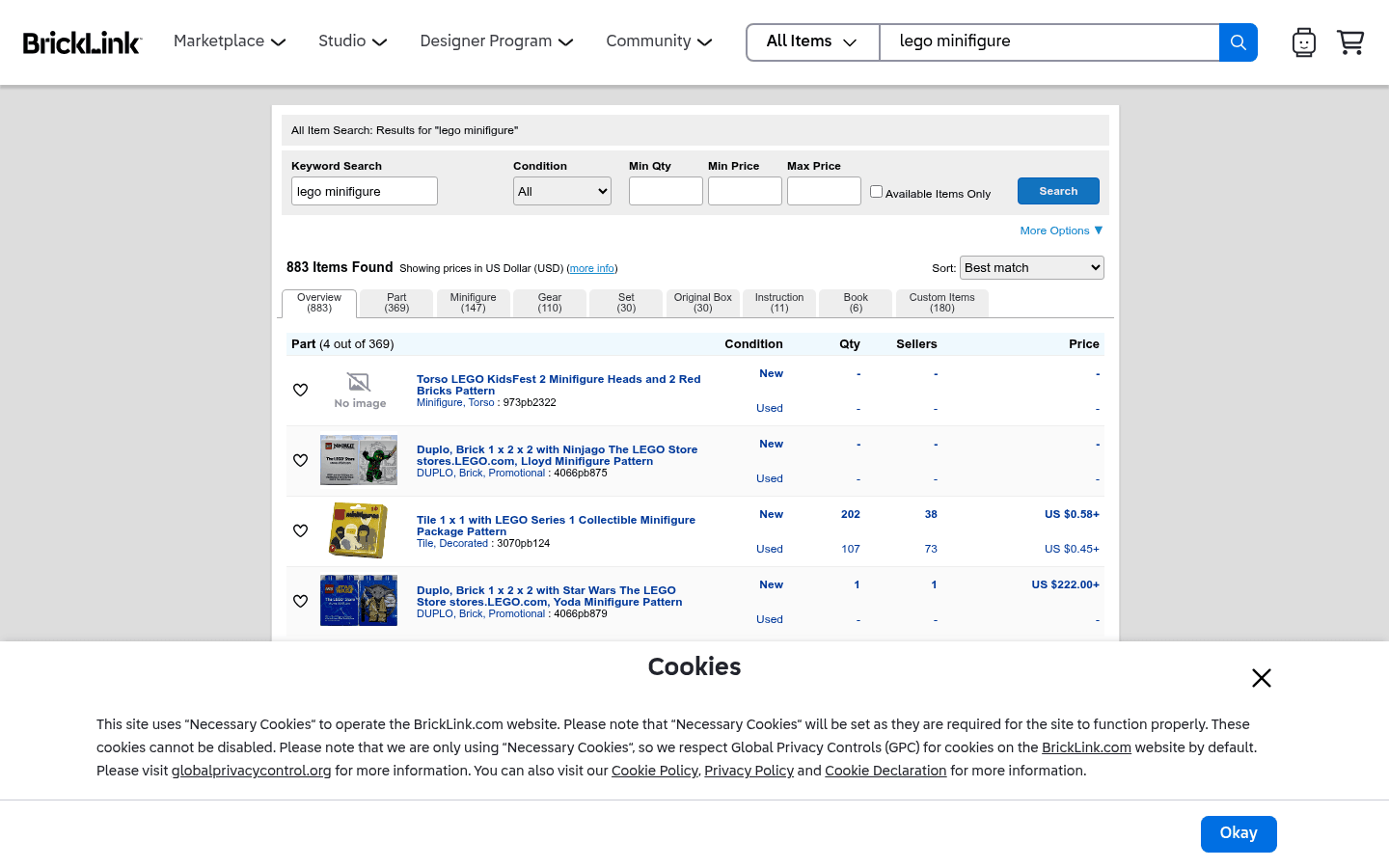
Before choosing where to sell, it helps to see the difference between a live-selling marketplace, a broad search marketplace, a LEGO-native catalog, and a social or local channel. These screenshots are visual references only. Platform interfaces, fees, and rules can change.
CTA(Identify%20and%20Price%20100%2B%20Figures%20With%20One%20Pic).png)
