


Fixed price usually nets more for common LEGO minifigures, parts, and bulk lots, while a live auction format like Whatnot can net more for rare, hype driven pieces such as exclusive minifigures or retired sealed sets. In my experience the selling format matters less than matching the right item to the right crowd, and most resellers lose money by picking one method and sticking with it for everything they own.
I've sold on eBay, Whatnot, BrickLink, and Facebook Marketplace, and I've watched the same minifigure do very different things depending on how it was listed. A common sports or city minifigure barely moves at auction because nobody is excited enough to bid it up, but list it at a fair fixed price next to ten others and it sells fast. Flip that around for a rare Star Wars or Marvel figure and a Whatnot auction with an engaged crowd can push the price well past what a BrickLink buyer would ever pay.
- Fixed price wins for bulk lots, parts, and common minifigures where buyers want predictable pricing, not competition.
- Auctions win for rare, character driven pieces where a live crowd can bid past normal market value.
- Platform fees change the math. eBay's promoted listings can push total fees close to 25% of the sale, so a "higher" auction price does not always mean more profit.
- Whatnot often runs no seller fee days, which can flip the math back in favor of auctions for the right item.
- The smartest resellers I know run both formats at once, sorting inventory by what it actually is before deciding how to sell it.
What's the Real Difference Between Auction and Fixed Price LEGO Listings?
A fixed price listing sets one number and waits for a buyer to accept it, while an auction lets buyers compete against each other until time runs out or a live host closes the bid. That difference sounds small, but it changes everything about how a LEGO item performs, because auctions depend on demand showing up at the same moment and fixed price listings just need one motivated buyer to find you.
On BrickLink and most of eBay, "fixed price" is the default. You set a price based on sold comps, and the listing sits there until someone buys it or you adjust it. Whatnot flips that model into a live show format, where a host presents an item on camera and buyers bid in real time, often with a countdown clock and social pressure from other bidders watching the same stream. eBay also supports true auction style listings, though fixed price has become far more common there over the last decade because sellers want predictable outcomes.
Does LEGO Actually Sell for More at Auction?
Sometimes, but only when the item has real hype and the auction has an engaged crowd watching it live. A rare minifigure or a retired sealed set can sell well above typical market value on Whatnot when a few bidders get competitive, but a common item in the same auction often sells for less than it would at a fair fixed price because nobody feels urgency to bid it up.
I've seen this play out on my own Whatnot shows more times than I can count. My first show only had about 10 people watching, and it still did over $500 in sales, which felt like a huge win at the time. What made that work wasn't the format itself, it was that the handful of people watching actually wanted what I was selling. Five months later I'd built that up to 3,000+ followers and $30,000+ in total sales, and the auctions that performed best were almost always the rarer, more character driven pieces, not the bulk city minifigures I was clearing out.
BrickEconomy tracks long term appreciation data on sets and can be a useful sanity check before you decide whether an item is auction worthy or better suited to a quiet fixed price listing.
When Does Fixed Price Selling Net You More on eBay and BrickLink?
Fixed price nets more when the item is common enough that buyers are comparison shopping, because a clear, fair price gets picked over a listing that requires them to wait and bid. BrickLink in particular is built around this behavior. Buyers there are typically pricing against sold history, not emotion, so a fair fixed price close to market usually outsells an auction format that most BrickLink users don't even expect to see.
eBay is where I've made the bulk of my money reselling LEGO, over $100,000 worth at this point, and almost all of it has been fixed price. From what I've learned, if you list a common item at 30% to 50% below recent sold comps, it's close to a sure thing to sell within 24 to 48 hours. eBay buyers love a steal, and fixed price lets you set that steal price directly instead of hoping bidders show up to create one. The catch is fees. Once you add promoted listings to get enough eyeballs on a listing, your total take rate on eBay can creep close to 25% of the sale, so I always factor that in before I decide a price is actually worth it.
Heads up: This is not financial or legal advice. We're sharing what we've learned from the LEGO reselling community.
How Do Fees Change the Auction vs Fixed Price Math?
Fees can turn a "winning" auction price into a worse outcome than a plain fixed price sale, so you have to compare net proceeds, not the headline number. A $50 auction sale with heavy platform and promotion fees can net less than a $40 fixed price sale with none, and I recommend running that math before assuming the higher sale price automatically wins.
| Factor | Auction (Whatnot / eBay auction) | Fixed Price (eBay / BrickLink) |
|---|---|---|
| Best for | Rare, hype driven, character pieces | Common minifigures, parts, bulk lots |
| Price ceiling | Can exceed market value with an engaged crowd | Capped near recent sold comps |
| Speed | Sells at show time or listing close, no earlier | Can sell any time, sometimes within 24 to 48 hours if priced right |
| Fee risk | Whatnot has run no seller fee days, but boosted promotion (around $20 per show) adds cost | eBay promoted listings can push total fees close to 25% of the sale |
| Predictability | Depends entirely on who shows up | High, based on sold comp pricing |
Which LEGO Items Are Worth Auctioning?
Auction formats work best on items with a story behind them, because bidders are competing on emotion as much as market value. Rare minifigures tied to a well known character, retired sealed sets with box art appeal, and anything with genuine scarcity tend to perform best when you put them in front of a live, engaged Whatnot crowd instead of a quiet fixed price listing.
Star Wars and Marvel minifigures are two of the strongest categories for this in my experience, because the demand is broad and the fandom is loyal. Ninjago also does well given the ongoing show keeps the character roster relevant. Before you commit an item to an auction slot, it's worth checking recent comps in the brick'em minifigure database so you're not guessing at whether the hype is real or just a hunch.
Which LEGO Items Should You List at a Fixed Price?
Fixed price wins for anything a buyer is likely to comparison shop, which in practice means common minifigures, individual parts, and bulk lots where the value is spread across a lot of smaller pieces rather than concentrated in one hero item. These are the items where a fair, honest price beats waiting for a bidding war that probably isn't coming.
City theme minifigures are a good example of where I steer people away from auctions entirely. City figures are highly illiquid and rarely sell for more than about $2 each, so there's no crowd to create a bidding war in the first place. Bulk lots are the same story on a bigger scale. When I sort a new lot, I run it through pricing first so I know what's actually worth listing individually versus grouping, and tools like the brick'em haul calculator make that math faster than doing it by hand.
What About Facebook Marketplace and Local Sales?
Facebook Marketplace is mostly a sourcing and negotiation channel rather than a true auction or fixed price sale, since almost every listing turns into an offer and counteroffer instead of a set price standing firm. It's a gold mine for buying inventory cheap from people clearing out old collections, and it comes with zero platform selling fees when you do sell there directly.
I always recommend meeting in a safe public location, like a police station parking lot, for any local LEGO deal. It's rare that anything goes wrong, but the LEGO resale business moves real cash and real inventory, and a little caution keeps the transaction smooth for both sides.
How Do You Decide Which Method to Use for a Given Item?
Decide by asking whether the item has enough built in hype to attract competitive bidders, or whether it's common enough that buyers just want a fair price without the wait. If you're unsure, price it out both ways using recent sold data before you commit to a format, because guessing usually costs you money either way.
- Check recent sold comps before choosing a format, not after.
- If the item is rare, character driven, or part of a hyped set, lean toward a Whatnot auction slot.
- If the item is common, a part, or part of a bulk lot, lean toward a fixed price listing on eBay or BrickLink.
- Factor in fees before comparing sale prices. A higher auction number isn't automatically the better net outcome.
- Run the numbers through a collection value calculator before you sort a large haul into auction versus fixed price piles.
- When in doubt, list a small batch at fixed price first. If it moves fast, you probably had a fixed price item all along.
If you want to try this workflow yourself, brick'em's free signup lets you pull real pricing comps and sort a haul into auction candidates and fixed price candidates in minutes instead of hours.
Frequently Asked Questions
Is Whatnot better than eBay for selling LEGO?
Neither is universally better. Whatnot tends to net more on rare, hype driven pieces with an engaged live audience, while eBay's fixed price format tends to net more on common minifigures and sets where buyers are comparison shopping sold comps instead of bidding emotionally.
Do LEGO auctions on Whatnot always sell above market value?
No. Auctions only sell above market value when there's real demand and an engaged crowd bidding at the same time. A common item in a quiet show can sell for less than a fair fixed price would have gotten on eBay or BrickLink the same day.
What LEGO items sell best at a fixed price?
Common minifigures, individual parts, and bulk lots tend to do best at fixed price, since buyers on platforms like BrickLink and eBay are usually pricing against recent sold comps rather than getting caught up in a bidding war over something ordinary.
How much do fees eat into an auction sale versus a fixed price sale?
It varies by platform. eBay's promoted listings can push total fees close to 25% of a sale, while Whatnot has offered no seller fee days that change the math in the seller's favor. Always compare net proceeds, not just the final sale price, before deciding which format actually paid more.
Should beginners start with auctions or fixed price listings?
Beginners often do well starting with fixed price listings on eBay or BrickLink since the pricing is more predictable and doesn't require an audience. Once you understand your inventory and, if you want to try live selling, a Whatnot auction can be a strong next step for the rarer pieces in a collection.
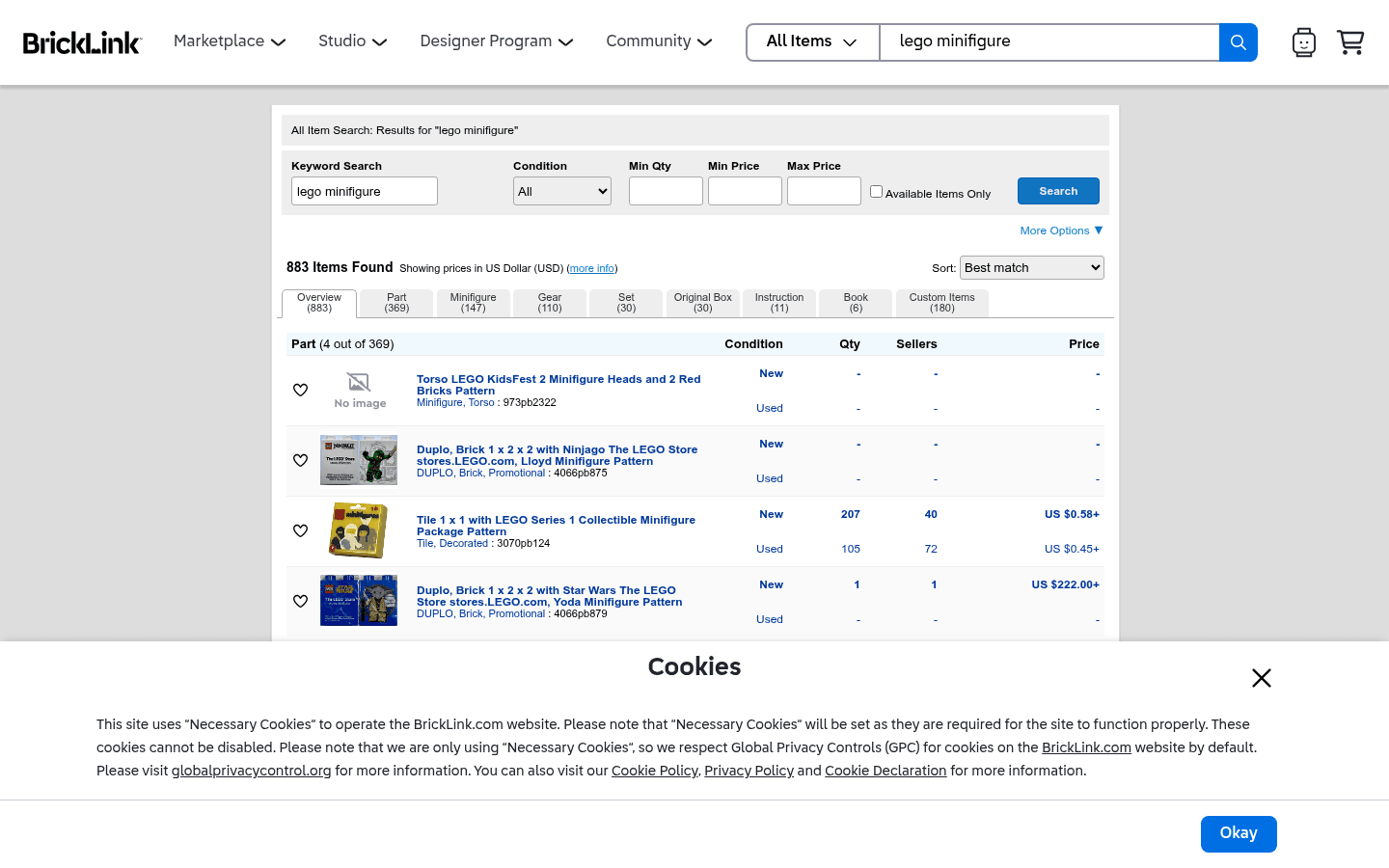
What Do These LEGO Selling Platforms Look Like?
Before choosing where to sell, it helps to see the difference between a live-selling marketplace, a broad search marketplace, a LEGO-native catalog, and a social or local channel. These screenshots are visual references only. Platform interfaces, fees, and rules can change.
.png)

