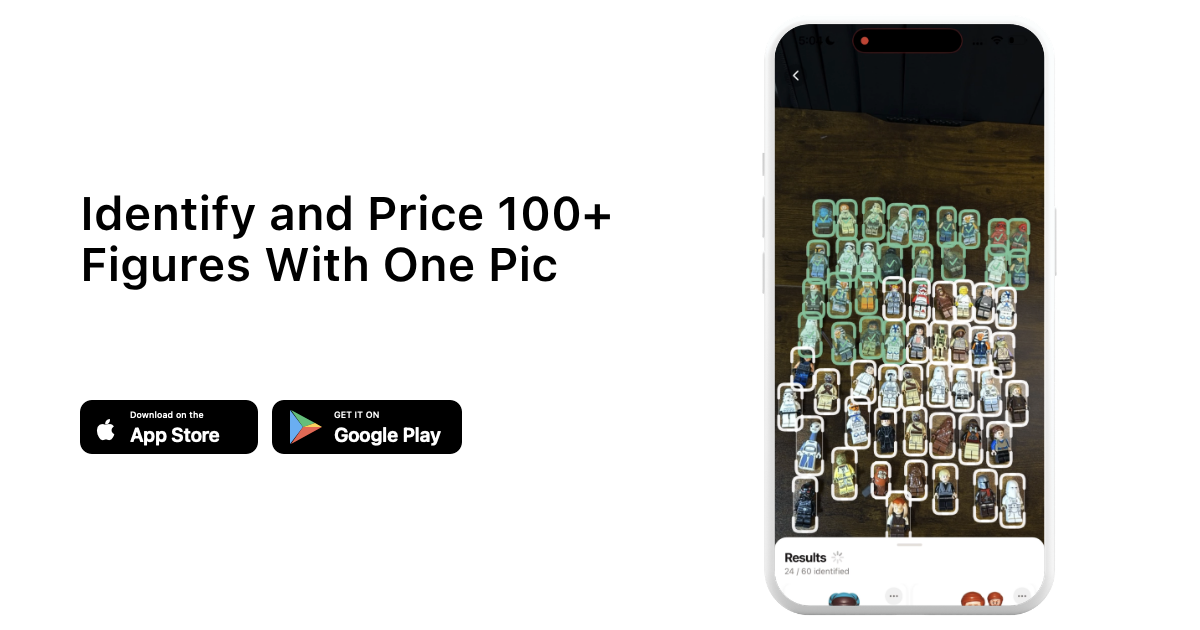


Most resellers I've talked to want a clean number: "tell me the exact minifigure count where buying software stops being a luxury and starts being math." In my experience there isn't one magic number, but there is a real pattern. Somewhere between 30 and 60 minifigures a month is where manual pricing and listing starts eating a full evening every week, and that's usually the point where a scanner or inventory tool pays for itself in time alone, before you even factor in pricing accuracy.
I'm not going to pretend every seller hits that threshold the same way. A part-out specialist moving bulk lots crosses it faster than someone casually flipping Facebook Marketplace finds on weekends. What stays consistent is the underlying cost you're comparing against: the hours spent manually identifying figures, cross-checking BrickLink prices, and writing listings one at a time. Once you add that up honestly, the payoff point gets a lot clearer.
- Most resellers I've seen break even on tool cost somewhere around 30 to 60 minifigures a month, depending on sourcing style.
- Manual pricing research is usually the biggest hidden time cost, not listing itself.
- Marketplace fee structures change the real math, not just raw sales volume.
- Bulk and incomplete lots tend to pay off faster because identification is the real bottleneck.
- If you're still unsure, run your own numbers with a tool like our haul calculator before committing to a subscription.
How Many Minifigures a Month Is the Real Tipping Point?
For most sellers, the tipping point lands between 30 and 60 minifigures a month, which is roughly 7 to 15 figures a week once you break it down. Below that volume, manual pricing and listing is annoying but tolerable. Above it, the hours start competing with sourcing time, and that's when a scanner or inventory tool stops being optional.
I started tracking my own time when I was still doing everything by hand, and the number that stuck with me was about two to three minutes per figure for identification and pricing alone, before I'd written a single word of a listing. At 10 figures that's barely half an hour. At 100 figures a month, which isn't unusual for someone running weekly bulk lots, that's four to five hours just on lookups. That's the math that convinced me tools earn their keep a lot sooner than most new sellers assume.
What Does Manual Pricing and Listing Actually Cost You in Time?
Manual pricing costs most sellers more time than listing does, because accurate pricing means checking sold comps across platforms, not just glancing at one number. In my experience, a careful seller checks BrickLink sold history, compares it against recent eBay sales, and sometimes peeks at BrickEconomy for longer term trend data before settling on a price. That's three lookups per figure if you're being thorough.
When I sort a fresh bulk lot, the figures I don't immediately recognize are the ones that eat the clock. A common Star Wars trooper I can price from memory in seconds. A figure I haven't seen before means a search, a comparison, and a judgment call on condition. Multiply that uncertainty across 50 or 100 unidentified pieces and you can see why resellers I know describe pricing, not listing, as the real bottleneck.
How Do Marketplace Fees Change the Math on Tools?
Marketplace fees matter because they shrink your margin before you even account for the time you spent sourcing and pricing, which makes getting the price right the first time more valuable, not less. On eBay, promoted listings can push your total take rate close to 25% of the sale once you need visibility on a crowded search page. That's a real number from my own selling, not a worst case estimate.
Whatnot works differently. I personally spend around $20 per show on boosted promotion near the start of a stream to help pull in viewers, and Whatnot has also run no-seller-fee days that change the calculus for a given week. BrickLink sits on the other end: cheaper selling fees make it the better home for low dollar individual pieces that wouldn't justify eBay shipping costs under $5. None of this is static, so verify current fee structures on each platform before you build a spreadsheet around them.
Heads up: This is not financial or legal advice. We're sharing what we've learned from the LEGO reselling community.
Is a Minifigure Scanner Worth It for Occasional Sellers?
For a seller moving fewer than 20 or 30 figures a month, a scanner is nice to have but rarely essential, because the manual time cost is still small enough to absorb on a weekend. Where it starts to matter even at low volume is accuracy on figures you don't personally recognize, since a wrong guess on value costs you more than the minutes you saved skipping a lookup.
I've seen plenty of casual sellers flip a Facebook Marketplace lot a couple times a year and do fine without any software at all. If that's your pace, a free listing on our minifigure database to double check an unfamiliar piece before you price it is usually enough. The calculation changes fast once you go from "a few times a year" to "every week," which is the shift most occasional sellers underestimate.
What About Bulk Lots and Incomplete Sets?
Bulk lots and incomplete sets tend to cross the payoff threshold faster than clean individual figures, because identification, not pricing judgment, is the bottleneck, and that's exactly the kind of repetitive work tools are built to absorb. A mixed lot of 200 loose figures from a garage sale or a Facebook Marketplace clearout can take a full day to sort by hand, piece by piece, before you've priced a single thing.
Incomplete sets add another wrinkle. A lot of the used sets sellers want to offload aren't 100% complete, and figuring out exactly what's missing, then finding a BrickLink store that stocks those specific parts, is slow work manually. I'd recommend running a quick collection value estimate before you decide whether a big incomplete lot is worth the restoration time at all.
How Does Your Sales Channel Affect the Payoff Point?
Your sales channel shifts the payoff point because each platform rewards speed and volume differently, and a tool that saves you an hour a week is worth more on a channel where you're already moving fast. My first Whatnot show had about 10 people watching and did over $500 in sales, which felt like proof the model worked even at a tiny scale. Five months later I'd reached 3,000-plus followers and more than $30,000 in total sales, and at that pace, manual pricing between shows simply wasn't sustainable.
Instagram tells a different story. With around 700 followers, I once posted a story and sold $700 of LEGO to three different buyers in about 20 minutes, almost entirely on trust and direct messages. That kind of speed means your pricing needs to be ready before you post, not worked out while a buyer is waiting on a reply. If you're scaling toward regular shows or frequent posts, a tool that keeps pricing current in the background pays for itself faster than it would for someone listing occasionally on BrickLink.
What Mistakes Do New Resellers Make When Judging Tool Cost?
The biggest mistake I see new resellers make is comparing a subscription price against a single month of sales instead of against the hours they'd otherwise spend. A tool that costs real money looks expensive next to a slow month, but looks completely different once you factor in 10, 20, or 40 hours of manual lookups across a year of steady selling.
The second mistake is ignoring accuracy. From what I've learned buying and selling thousands of figures, a single missed rare minifigure, the kind that can be worth $2,000 to $3,000 despite being smaller than an index finger, costs you more than a year of any reasonable software subscription. I recommend treating pricing tools as insurance against that kind of miss, not just a convenience for busy sellers.
Checklist: Signs You've Crossed the Software Payoff Threshold
Here's a quick checklist I use, and that a lot of sellers I know use the same way, to judge whether tools are worth it yet.
| Signal | What it means |
|---|---|
| You're sorting 30+ figures a week | Manual identification is likely costing you multiple hours already |
| You've missed pricing on an unfamiliar figure before | Accuracy risk is outweighing the cost of a tool |
| You buy bulk lots regularly | Identification speed matters more than pricing nuance |
| You list on more than one platform | Keeping prices consistent manually gets harder fast |
| Sourcing time is shrinking because of pricing time | You're losing deal flow to admin work |
If you check three or more of those boxes, it's worth running your actual numbers through our investment calculator before your next big buy.
Frequently Asked Questions
How many LEGO minifigures do I need to sell before software is worth it?
Most sellers I've seen cross the payoff point somewhere between 30 and 60 figures a month, though bulk lot sellers often get there sooner. The real driver is hours spent on manual pricing, not a fixed number, so track your own time for a couple weeks before deciding.
Is a LEGO minifigure scanner worth it for a beginner?
For a true beginner selling occasionally, a scanner is helpful but not essential yet. It becomes worth it once you're buying lots regularly or worried about misidentifying a figure, since one missed rare piece can cost more than a year of subscription fees.
Do marketplace fees change when tools pay off?
Yes. Platforms like eBay with promoted listings can push your effective take rate close to 25%, which makes getting pricing right the first time more valuable. Lower fee platforms like BrickLink change the math in the other direction for small individual sales.
What costs more, manual pricing or manual listing?
In my experience, pricing research costs more time than listing itself, especially for figures you don't recognize right away. Checking sold comps across BrickLink, eBay, and BrickEconomy for an unfamiliar piece can take several minutes per item.
Should I use software even if I only sell a few times a year?
Probably not yet. If you're flipping a Facebook Marketplace lot once or twice a year, a free lookup through a minifigure database to confirm value is usually enough. The calculation shifts quickly once you move to weekly selling.