

If you've inherited a LEGO collection, the fastest way to sell it fairly is to stop before you touch anything and sort it into four piles first: minifigures, sealed sets, loose parts and bulk, and instructions or boxes. From what I've seen, that one step matters more than anything else you'll do, because each pile sells through a different marketplace at a very different price, and mixing them together almost always means underselling the good stuff.
Losing someone and then staring at boxes of plastic bricks in a garage or closet is its own strange kind of grief. There's no rule that says you have to figure out pricing, platforms, and shipping in one weekend. In my experience, families who take it slow and treat the sorting like a small project, rather than a chore to clear out fast, end up with both more money and less stress.
Key takeaways:
- Sort before you price. Minifigures, sealed sets, loose parts, and instructions sell on different platforms for very different money.
- Minifigures are usually the most valuable part of an old collection, pound for pound.
- BrickLink is the most reliable source for checking current part and minifigure pricing.
- Selling everything as one lot is faster but almost always leaves money on the table compared to selling in smaller, sorted batches.
- A scanning or identification tool can save you days of manual work if the collection is large.
What Should You Do Before You Sell an Inherited LEGO Collection?
Before you sell anything, separate the collection into four piles: minifigures, sealed sets, loose parts and bulk, and instructions or boxes. This single step matters more than anything else you'll do, because each pile sells through a different marketplace at a different price, and mixing them together almost always means underselling the good stuff.
I recommend doing this sort in a room with a lot of floor space and good light, not the garage where the collection has probably been sitting. Minifigures get their own bin right away, even if you're not sure which ones are worth anything yet. Sealed sets go on a shelf untouched. Loose parts and partially built sets go into a third pile, and any instruction booklets, boxes, or catalogs go into a fourth. Once it's sorted, the collection stops feeling like one overwhelming mass and starts feeling like four manageable projects.
How Do You Know What an Inherited LEGO Collection Is Worth?
You find out what an inherited LEGO collection is worth by checking current sold listings on BrickLink and eBay for the specific sets and minifigures you have, not by guessing from memory or box art. BrickLink in particular functions as the pricing backbone of the whole secondary LEGO market, and a lot of sellers I know treat it as the closest thing LEGO has to a stock ticker.
From what I've learned doing this myself, the value in an old collection is rarely evenly spread. A bin of a few hundred minifigures might be worth more than ten sealed sets sitting next to it, simply because minifigures carry character and story value on top of plastic value. A single rare figure, something roughly two thirds the size of your index finger, can realistically be worth $2,000 to $3,000, though you should always confirm current sold prices before assuming any one figure is in that range. If you want a faster starting point than pricing every single figure by hand, brick'em's minifigure database and collection value calculator can give you a reasonable estimate before you commit to a platform.
Heads up: This is not financial or legal advice. We're sharing what we've learned from the LEGO reselling community.
Should You Sort Minifigures Separately From Everything Else?
Yes, minifigures should almost always be sorted and sold separately from sets and bulk parts. In my experience they are the most valuable category per pound in most inherited collections, since they're small, easy to store by the hundreds, and tied to characters people already care about, like a Star Wars or superhero figure instead of a generic gray brick.
I personally think minifigures are one of the best resale categories in all of LEGO, and estate and inherited collections are full of them because older sets from the 2000s and 2010s often included several each. Don't bag them in with loose parts just to get them out of the way. Even common figures add up fast when you're selling by the lot, and the rare ones can pay for the whole project on their own.
What's the Best Way to Identify Hundreds of Loose Minifigures?
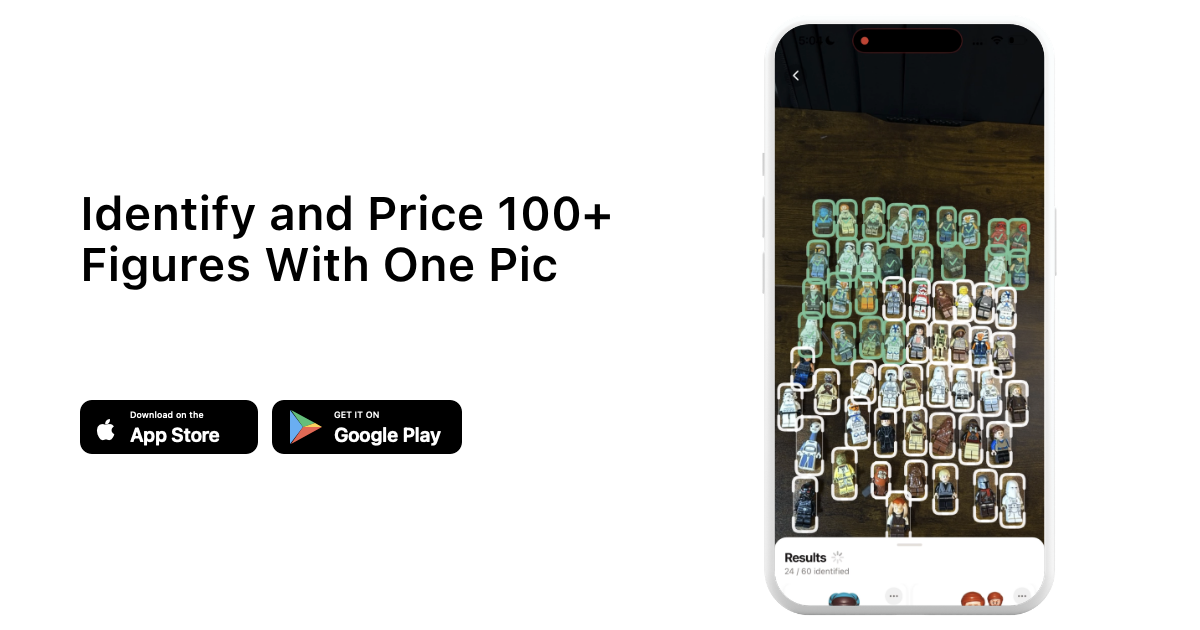
The fastest way to identify a large pile of loose minifigures is to use a scanning tool that can recognize figures from a photo instead of manually searching each one on BrickLink. I started doing LEGO resale by looking up figures one at a time, and it is genuinely one of the slowest, most tedious parts of this entire business when you have a big inherited lot.
If you're dealing with more than a couple dozen figures, this is where a bulk scanning app earns its keep. Instead of photographing and searching each figure individually, you lay them out, scan the group, and get identification and pricing back in one pass. It won't replace double checking a handful of the rarest-looking pieces by hand, but it turns a multi day sorting project into an afternoon.
Where Should You Sell an Inherited LEGO Collection?
Where you sell depends on what you have. BrickLink is best for individual parts and minifigures, eBay is best for sets and broad reach, Whatnot is best for live selling to an engaged LEGO audience, and Facebook Marketplace works well for bulky local lots you'd rather not ship. Most inherited collections end up spread across two or three of these rather than just one.
| Platform | Best for | What to know |
|---|---|---|
| BrickLink | Individual minifigures and parts | The most accurate source for current part and figure pricing, with lower fees than eBay |
| eBay | Sealed sets, bundles, broad buyer reach | Promoted listings can push your total take rate close to 25% of the sale, so price with that in mind |
| Whatnot | Live selling, bulk lots, minifigure mystery bags | Takes time to build an audience, but no-seller-fee days show up regularly |
| Facebook Marketplace | Large local lots, bulky sealed sets | No platform selling fee, but expect haggling and local pickup logistics |
| Mercari | Smaller sets and mixed lots | Simple to list, useful as a secondary channel alongside eBay |
I'm a BrickLink person at heart for pricing and for selling parts and figures, but I recommend eBay or Whatnot once you're ready to move sealed sets and bigger bundles. There's no rule that says you have to pick just one.
Should You Sell the Whole Collection at Once or Break It Up?
Selling an inherited LEGO collection as one single lot is faster but almost always nets you less money than breaking it into minifigures, sets, and parts and selling each group on the right platform. A single buyer offering to take everything off your hands is tempting, especially when you're grieving and just want it gone, but that convenience usually costs you a real discount.
A seller I know who buys full collections from families told me the going rate for an entire untouched lot is often around 30 to 50% of what the pieces would bring if sorted and sold individually. That's not a criticism of buyers who make that offer, sorting and relisting an entire estate takes real time and risk on their end too. It's just worth knowing that number exists before you accept the first offer, in case you have the time and energy to do some of that sorting yourself.
What Do You Do With Incomplete Sets or Missing Pieces?
An incomplete set is not worthless. You can either sell it as is at a discount, clearly labeled as incomplete, or source the missing pieces on BrickLink and complete it before selling for a lot more. I noticed a lot of families assume a set with a missing piece or two should just be thrown out, and that's almost always the wrong call.
If you decide to complete sets rather than sell them as is, you'll need to know exactly what's missing before you go shopping for parts. That's also true for incomplete or built minifigures where a torso, legs, or accessory went missing somewhere over the years. Matching what you have against what a set or figure should include is tedious to do from memory, so I'd lean on a proper minifigure database lookup rather than guessing from an old box photo.
How Do You Handle the Emotional Side of Selling a Family Member's Collection?
It's completely normal for selling a loved one's LEGO collection to feel heavier than selling almost anything else, and there's no deadline that says you have to be over that by a certain date. In my view, the practical and emotional sides of this process don't have to fight each other, you can set aside a handful of sentimental pieces, like a set your dad built with you as a kid, and still sell the rest responsibly.
I've talked to sellers who kept exactly one minifigure or one small set and sold everything else, and they were glad they didn't try to keep it all or sell it all. If you're not ready to touch any of it yet, that's fine too. The collection isn't going anywhere, and the pricing information on BrickLink and eBay will still be there whenever you are ready.
Checklist: Selling an Inherited LEGO Collection Step by Step
Here's the short version of everything above, in order, so you can come back to it whenever you're ready to work through the next step.
- Sort into four piles: minifigures, sealed sets, loose parts and bulk, instructions and boxes.
- Set aside anything genuinely sentimental before you price or list a single thing.
- Check current sold listings on BrickLink and eBay before pricing anything, don't guess from memory.
- Use a scanning tool if you have more than a couple dozen loose minifigures to identify.
- Decide per category where it sells best: BrickLink for parts and figures, eBay or Whatnot for sets and bundles, Facebook Marketplace for bulky local lots.
- Repair or complete incomplete sets and figures with BrickLink parts if it's worth your time, or disclose and discount if it's not.
- Get a second opinion on anything that looks unusually rare before you sell it cheap.
- Decide whether a quick whole-lot sale or a slower sorted sale fits your actual time and energy right now, both are valid choices.
If the collection is big enough that this checklist feels overwhelming on paper, our haul calculator can help you estimate what a bulk lot is worth before you commit to sorting the whole thing by hand, and our blog has more detailed guides on pricing specific categories like sealed sets and bulk minifigure lots.
Frequently Asked Questions
Is it worth sorting an inherited LEGO collection or should I just sell it all at once?
It's almost always worth sorting first. In my experience, minifigures and rare sets sold individually on the right platform bring noticeably more than the same items buried in one bulk lot, even accounting for the extra time sorting takes. If you're short on time or energy, selling as one lot is still a legitimate option, just expect a lower total.
How do I find out if an inherited minifigure is rare or valuable?
Check the figure against a minifigure database or BrickLink's catalog to identify exactly which figure it is, then look at current sold listings rather than active asking prices, since asking prices are often inflated. Character-driven figures from popular themes tend to hold value better than generic ones.
What's the fastest way to sell a large inherited LEGO collection?
Selling the whole thing as one lot to a single buyer, whether that's a local collector or a reseller who buys full collections, is the fastest route. It's quicker but typically nets less than sorting it into minifigures, sets, and parts and selling each category where it performs best.
Should I clean or repair pieces before selling an inherited collection?
Light cleaning is almost always worth it and takes little time. Full repairs or completing incomplete sets with purchased parts can meaningfully increase value, but only make sense if you have the time for it and you disclose clearly what's original versus replaced when you list it.
Is selling LEGO from an estate different from selling your own collection?
The selling process itself is the same, sort, identify, price, and list on the right platform. The main difference is pace and mindset. There's no rush, and it's completely fine to keep a few sentimental pieces aside while selling the rest.