Rare LEGO head prints are the small, overlooked detail that separates a two dollar minifigure from a hundred dollar one. The direct answer: a head print becomes rare when LEGO used a limited run, a double-sided mold, a promotional-only design, or a short production window, and most resellers miss these clues because they are focused on the body and accessories instead of the face underneath the hair piece.
If you buy and sell LEGO minifigures, learning to recognize rare lego head prints is one of the highest-leverage skills you can build. A bin of "junk" figures at a garage sale can hide a handful of heads worth real money, and you will never know unless you actually flip the hair off and look.
- Rare head prints usually come from double-sided molds, promotional sets, or short production runs.
- Expression, print quality, and mold type matter more than the minifigure's body or theme.
- BrickLink sold listings, not asking prices, are the only reliable way to check current value.
- Always flip the hair piece off before sorting a lot, since the real value is often hidden underneath.
What Makes a LEGO Head Print Rare?
A LEGO head print is considered rare when it was produced in a limited run, used a double-sided or dual-molded design, or only ever shipped inside a promotional set, convention exclusive, or short-lived theme. In my experience, the rarest heads almost always combine two of those factors at once, which is why they get overlooked by casual sellers who are only scanning for recognizable characters.
LEGO has been producing the modern minifigure since 1978, and over those decades the head mold itself has barely changed shape. What has changed constantly is the printing: new expressions, new face paint techniques, and limited promotional variants that never got a wide release. That long production history is exactly why so many valuable head prints hide in plain sight inside ordinary looking figures.
Double-Sided Heads: Why They Carry Extra Value
Double-sided heads carry extra value because they require a second printing pass on the back of the head, which costs more to produce and was historically used more sparingly than single-sided prints. A double-sided head lets a minifigure show two expressions, usually a calm face on one side and an angry, scared, or injured face on the other, by simply spinning the head around.
From what I've seen sorting bulk lots, resellers tend to treat every double-sided head the same, but that is a mistake. A common double-sided head from a mass-market theme might only be worth a few dollars more than a single-sided version, while a double-sided head tied to a short-lived promotional figure or an early thin-necked era minifigure can sell for dramatically more. I recommend checking the exact print combination, not just the fact that it spins, before you price anything.
Does LEGO Collectible Minifigures Change the Rarity Math?
Yes, Collectible Minifigures head prints behave differently than theme sets because the entire line is built around mystery and scarcity from the start. LEGO launched the Collectible Minifigures line in 2010, and each series ships in sealed foil bags specifically so buyers cannot see the print inside before opening it.
In my experience, sealed CMF bags hold their value differently than opened ones because the mystery itself is worth something to collectors, separate from the head print quality inside. Once a bag is opened, the head print has to stand on its own merit: expression, mold type, and how limited that specific series run actually was. Newer CMF releases have started showing up with scannable codes that let buyers identify the contents without opening the bag, which is changing how quickly packaged figures move on the secondary market.
Which Head Prints Should Resellers Watch For?
Resellers should watch for promotional-only prints, convention exclusives, early thin-neck era heads, heads with printed scars or unique face damage, and any head that was only ever packaged with one specific limited set. These categories consistently outperform generic single-sided expressions because the supply is capped and will never be reprinted.
A seller I know specializes almost entirely in sorting old bulk lots for exactly this reason. He ignores the bodies completely and builds his inventory list from heads first, because a plain body with a rare head print is still a profitable flip, while a flashy body with a common head print rarely is. That ordering of priorities, head print first, is the single biggest mindset shift new resellers need to make.
How Can You Spot a Rare Head Print in a Bulk Lot?
You spot a rare head print in a bulk lot by physically removing every hair piece, hat, and helmet before you sort, checking both sides of every head for a second print, and comparing anything unfamiliar against a minifigure database instead of guessing from memory. Skipping this step is the single most common reason resellers underprice a lot.
I use a simple process when I sort a new lot, and it works whether you have ten figures or ten thousand:
| Step | What to check | Why it matters |
|---|---|---|
| 1 | Remove all hair, hats, and helmets | Rare prints are almost always hidden under headgear |
| 2 | Flip every head to check the back | Double-sided prints are easy to miss if you never rotate the head |
| 3 | Separate anything with unusual expressions or face paint | Unique expressions are more likely tied to limited runs |
| 4 | Cross-reference against a minifigure database | Confirms the exact print variant instead of a guess |
| 5 | Check recent sold listings, not asking prices | Asking prices are frequently inflated and unreliable |
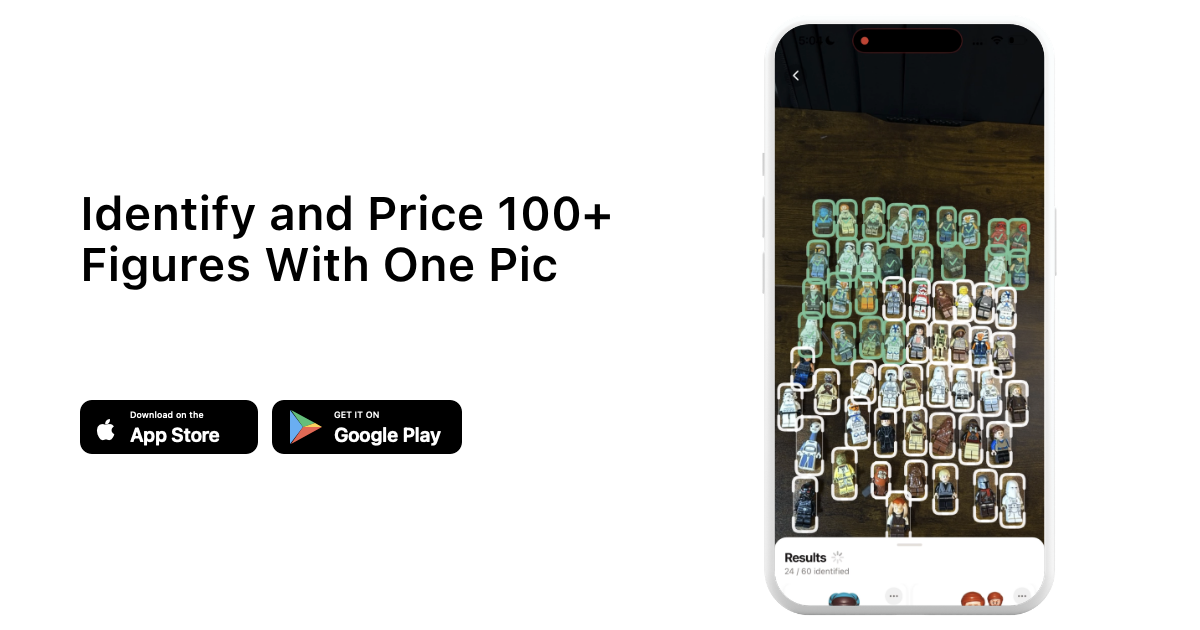
Tools like the brick'em minifigure database exist specifically for step four, since trying to identify hundreds of head print variants from memory is not realistic for most sellers, even experienced ones.
What Are Rare LEGO Head Prints Actually Worth?
Rare LEGO head prints are worth anywhere from a small premium of a few dollars over a common variant to several hundred dollars for genuinely scarce promotional or dual-molded prints, and the only honest way to know the real number is to check current sold listings rather than relying on a fixed price list. Condition, completeness of the matching body, and buyer demand all move that number constantly.
As a rough, hedged sense of range: common double-sided heads from mass-market themes often trade for small premiums in the $5 to $15 range above a single-sided equivalent, while genuinely scarce promotional or convention-exclusive head prints have been documented selling well into the $100 to $500+ range depending on demand at the time. Please verify current sold prices on BrickLink or eBay before pricing your own inventory, or run a lot through the LEGO collection value calculator to sanity check a bulk estimate, since LEGO resale values shift with trends and should never be treated as fixed.
Heads up: This is not financial or legal advice. We're sharing what we've learned from the LEGO reselling community.
Where Should You Sell Rare Head Prints?
You should sell rare head prints on BrickLink first, since it is the pricing backbone of the LEGO resale world and attracts buyers who specifically search for individual print variants, with eBay and Whatnot as strong secondary channels for broader exposure and live-selling energy. Each platform rewards a slightly different seller behavior.
In my view, BrickLink buyers already know what they are looking at, so accurate print descriptions matter more than photography. eBay buyers respond better to a strong headline and clear photos, and a lot of LEGO sells fast there once it is priced 30 to 50 percent under market, though promoted listings can push your effective take rate close to 25% of the sale. Whatnot works well if you can build an audience and talk through why a head print is rare on camera, since live buyers love a good story attached to an item. Facebook Marketplace and local LEGO events are worth checking too, especially for sourcing bulk lots cheaply before you ever get to the sorting stage.
Common Mistakes Resellers Make With Head Prints
The most common mistake resellers make is selling a minifigure as a complete bundle without ever separating and individually listing a rare head, which buries the most valuable part of the figure inside a listing nobody searching for that print will ever find. The second most common mistake is trusting asking prices instead of sold prices when setting your own listing.
I started my own reselling by making both of these mistakes repeatedly. I sold full figures as bundles for months before I noticed a pattern: certain heads kept selling fast no matter what body they were attached to. Once I started separating heads from bodies and listing standout prints individually, average revenue per lot went up noticeably, simply because buyers could finally find what they were actually searching for. A haul calculator can help you estimate whether a bulk lot is worth buying in the first place, before you ever get to the sorting and listing stage.
Frequently Asked Questions
What is the rarest type of LEGO head print?
The rarest types are typically promotional or convention-exclusive prints that were never sold at mass retail, combined with a double-sided or dual-molded design. These factors stack together, since a limited print run on a head that already required two printing passes creates a genuinely small supply that will not be reprinted.
Do all double-sided heads sell for more money?
No. A double-sided head only carries a strong premium when the specific print combination is itself scarce. Common double-sided prints from mass-market themes usually sell for only a small premium over single-sided versions, while scarce promotional combinations can sell for significantly more.
Where can I check what a specific LEGO head print is worth?
Check recent sold listings on BrickLink and eBay rather than relying on asking prices, and use a minifigure database to confirm the exact print variant first. Values shift over time with demand, so treat any number as a snapshot rather than a permanent price.
How do I start identifying rare heads in a bulk lot I just bought?
Remove every hair piece, hat, and helmet, flip each head to check the back for a second print, and separate anything unfamiliar for closer research before you list it. Starting a free account through brick'em gives you scanning and identification tools that speed this process up considerably for larger lots.
Is it worth buying damaged minifigures just for rare heads?
Often yes, since a damaged or incomplete body is frequently discounted heavily while the head print retains most of its value on its own. A seller I know builds a meaningful part of their inventory this way, buying rough bulk lots cheaply specifically to rescue valuable heads out of otherwise unsellable figures.