

Direct answer: bulk LEGO lot purchases are won or lost before you ever send a dollar figure. You need a rough sense of what the lot is worth, a read on why the seller wants it gone, and an opening number that leaves room to land somewhere between 30 and 50% below perceived market value for a mixed, unsorted lot. Sellers who skip the homework either overpay or lose the deal to someone who didn't.
I've bought enough bulk lots over the years to know the buyers who walk away happy are the ones who did their research before they ever messaged a stranger about a garage full of bins. In my experience, the negotiation itself matters less than the prep work behind it, because a seller can usually tell within one or two messages whether you actually know LEGO or whether you're just throwing out a lowball number and hoping it sticks.
Key takeaways:
- Research comparable lot and piece prices before you make any offer, not after
- Open below your real ceiling, but anchor the number to a reason the seller can understand
- Ask about completeness, smoke exposure, pets, and storage before you talk price
- Factor platform fees into your math, since eBay runs around 13.25% on most categories, BrickLink closer to 3% plus payment processing, and Mercari around 10%
- Be willing to walk away from lots priced far above market unless they hide genuinely rare minifigures or sealed sets
How Do You Know What a Bulk LEGO Lot Is Actually Worth?
You estimate a bulk lot's worth by weighing it, scanning a representative sample of minifigures and sets inside it, and checking those against current sold prices on BrickLink and recent completed listings on eBay, rather than asking prices, which run high. A rough per-pound or per-figure range is enough to negotiate from.
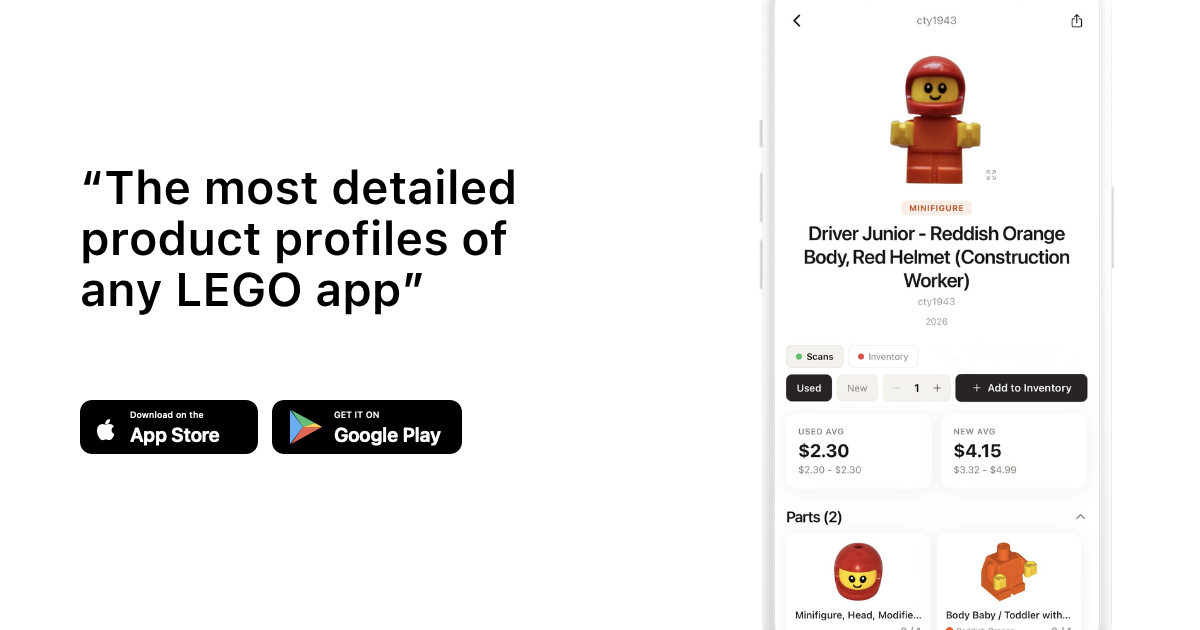
Most mixed lots are priced by buyers using a blended method: a rough weight-based floor for loose bricks, plus a premium for anything identifiable, like minifigures, instructions, or sealed polybags sitting in the bin. When I'm evaluating a lot from photos alone, I zoom in on every minifigure head and torso I can see, because that's usually where the real value is hiding. Running those figures through a tool like brick'em's minifigure database, which tracks pricing data on more than 18,686 individual minifigures, gives you a defensible number instead of a gut feeling, and it's the single biggest thing that separates confident offers from guesses.
What's the Right Opening Offer for a Bulk LEGO Lot?
A reasonable opening offer for an unsorted bulk lot is usually 30 to 50% of what you believe the contents are worth once sorted and listed individually, since you're absorbing all the sorting labor, platform fees, and risk that the seller isn't willing to do themselves. Adjust up or down based on condition and how motivated the seller seems.
That range isn't arbitrary. Larger resellers who acquire entire BrickLink stores from smaller sellers often pay somewhere in that same 30 to 50% band for the whole inventory, because buying in bulk means buying the slow-moving parts along with the good stuff. I use that same logic on a smaller scale with garage-sale and estate lots. In my experience, starting at the low end of that range and explaining why, dirty pieces, missing instructions, mixed sets, gives the seller a reason to negotiate with you instead of just saying no and moving on to the next offer.
Heads up: This is not financial or legal advice. We're sharing what we've learned from the LEGO reselling community.
How Should You Talk to a Seller Before You Even Mention Price?
Before price comes up, ask about completeness, storage conditions, smoke or pet exposure, and whether the lot includes boxes or instructions, because those answers change your real cost to resell it. Sellers who answer specific questions in detail are usually easier to negotiate with than ones who just say "lots of LEGO, make an offer."
I've found that a seller who takes the time to photograph individual minifigures or mention a few set names is usually more reasonable on price too, because they already know roughly what they have. A seller I know who flips estate lots for a living always asks for a video walkthrough before naming a number, specifically to catch water damage or missing pieces that photos hide. That single question has saved both of us from bad deals more than once.
What Red Flags Mean You Should Negotiate Harder, or Walk Away?
Red flags that justify a harder negotiation, or walking away entirely, include visible mold or water damage, a strong smoke smell, missing instructions on sets the seller claims are complete, and asking prices clearly copied from retail rather than from actual sold comps. Any one of these should lower your offer or end the conversation.
Smoke damage in particular is a dealbreaker for a lot of resellers I know, because the smell rarely comes out and buyers notice it immediately on video calls or in person. Water damage is worse, since it can warp pieces and ruin printed parts permanently. If a seller gets defensive when you ask basic condition questions, that's usually a sign they already know something is wrong with the lot.
What Should a Pre-Offer Checklist Look Like?
A pre-offer checklist should cover condition, completeness, pricing comps, and logistics before you ever type a number, so you're negotiating from facts instead of guesses. Here's the version I actually run through before sending an offer on anything bigger than a single box.
| Check before offering | Why it matters |
|---|---|
| Weight or piece count estimate | Sets your rough price floor |
| Visible minifigures, heads, and torsos | Usually the highest-value items in a mixed lot |
| Smoke, pet, or water exposure | Can tank resale value or kill the deal entirely |
| Instructions, boxes, or polybags included | Adds resale value beyond loose piece price |
| Seller's motivation (moving, decluttering, estate) | Motivated sellers negotiate more on price |
| Recent sold comps on BrickLink or eBay | Keeps your offer grounded in real market data |
Running a lot through brick'em's collection value calculator before you negotiate turns this checklist into an actual number, which makes the whole conversation with the seller faster and less emotional on both sides.
How Do You Handle a Seller Who Won't Budge on Price?
When a seller won't move on price, try offering a faster, simpler transaction instead of a lower number, cash in hand, same-day pickup, or taking the entire lot instead of cherry-picking, since speed and convenience are often worth more to a motivated seller than an extra fifty dollars. If that doesn't work, be ready to walk.
In my experience, a lot of sellers care more about getting the stuff out of their house this weekend than squeezing out the last bit of value. I've closed deals by simply saying I could pick everything up same day with cash, which beat out other buyers who offered slightly more money but wanted to "think about it" or come back next week. Patience and a flexible pickup window are negotiating tools just as much as price is.
How Do Bulk Lots Compare to Buying Individual Sets or Minifigures?
Bulk lots generally offer a lower per-item cost but require more sorting labor and carry more unknowns than buying individual sets or minifigures directly. Buying individual, verified items is more predictable but rarely as profitable per dollar spent, since sellers price those more carefully and platform fees eat into both approaches regardless of where you sell.
I started my own reselling path mixing both approaches, picking up bulk lots from Facebook Marketplace and estate sales while also buying specific minifigures I knew were undervalued on BrickLink. From what I've seen, bulk lots are where the biggest wins happen, but also where the biggest time sinks and occasional losses happen too. If you're newer to reselling, mixing a few smaller, lower-risk bulk lots with some individual purchases is a reasonable way to learn pricing without betting everything on one big gamble.
What About Estate Sales and Larger Collections?
Estate sales and larger inherited collections often include decades of accumulated sets, loose parts, and minifigures that the family has no idea how to value, which means there's usually more room to negotiate than with an experienced seller who already knows BrickLink pricing. Treat these conversations with extra patience and respect.
These situations often involve someone selling a parent's or relative's collection, and the emotional weight of that is real. I always try to be straightforward about how I'm arriving at a number, walking them through roughly what's sellable and what isn't, rather than just naming a low figure and hoping they accept it. It tends to build enough trust that they'll come back to you first if more boxes turn up later.
How Do You Protect Your Margin After You Win the Negotiation?
After you win the lot, protect your margin by sorting and pricing quickly, using accurate comps instead of guessing, and tracking your actual cost per item against what it sells for, so you know whether the deal was really as good as it felt in the moment. Factor in that eBay's roughly 13.25% fee, BrickLink's lighter 3% plus processing, or Mercari's near 10% cut will all shave a chunk off whatever price you eventually get.
I use brick'em's haul calculator on almost every bulk lot I bring home now, mainly because it's easy to overestimate a win based on the two or three cool minifigures sitting on top of the bin and ignore the three hours of sorting the rest of it took. If you want to track your deals more consistently, starting a 14-day free trial through brick'em's signup page gives you a running record of what you've bought, what it's worth, and what you've actually made, which matters more than any single negotiation once you're buying lots regularly.
Frequently Asked Questions
What's a fair starting offer for a bulk LEGO lot?
A fair starting offer is typically 30 to 50% of what you estimate the sorted contents are worth, adjusted for condition and completeness. Always verify your estimate against current sold listings rather than asking prices, and be ready to explain your reasoning if the seller pushes back on the number.
Should I negotiate in person or over text and messages?
Either works, but in-person or video negotiations tend to move faster because sellers find it harder to ignore specific questions when you're face to face. Text negotiations are convenient and give you time to research comps, but responses can stall for days if the seller isn't motivated to sell quickly.
Is it rude to lowball a LEGO seller?
Opening low isn't rude as long as you explain your reasoning, condition concerns, sorting labor, missing pieces, rather than just naming a number and going silent. Sellers generally respond better to a low offer with context than a low offer with no explanation at all, even if they ultimately counter higher.
How do I avoid overpaying for a lot that looks better than it is?
Ask detailed condition questions before price comes up, request close-up photos or video of minifigures and any smoke or water damage, and run a quick valuation through a tool before committing. A lot that looks impressive in a wide photo can fall apart once you see individual pieces up close.
What if the seller has no idea what their LEGO is worth?
Walk them through your reasoning honestly rather than taking advantage of the gap in knowledge, since a transparent explanation builds trust and often leads to repeat deals or referrals. Many of the best long-term sourcing relationships I've seen started with a buyer being upfront with a seller who simply didn't know the market.