LEGOLAND exclusive minifigures are the figures you can only get inside a LEGOLAND park, not at retail, not on LEGO.com, and not inside a standard Collectible Minifigures box. That scarcity is exactly why resellers ask about them. A figure that never touched a shelf at Target or Walmart has a built in supply cap, and supply caps are what drive aftermarket demand in this hobby.
I've been buying and selling LEGO minifigures long enough to know that "exclusive" gets thrown around loosely in this corner of the hobby, so this guide splits LEGOLAND figures into the categories that actually matter for resale: park exclusive retail figures, employee only figures, and anniversary or event figures. I'll also walk through where I'd actually try to sell them, because the right platform matters almost as much as the figure itself.
Key takeaways:
- LEGOLAND exclusive minifigures are only distributed at LEGOLAND parks or through employee channels, which keeps supply tighter than retail Collectible Minifigures.
- Not every LEGOLAND figure is actually rare. Park mascot figures sold in gift shops for years can be fairly common.
- Employee only and limited event figures tend to hold the most resale value, but exact prices swing a lot based on condition and completeness.
- BrickLink is usually the best place to check real sold prices before you buy or sell, and I lean on it over gut feeling every time.
What Actually Makes a Minifigure "LEGOLAND Exclusive"?
A minifigure counts as LEGOLAND exclusive when the only way to get it is inside a LEGOLAND park, either through a gift shop set sold nowhere else, a ride specific giveaway, or a staff only distribution. If you can buy the same figure on LEGO.com or in a standard retail set, it isn't really exclusive, even if LEGOLAND branding shows up on the box.
I split these into three buckets when I'm sorting a lot: park exclusive retail figures (sold in LEGOLAND gift shops, usually in small polybag sets), employee only figures (given to staff, never sold to the public), and anniversary or event figures (tied to a specific park birthday or ride opening). Each bucket behaves differently on the resale market, which is why lumping "all LEGOLAND figures" together as one category is a mistake I see a lot of newer sellers make.
Why Do Park Exclusive Figures Hold Value Better Than Retail CMFs?
Park exclusive figures tend to hold value because the only way to acquire them is physically visiting a LEGOLAND park, which caps supply far below a standard Collectible Minifigures series that LEGO prints and ships to thousands of stores worldwide. A figure that requires a plane ticket or a day pass to obtain will almost always be scarcer than one sitting on a Walmart shelf.
In my experience, standard retail CMF lines sell well specifically because of the mystery bag format, people like not knowing which figure they'll pull. Park exclusives work on a different mechanism entirely: there's no mystery, you know exactly what you're buying, but the geographic and logistical barrier to entry does the scarcity work instead. That's a meaningfully different value driver, and it means a LEGOLAND figure with a low print run but easy in person access can still behave like a mid tier item rather than a true grail.
How Many LEGOLAND Parks Actually Produce Their Own Exclusive Figures?
There are more than ten LEGOLAND parks worldwide at this point, and most of them have released at least some park specific minifigures or polybags over the years, usually tied to a mascot character, a regional theme, or a park anniversary. The original Legoland opened in Billund, Denmark back in 1968, and the park network has grown steadily since the first US location opened in Carlsbad, California in 1999.
Here's a rough sense of the park footprint sellers are usually dealing with when LEGOLAND exclusive figures come up:
| Park | Region | Approximate Opening Era |
|---|---|---|
| Legoland Billund | Denmark | 1968 |
| Legoland Windsor | United Kingdom | Mid 1990s |
| Legoland California | United States | 1999 |
| Legoland Deutschland | Germany | Early 2000s |
| Legoland Malaysia | Malaysia | Early 2010s |
| Legoland Florida | United States | 2011 |
| Legoland Japan | Japan | Mid 2010s |
| Legoland Dubai | United Arab Emirates | Mid 2010s |
| Legoland New York | United States | 2021 |
| Legoland Korea | South Korea | Early 2020s |
Treat the "era" column as a starting point, not a catalog fact. Exact opening dates, park closures, and which specific exclusive figures each park released in a given year are details I'd always double check against current park and marketplace listings before pricing anything.
Are Employee Only LEGOLAND Minifigures Worth More Than Retail Exclusives?
Employee only LEGOLAND minifigures are generally worth more than retail park exclusives because they were never sold to the public at all, which means the only supply in circulation came from staff who kept, traded, or eventually sold their figures. That's a much smaller pool than a gift shop item that sold for a few years.
I've seen this pattern across the hobby in general: anything distributed through an internal or staff channel tends to command a premium once it surfaces, because buyers know there's effectively no restock possible. The catch is authentication. There's no official database listing every employee exclusive ever made, so a seller I know who deals in staff exclusives always asks for provenance, a photo of the original lanyard, a staff badge, anything that supports the story, before paying a premium.
How Do LEGOLAND Family and VIP Figures Fit Into the Market?
Family and VIP tier figures sit in the middle of the value range because they're usually sold to annual pass holders or higher tier ticket buyers rather than given away for free, but they're still more available than a true staff only figure. They show up on the secondary market more often than employee figures, just less often than standard gift shop polybags.
From what I've noticed buying LEGO lots over the years, these mid tier exclusives are some of the easiest to misprice. Sellers either assume "VIP" means ultra rare and overprice it, or they assume it's just a gift shop item and underprice it. Checking recent sold listings before you set a number saves you from both mistakes.
Where Should You Sell LEGOLAND Exclusive Minifigures?
I'd sell LEGOLAND exclusive figures on whichever platform matches the figure's rarity tier: BrickLink for accurate pricing and patient collector buyers, eBay for broad reach and faster sales, and Whatnot if you have a few of these figures as part of a bigger live show rather than a one off listing. Facebook Marketplace works better for sourcing LEGOLAND lots locally than for selling individual exclusives.
Fees are part of that decision too. eBay's standard take rate runs around 13.25% before any promoted listing boost pushes it higher, BrickLink's seller fees are much lighter, usually in the range of 3% plus PayPal processing, and Mercari sits around 10%. That gap matters more on lower priced park exclusives than on a single grail figure.
BrickLink is the one I check first no matter what, because it's effectively the pricing backbone for this entire category. It's where collectors and part out sellers actually look up what something is worth, so even if I end up listing elsewhere, I'm pricing off BrickLink data. eBay is where I'd expect the fastest sale for a well known LEGOLAND exclusive, especially if I price it a bit under recent sold comps, buyers on eBay respond fast to a good deal in a niche with strong demand like LEGO. Whatnot can work well too, but it really shines when you're running a themed park exclusives show rather than trying to move a single figure, since the live audience engagement is what drives the extra value on that platform. I personally wouldn't lean on Facebook Marketplace to sell a genuinely rare LEGOLAND figure since the buyer pool there skews local and casual, but it's a solid place to find sellers unloading an old LEGOLAND trip haul who don't know what they have.
If you're trying to figure out what a whole box of park figures is actually worth before you decide where to list them, running the lot through our minifigure database first will save you a lot of guessing.
How Can You Tell If a LEGOLAND Figure You Found Is Actually Rare?
You can usually tell a LEGOLAND figure is genuinely rare by checking whether it was sold at retail at all, how long it was available, and whether current sold listings on BrickLink or eBay show consistent demand rather than a single lucky auction. A handful of recent comparable sales tells you far more than one outlier listing.
Here's the checklist I actually run through when I'm sorting a box that might have LEGOLAND exclusives mixed in:
- Was this figure ever sold through LEGO.com or a standard retail set? If yes, it's not a true LEGOLAND exclusive, even with park branding.
- Does the figure or its packaging reference a specific park, mascot, or anniversary year?
- Are there multiple recent sold listings on BrickLink or eBay, not just one asking price that never sold?
- Is the figure complete, with the correct accessories, legs, and printed torso for that exact version?
- Can you find any staff, employee, or VIP program context that would explain limited distribution?
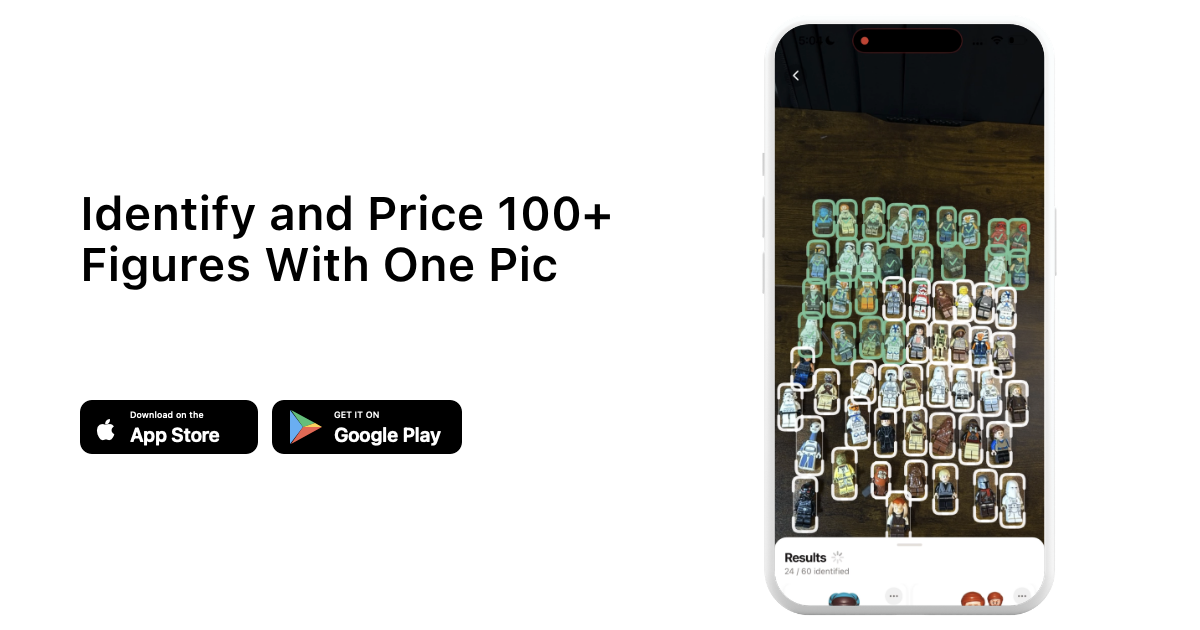
If a figure checks most of those boxes, it's worth researching further before you price it. If it fails most of them, it's probably a common park souvenir, still fun, just not a reseller priority. If you'd rather skip the manual lookups, you can sign up for brick'em and scan a whole box of park figures in one pass instead of checking each one by hand.
What Mistakes Do New Resellers Make With Park Exclusive Minifigures?
The biggest mistake new resellers make with LEGOLAND exclusives is pricing off a single high asking price they saw online instead of checking actual sold comps, which leads to listings that sit for months at a number nobody is willing to pay. The second most common mistake is assuming every figure with LEGOLAND packaging is automatically rare.
I started out making exactly this mistake on a few lots early on, holding out for a price that only ever existed in one seller's imagination. I learned pretty quickly that the sold price, not the listed price, is the only number that actually matters. The other pattern worth watching for is incomplete figures being sold as complete. A LEGOLAND exclusive missing its correct accessory or printed piece is worth a fraction of a complete one, so always check piece by piece before you buy or before you price something you already own.
Should You Buy LEGOLAND Exclusive Minifigures As an Investment?
Buying LEGOLAND exclusives purely as an investment is riskier than buying sealed sets or mainline Collectible Minifigures, mainly because the market for park specific figures is thinner and less documented, which makes pricing less predictable over time. Some will appreciate meaningfully. Others will stay flat for years.
In my view, LEGOLAND exclusives are a better fit for sellers who already enjoy the category and want to build a niche inventory than for someone purely chasing returns. A lot of sellers I know treat these more like a specialty lot: fun to source, satisfying to complete a set of, and a nice bonus if values climb, rather than a core investment strategy.
Heads up: This is not financial or legal advice. We're sharing what we've learned from the LEGO reselling community.
If you want a quicker gut check on whether a collection of park exclusives is worth holding or flipping now, our investment calculator and collection value calculator are built for exactly that kind of question.
Frequently Asked Questions
Are LEGOLAND exclusive minifigures worth more than regular Collectible Minifigures?
It depends on the specific figure. Employee only and genuinely limited event figures often outperform standard CMFs because supply is so much smaller, but many park gift shop figures sold for years and aren't particularly scarce. Always check recent sold listings before assuming LEGOLAND branding equals high value.
Where can I find out which minifigures were LEGOLAND exclusives?
There's no single official master list, which is part of why this category is tricky. Cross referencing BrickLink catalog entries, LEGO.com set history, and collector community posts is the most reliable approach, and running a figure through a minifigure database can speed up identification significantly.
Do LEGOLAND minifigures lose value over time?
Some do, especially common gift shop figures that were sold for several years without a hard cutoff. Genuinely limited figures tend to hold or gain value, but condition and completeness matter just as much as rarity when it comes to what a figure actually sells for.
Is BrickLink or eBay better for selling LEGOLAND exclusive figures?
BrickLink tends to attract patient collectors who already know what they're looking for and want accurate pricing, while eBay offers broader reach and often a faster sale, especially if you price close to recent sold comps. Many sellers I know use BrickLink for pricing research and list on whichever platform fits the figure's rarity and their timeline.
What should I do if I think I found a rare LEGOLAND minifigure in an old lot?
Check it against retail history first to confirm it was never sold outside LEGOLAND, verify it's complete with the correct accessories, then compare it against multiple recent sold listings rather than one asking price. If it checks out, it's worth listing on a platform that reaches serious collectors instead of a general local marketplace.