


LEGO seller discounts work when they move real inventory without teaching your regular buyers to sit on their wallets until the next markdown. In my experience running a LEGO resale business, the sellers who get hurt by discounting aren't the ones who cut prices, they're the ones who cut prices on a predictable schedule with no reason attached. A discount tied to a bulk lot, a slow shelf-sitter, or a genuine seasonal push behaves completely differently than a recurring "20% off everything" habit that trains your audience to wait you out.
This guide breaks down when a LEGO sale actually helps you, when it quietly trains buyers to stall, and how to time markdowns so you protect margin on your best minifigures and sets while still clearing the stuff that's just taking up shelf space. I'm pulling from what I've seen selling across eBay, Whatnot, BrickLink, and Facebook Marketplace, plus patterns a lot of sellers I know run into once their store starts scaling past a hobby.
- Blanket, recurring discounts train buyers to wait; targeted discounts on specific inventory don't.
- Platform fees change your real discount math, especially once promoted listings enter the picture.
- Bundling and bulk pricing usually protect margin better than a flat percentage off.
- Your rarest minifigures and sealed sets should almost never be the thing you discount.
- A simple discount timing checklist keeps you from turning a clearance into a habit.
Why Do LEGO Buyers Learn to Wait for a Sale?
Buyers learn to wait when a discount becomes predictable instead of situational. If your store runs the same "10% off" promotion every few weeks, regular buyers notice the rhythm fast and simply hold their carts until it repeats, which quietly resets your actual selling price lower without you ever deciding to lower it.
I noticed this pattern early on. When I sell the same theme or category on a loop, like recurring Star Wars minifigure restocks, a predictable discount cadence trains the most active buyers in that niche to stop paying full price at all. They aren't being difficult, they're just responding rationally to a pattern you created. The fix isn't to stop discounting, it's to make discounts feel tied to a specific, non-repeating reason: a bulk lot you need gone, a set that's been sitting for 90 days, or an end-of-season push.
What Actually Counts as a LEGO Seller Discount?
A real discount is any price cut a buyer can identify as temporary and reason-based, not every price you set below sticker. Pricing a common minifigure at fair market value isn't a discount, it's just accurate pricing, and confusing the two is where a lot of new sellers lose margin they didn't need to give up.
In my view, there's a meaningful difference between three things sellers often lump together: everyday pricing (set at or near current market value), promotional discounting (a temporary cut tied to a clear reason), and desperation pricing (cutting because inventory has sat too long and it's starting to feel like dead weight). Only the middle one is a real "discount" in the strategic sense. The other two are just pricing decisions that happen to look similar on the surface.
How Often Should You Discount LEGO Inventory?
Discount timing for LEGO inventory should follow the item's actual sitting time, not a calendar. A reasonable rule I use is that fast-moving minifigures and popular sets get zero discount pressure inside the first 30 to 45 days, and only earn a markdown if they're genuinely stale after that window.
From what I've seen, sellers who discount on a fixed schedule (every Friday, every end of month) train buyers faster than sellers who discount reactively based on sitting time. A reactive approach means your buyers can't predict when the next sale is coming because it's tied to your inventory, not your calendar. That unpredictability is what keeps full-price sales healthy while still letting you clear genuinely slow stock.
Which LEGO Items Should You Almost Never Discount?
Rare minifigures, limited collectible minifigure series, and sealed sets in high demand should almost never carry a blanket discount because cutting price on scarce items signals the opposite of what you want buyers to believe. I've seen rare figures worth $2,000 to $3,000 in the right condition, and discounting anything in that tier undercuts the scarcity story that makes it valuable in the first place.
My experience is that discounting works best on the middle of your inventory, the common minifigures, the sets that are fine but not exciting, and the bulk lots you bought to part out. Your scarcest items should move through better merchandising, better photos, and accurate BrickLink-informed pricing, not a markdown.
How Do Platform Fees Change Your Discount Math?
Heads up: This is not financial or legal advice. We're sharing what we've learned from the LEGO reselling community.
Platform fees eat into a discount before the buyer even sees it, so the same 15% price cut can mean very different real margin depending on where you're selling. On eBay, promoted listings can push your effective take rate close to 25% of the sale once you add standard fees on top, which changes whether a discount is actually profitable or just a nice gesture.
BrickLink tends to run cheaper selling fees than eBay, which is part of why it works as the pricing backbone of the LEGO resale world, some sellers I know call it the Wall Street of LEGO because of how consistently items price against real sold data there. Whatnot fee structures shift too, and I've noticed some no-seller-fee days pop up on the platform, which is a good window to run a live discount without losing margin to platform costs on top of the price cut. Always check current fee schedules before you plan a discount around them, since platforms change these terms over time.
| Platform | Fee Behavior | Best Use for Discounts |
|---|---|---|
| eBay | Fees can approach 25% with promoted listings | Steep, time-boxed discounts on common items that need visibility |
| BrickLink | Lower fees, market-standard pricing data | Small, precise discounts on parts and common minifigures |
| Whatnot | Occasional no-seller-fee days | Live-show discounts timed to fee-free windows |
| Facebook Marketplace | No platform selling fees | Local bulk lot and bundle discounts |
Do Bundles Work Better Than Straight Discounts?
Bundling almost always protects margin better than a flat percentage discount because you're adding perceived value instead of just subtracting price. A buyer who gets three common minifigures for the price of two feels like they won something, while a buyer who just sees 20% off everything starts anchoring to that lower number as your real price.
I recommend bundling as the default move for clearing bulk lots and slow-moving common inventory. When I sort through a bulk lot, the pieces that aren't individually exciting almost always sell better grouped into a themed bundle, Star Wars troopers together, a handful of City minifigures as a set, than they do sitting individually with a discount tag on each one. Bundling also avoids resetting the individual market price that buyers will remember the next time you list something similar.
How Do You Signal Scarcity Instead of Just Cutting Price?
Scarcity signals like limited quantity language, accurate condition notes, and confident pricing against real BrickLink sold data do more for a stuck listing than a price cut usually does. Buyers respond to the feeling that an item won't be there tomorrow, and a markdown can actually undercut that feeling if it looks like the item is struggling to sell.
A seller I know rebuilds his slow listings with better photos and updated comps before ever touching the price, and it works more often than people expect. Checking your item against a proper LEGO minifigure database and current market pricing before you discount tells you whether the problem is really price, or whether it's presentation, timing, or just needing to reach a different audience, like moving a listing from BrickLink to a Whatnot show.
When Does a Discount Actually Hurt You?
A discount hurts you when it becomes the buyer's expectation rather than an exception, which usually happens after the third or fourth time you run the same type of sale on the same category of item. At that point you haven't run a promotion, you've quietly repriced your entire catalog downward and trained your best customers to notice.
I learned this the expensive way early on, running recurring discounts on popular themes because it felt like it drove short-term sales volume. It did, but it also meant buyers stopped paying my listed price at all for that category, and I had to rebuild pricing trust slowly by pulling back on frequency and tying every future discount to a specific, visible reason.
A Simple LEGO Discount Timing Checklist
Before running any LEGO seller discount, it helps to run through a short checklist so the markdown stays a strategic tool instead of becoming a habit your buyers start expecting.
- Has this specific item sat unsold for 30 to 45 days or longer?
- Is the discount tied to a clear, visible reason (bulk lot, bundle, season, inventory clearance)?
- Have you checked current BrickLink sold comps before assuming price is the problem?
- Are your rarest minifigures and sealed sets excluded from the discount?
- Have you priced in platform fees so the discount is still profitable after they're applied?
- Is this a one-time or occasional event rather than a recurring weekly or monthly pattern?
If you're managing enough inventory that tracking sitting time and comps by hand is getting hard, that's usually the point where sellers start using tools built for it, whether that's a proper collection value calculator to see which items are actually underperforming, or a full minifigure database to check comps before deciding a price cut is even necessary. For bulk lots specifically, running the numbers through a haul calculator before you price a bundle keeps the bundle profitable instead of a guess.
Frequently Asked Questions
Do LEGO discounts always train buyers to wait for sales?
Not always. Recurring, predictable discounts on the same category train buyers to wait, but targeted discounts tied to a specific reason, like a bulk lot or genuinely stale inventory, don't create the same pattern. The difference is predictability, not the discount itself.
How much should I discount LEGO minifigures or sets?
It depends on the platform fees involved and how long the item has sat unsold. A modest 10 to 15% cut on common inventory after 30 to 45 days is a reasonable starting point, but rare minifigures and sealed sets should rarely be discounted at all since scarcity is part of their value.
Is bundling better than discounting individual LEGO items?
In most cases, yes. Bundling adds perceived value without resetting the market's memory of your individual item pricing, while a flat discount can anchor buyers to a lower price going forward. Bundling works especially well for bulk lots and common minifigures.
Which LEGO platform is best for running a discount?
It depends on your fee structure and audience. BrickLink works well for small, precise discounts on parts and common figures because fees are lower, while Whatnot can work well during no-seller-fee windows, and Facebook Marketplace has no platform fees at all for local bundle deals.
Should I ever discount rare LEGO minifigures?
Generally no. Rare and limited minifigures carry value partly because of scarcity, and discounting them undercuts that signal to buyers. It's usually better to hold firm on price, improve photos and condition notes, and confirm pricing against current BrickLink sold data instead of cutting the price.
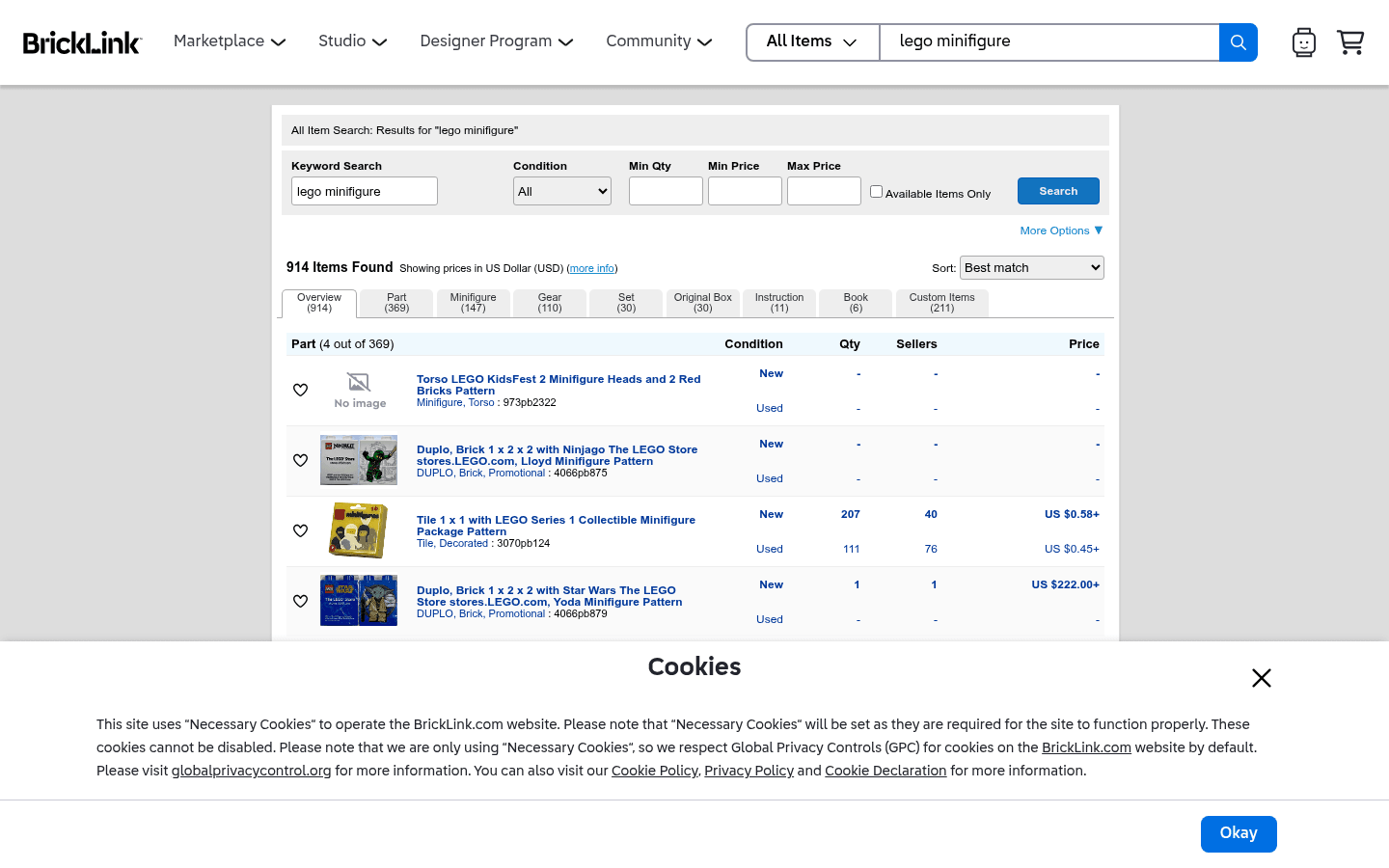
What Do These LEGO Selling Platforms Look Like?
Before choosing where to sell, it helps to see the difference between a live-selling marketplace, a broad search marketplace, a LEGO-native catalog, and a social or local channel. These screenshots are visual references only. Platform interfaces, fees, and rules can change.
.png)

