

A fair LEGO minifigure trade is one where both people walk away feeling like they actually got value, not just "even pieces." That means matching current market value instead of retail price or nostalgia, checking condition and completeness honestly, and being upfront about any repairs or swapped parts before anyone agrees to anything.
I've traded and resold LEGO minifigures for years, and in my experience almost every trade that goes bad comes down to one person not checking real value before saying yes. The good news is that figuring out fair value today takes a few minutes, not guesswork, once you know where to look and what to ask.
- Check recent sold prices on BrickLink or eBay before agreeing to any trade, never retail price
- Always ask about condition: missing accessories, cracked parts, and sticker wear all change value
- Licensed, retired figures (Star Wars, Marvel) usually hold value better than generic City figures
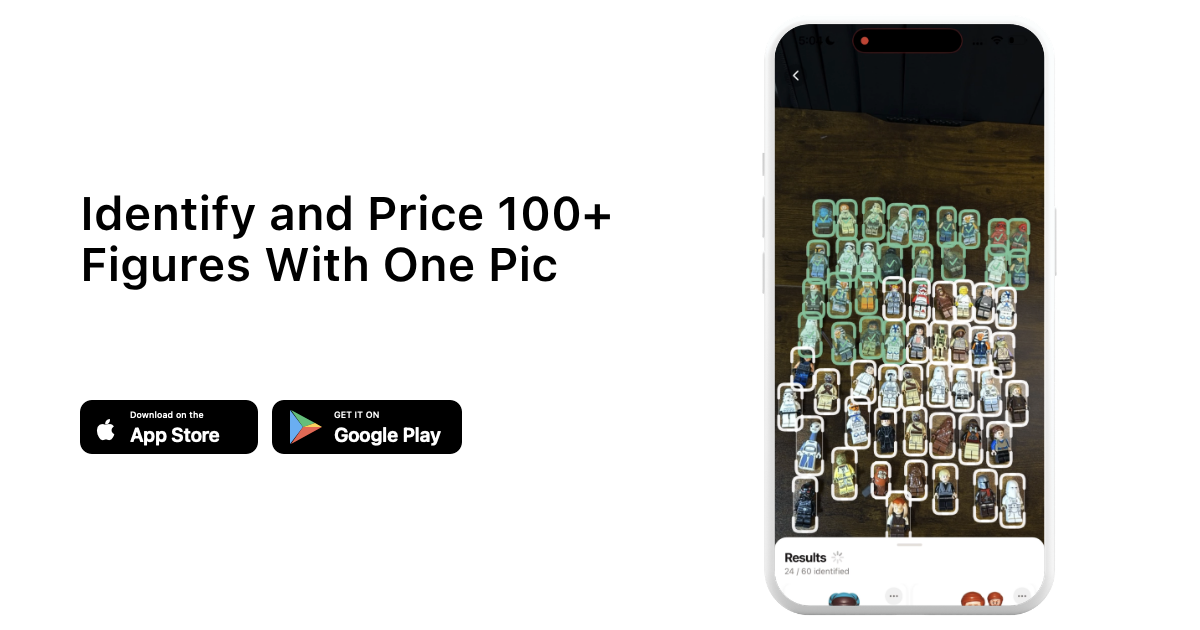
- Scan a whole lot at once instead of pricing figures one by one by hand
- Walk away from "trust me, it's worth it" trades. Verify first, trade second.
What Makes a LEGO Minifigure Trade Fair?
A fair trade means both figures are worth roughly the same amount on today's secondhand market, not what either person originally paid or wishes they were worth. Condition, completeness, and current demand all factor in, and the only real way to know is to check recent sold prices before you agree to anything.
That sounds obvious, but in my experience it's the step most people skip. Someone sees a minifigure they loved as a kid and offers three "random" figures for it, assuming volume equals value. It usually doesn't. A single retired Star Wars figure can outvalue a dozen generic City minifigures combined, because the market for licensed, story driven characters is simply deeper. Trading fairly isn't about counting pieces, it's about matching dollar value on both sides of the table.
How Do You Check a Minifigure's Real Value Before You Trade?
The fastest way is to look up recent sold listings, not active asking prices, on BrickLink or eBay, since asking prices are often inflated and don't reflect what buyers are actually paying. If you're trading more than one or two figures, scanning the lot is much faster than pricing each one by hand.
BrickLink is where I check pricing first because it's built specifically around individual LEGO pieces and minifigures, and a lot of sellers treat it as the closest thing the hobby has to a Wall Street ticker. eBay sold listings are a good second check, especially for figures that move fast in a popular theme. If you use brick'em, you can scan a whole bin of minifigures at once and get pricing on all of them instead of looking up each figure individually, which is the difference between a five minute check and an hour of tab switching. It also helps to run your side of the trade through a minifigure database search so you're not relying on memory for what a character or variant actually looks like.
If you're trading a bigger group of figures at once, it also helps to get a sense of the total value you're putting on the table, not just the per figure price. A collection value calculator can give you a rough total so you know whether the trade is balanced overall, not just figure for figure.
What Mistakes Do Most Traders Make?
The most common mistake is trading based on how a figure feels instead of what it actually sells for, which almost always favors whoever did their homework first. The second most common mistake is not asking about condition until after the trade is already done.
I've seen plenty of trades fall apart after the fact because someone assumed "complete" meant complete, when really a cape, helmet, or accessory was missing. Always ask specific questions: does it have all original accessories, is the printing crisp or worn, has anything been swapped from a different figure. A seller I know got burned trading for what looked like an original Han Solo only to find the head had been swapped from a lower value variant. It still looked right in photos. It wasn't right in person.
Another mistake is ignoring platform context. A figure that's hot on Whatnot right now because of a trending show or set release might not carry the same demand on BrickLink six months later. Prices move with pop culture and new releases, so "worth it" today isn't always "worth it" next quarter.
Where Do People Actually Trade LEGO Minifigures?
Most minifigure trading happens in three places: dedicated BrickLink and online collector forums, Facebook Marketplace groups built around local LEGO communities, and in person at swap meets or conventions. Each has a different trust level and a different pace.
BrickLink and collector forums are slower but more structured, since reputations and feedback carry real weight there. Facebook Marketplace groups move faster and are more local, which is good for in person swaps but means you're often trading with strangers who have no trading history. In person events add social pressure that actually helps fairness, since it's harder to lowball someone face to face than it is over a text thread.
| Trading Venue | Speed | Trust Level | Best For |
|---|---|---|---|
| BrickLink / forums | Slower | High (feedback history) | High value or rare figures |
| Facebook Marketplace groups | Fast | Low to medium | Local, lower stakes swaps |
| In person meetups / conventions | Immediate | Medium to high | Bigger trades, building relationships |
| Whatnot community / streams | Fast | Medium | Spotting demand, not formal trading |
What Trading Etiquette Keeps Deals From Falling Apart?
Good trading etiquette comes down to disclosure and patience: tell the other person about any flaws up front, give them time to check values on their end, and don't pressure anyone into a quick yes. Trades built on rushed decisions are the ones people regret.
In my experience, the trades that go smoothly almost always start with both people sharing clear photos from multiple angles before anything is finalized. Disclose missing accessories, repainted parts, or replaced pieces even if the other person doesn't ask, because it will come up eventually and it's better coming from you. If a deal is happening by mail, agree on shipping cost and tracking ahead of time so nobody is left guessing where their half of the trade is.
It also helps to treat every trade like it's building a reputation, not a one off deal. I recommend keeping trades you've done organized, especially in active communities, since the same collectors show up again and again in LEGO minifigure trading circles. Trust moves faster than people expect once you have a track record. I posted a single story to about 700 followers on Instagram and sold roughly $700 worth of LEGO to three different buyers in about 20 minutes, and the only reason that worked was a history of honest deals behind it.
How Should You Handle Trades for Rare or High Dollar Figures?
High value trades need more documentation and more caution than everyday swaps, because the cost of a bad trade goes up with the price tag. Get clear photos, confirm authenticity details, and consider a partial cash difference instead of trying to force an exact figure for figure match.
Rare minifigures can carry genuinely wild prices. It's not unusual to see certain retired or exclusive figures, something barely two thirds the size of your index finger, listed in the $2,000 to $3,000 range on the secondhand market. At that level, I'd always confirm the specific variant and check recent sold comps on BrickLink and eBay, and cross reference the long term price history on a tracking site like BrickEconomy, before finalizing anything, since small printing or accessory differences can swing value significantly. Don't rely on memory or a quick glance. Verify current sold prices before you commit.
Heads up: This is not financial or legal advice. We're sharing what we've learned from the LEGO reselling community.
For a trade that's lopsided in dollar value, adding cash to balance it out is normal and expected in most collector communities. There's nothing wrong with saying "I'll trade plus twenty dollars" instead of pretending two uneven figures are equal.
Is It Better to Trade for Figures, Sets, or Just Sell for Cash?
It depends on what you're trying to build. Trading for other minifigures makes sense if you're filling gaps in a specific theme or character collection, while selling for cash makes more sense if your goal is simply growing your reselling business.
From what I've seen, newer resellers often do better focusing on cash sales early on, especially through high demand channels like eBay or Whatnot, because cash gives you flexibility to reinvest in whatever inventory is actually moving. Keep in mind eBay promoted listings can push your effective take rate close to 25% of the sale once fees stack up, which is part of why some sellers lean on trading or on lower fee venues like BrickLink for slower moving pieces instead of paying to promote every single listing. Trading is better suited to collectors building a personal set, or to resellers who already know exactly what sells fast in their market and want to swap slow moving stock for faster moving stock. If you're managing a larger bulk lot and trying to decide what to trade away versus sell, running the numbers through a haul calculator before you commit to anything can save you from trading away your best piece for a pile of mediocre ones.
A Quick Pre-Trade Checklist
Before you finalize any minifigure trade, run through a short checklist so you're not relying on memory in the moment. This takes a few minutes and prevents almost every regret trade I've heard about from other collectors.
- Checked recent sold prices on BrickLink or eBay, not asking prices
- Confirmed condition: paint wear, accessories, and any swapped parts
- Asked for clear photos from multiple angles, front and back
- Compared total value if trading multiple figures, not just one for one
- Agreed on who covers shipping and confirmed tracking, if mailing
- Added cash to balance an uneven trade instead of forcing it even
Frequently Asked Questions
How do I know if a minifigure trade is actually fair?
Check recent sold prices for both figures on BrickLink or eBay, not retail or asking prices, and compare condition and completeness. If both figures land in a similar price range once you account for missing accessories or wear, the trade is fair. When values don't match, adding a small cash difference keeps things balanced.
What's the best place to trade LEGO minifigures?
BrickLink and established collector forums tend to be safest for higher value trades because feedback history builds trust over time. Facebook Marketplace groups and in person meetups work well for faster, lower stakes local swaps. Choose based on how much the trade is worth and how much trust history you already have.
Should I trade my minifigures instead of selling them?
Trading makes sense when you're filling a specific gap in a personal collection or swapping slow moving stock for something that sells faster. If your main goal is cash flow for a reselling business, selling through eBay or Whatnot usually gives you more flexibility than locking value into another figure.
How much is a rare LEGO minifigure actually worth?
It varies enormously by character, theme, and condition, and the only reliable answer is checking current sold listings rather than guessing. Some retired or exclusive figures sell in the thousands of dollars, while most common figures sell for just a few dollars. Always verify the specific variant before assuming a figure is rare.
What should I do if a trade goes wrong?
Document everything with photos and messages before and after the trade, since that record is what most forums and marketplaces use to resolve disputes. If you're trading by mail, always use tracked shipping. Going forward, treat the experience as a reminder to verify value and condition up front, every single time.