

LEGO minifigure price volatility happens because value is pulled in different directions at the same time: shifting demand, retirement timing, condition, and which marketplace a figure sells on. A figure that sits flat for a year can jump 20 percent in a week after its set gets discontinued, then drift back down once the early buyers stop chasing it.
I've sold a lot of minifigures across eBay, BrickLink, and Whatnot, and in my experience the swings feel random until you start tracking the pattern behind them. Once you understand what actually moves prices, volatility stops feeling like noise and starts looking like a map of where the next opportunity is.
- Minifigure prices move on demand, retirement status, condition, and marketplace fees, often all at once.
- Rare figures smaller than an index finger have been known to sell for $2,000 to $3,000 when demand spikes.
- Themes like Star Wars and Ninjago tend to stay liquid, while a theme like City rarely holds meaningful resale value.
- Platform choice changes your realized price more than people expect, once fees and competition are factored in.
- Tracking swings over time, instead of checking a single listing, is the only reliable way to price a figure fairly.
What Causes LEGO Minifigure Price Volatility?
LEGO minifigure price volatility comes from several forces moving at once: demand spikes tied to pop culture or nostalgia, retirement timing that shrinks future supply, condition grading that splits one figure into several price tiers, and marketplace fees that change what a seller actually keeps from a sale.
None of these forces move on a predictable schedule. A figure can sit at the same price for a year, then swing hard in either direction once one of those forces shifts. From what I've seen selling full time, the biggest single swing driver is retirement news, closely followed by a figure showing up again in a new movie, show, or set wave that reignites interest in a character. The Collectible Minifigures line, which launched back in 2010, is a good example of how a single blind bag wave can spike demand for specific characters almost overnight.
How Much Can Minifigure Prices Swing in a Short Time?
Minifigure prices can swing from a few percent to several hundred percent within a matter of weeks, especially right after a set retires or a character reappears in new media. The size of the swing usually tracks how emotionally attached buyers are to the character, not just how rare the physical piece is.
Rare figures, some barely two thirds the size of your index finger, have sold in the $2,000 to $3,000 range when a wave of nostalgic or completionist buyers all want the same piece at once. I've seen a figure barely worth $10 triple in price after a retirement rumor started circulating online, then settle back down within a month once buyers realized the set wasn't actually being pulled.
Why Do Some Themes Hold Value Better Than Others?
Some LEGO themes hold value better because they combine broad name recognition with ongoing story relevance, while other themes rely on a character or show that stopped being culturally active years ago. Liquidity, meaning how fast something sells at a fair price, matters just as much as rarity.
In my experience, Star Wars, Marvel, and Ninjago figures tend to move quickly because the fan base is large and constantly refreshed by new movies, shows, and sets. A theme like City, on the other hand, is highly illiquid. Most City figures rarely sell for more than $2 each, because there is no strong character story pulling buyers in. A seller I know focuses almost entirely on Castle and Pirates figures instead, since nostalgic collectors keep paying strong prices years after a set retires, even when the pieces show real wear.
Does Retirement Always Cause Prices to Spike?
Retirement does not automatically cause a price spike. It removes future supply, but a figure still needs real demand behind it for that scarcity to translate into higher prices, otherwise it just becomes a low volume item that sells slowly at roughly the same price as before.
This is where a lot of newer sellers get caught off guard. They assume anything retired is automatically worth more, buy up a bunch of stock, and then find out the theme never had strong demand to begin with. Checking actual sold prices and search volume for a figure, rather than guessing based on retirement status alone, is the safer habit to build.
How Does Condition Affect Minifigure Price Volatility?
Condition affects minifigure price volatility by creating several price tiers out of what looks like the same product. Mint, complete, lightly played with, and damaged or incomplete figures can sell for wildly different amounts, and that spread tends to widen as a figure gets rarer.
I started paying much closer attention to condition grading after noticing two nearly identical figures sell for very different prices, just because one had a cracked torso and the other didn't. There is also a quieter opportunity on the other side of this: damaged and dirty inventory is slept on by a lot of sellers. Cleaning a figure, sourcing the right replacement part, and completing it honestly can turn a cheap, overlooked piece into something worth meaningfully more, as long as any repairs or part swaps are disclosed clearly in the listing.
How Should Resellers Track Minifigure Price Volatility?
Resellers should track minifigure price volatility by watching sold prices over time instead of relying on a single active listing, which can be priced far above or below what the figure will actually fetch. A short price history tells you far more than one snapshot ever will.
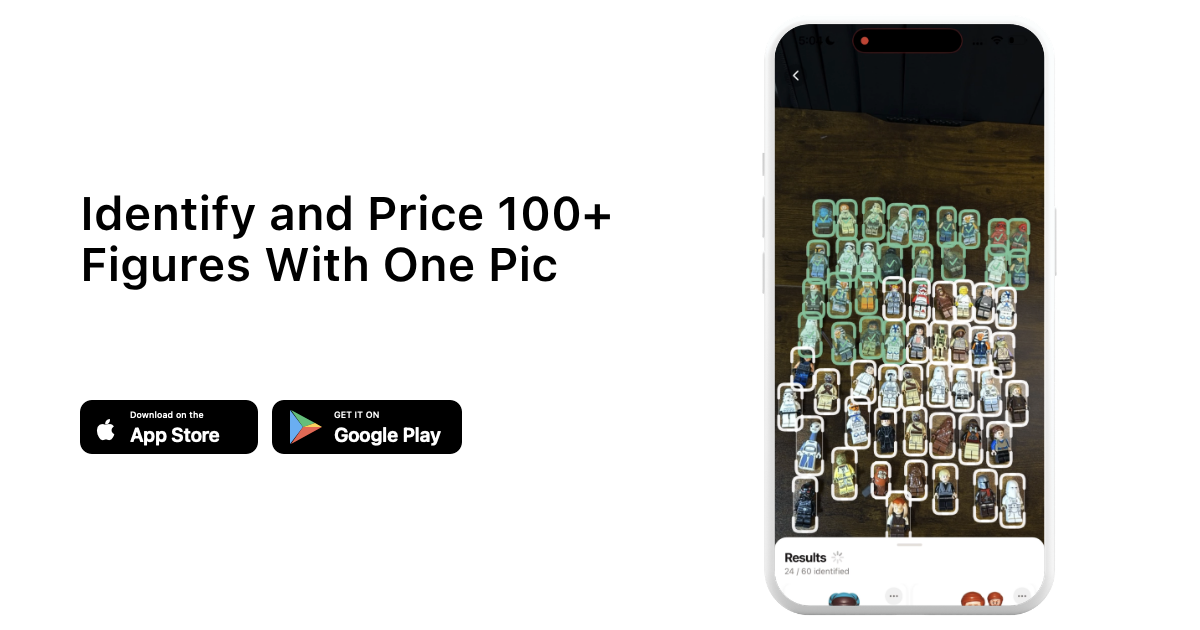
I personally cross check prices in brick'em's minifigure database before I commit to buying a lot, since it saves time compared to manually searching sold listings one by one. For bulk lots specifically, running the numbers through the haul calculator first helps you see whether a mixed box is actually worth the asking price once you account for the figures that are likely to sell slowly. If you are trying to size up a whole collection rather than one lot, the collection value calculator gives you a faster read than pricing everything out piece by piece.
Which Marketplace Should You Watch for Price Signals?
You should watch BrickLink for baseline pricing, eBay for broad demand signals, and Whatnot or Mercari for live, buyer driven pricing, since each platform reflects a different slice of the market and volatility often shows up on one platform before the others catch up.
BrickLink works like the Wall Street of LEGO in my experience, because so many sellers and buyers reference it as the going rate before listing anywhere else. I've personally sold over $100,000 worth of LEGO on eBay, and it tends to show you raw demand, though promoted listings fees can push your effective take rate close to 25 percent of the sale once you add them up, so a strong sold price there doesn't always mean a strong net price. Whatnot and Mercari move faster and can run hotter during a live show or a trending moment, and sites like BrickEconomy are useful for tracking longer term appreciation trends rather than day to day swings. Facebook Marketplace is worth watching too, mostly for sourcing, since local sellers often have no idea what a figure is actually worth.
Is Minifigure Price Volatility a Risk or an Opportunity?
Minifigure price volatility is both a risk and an opportunity, depending on whether you are buying or selling and how much research you did before the swing happened. The same price movement that burns an unprepared buyer can be a profitable entry point for someone who was already tracking the figure.
I use the investment calculator to sanity check whether a figure's recent run up still leaves room for upside, or whether I'd just be buying at the top of a temporary spike. Treating volatility as information instead of noise is really the whole game here.
Heads up: This is not financial or legal advice. We're sharing what we've learned from the LEGO reselling community.
Volatility Risk Factors Checklist
Use this quick checklist before you buy or price a minifigure that has moved sharply in either direction. Each factor below changes how much you should trust a single price point you're seeing right now.
| Factor | Effect on Price Stability |
|---|---|
| Set recently retired | Increases volatility; demand may or may not follow |
| Character in new movie or show | Increases volatility; often short term spike |
| High completionist demand (CMF, Star Wars) | Tends to support more stable high prices |
| Low story relevance (City, generic themes) | Tends to keep prices low and flat |
| Poor condition or missing parts | Widens the price spread versus mint examples |
| Single marketplace listing checked | Unreliable; always cross reference sold prices |
Frequently Asked Questions
Why do LEGO minifigure prices change so quickly?
LEGO minifigure prices change quickly because demand can shift within days when a set retires, a character reappears in new media, or a marketplace trend brings sudden attention to a theme. Supply rarely changes that fast, so price absorbs most of the shock until the buying frenzy settles down again.
Are retired LEGO minifigures always worth more?
No, retired LEGO minifigures are not always worth more. Retirement limits future supply, but a figure still needs genuine buyer demand for that scarcity to matter. Plenty of retired figures from low demand themes sell for about the same price they always did, or even less over time.
Which LEGO minifigure themes are the most stable?
Themes with broad, ongoing cultural relevance tend to be the most stable, including Star Wars, Marvel, and Ninjago, since new movies, shows, and sets keep refreshing demand. Nostalgia driven themes like Castle and Pirates also hold up well with collector audiences, even without new releases.
How can I check if a minifigure price swing is temporary?
Check sold price history over the last few weeks or months instead of trusting one active listing. If a figure's sold prices jump briefly after retirement or media news and then drift back down, the swing was likely driven by short term hype rather than a lasting shift in demand.
What is the safest way to price a volatile minifigure?
The safest way is to compare recent sold prices across more than one marketplace, weigh how condition affects your specific figure, and avoid pricing purely off the single highest listing you can find. A short, honest price range beats a guess based on one outlier sale.