


LEGO listing price psychology is the set of pricing tactics, like charm pricing, anchoring, and scarcity framing, that change how a buyer perceives a price without changing the item itself. A $19.99 minifigure lot reads as noticeably cheaper than a $20 one, and a listing sitting next to a higher priced comp feels like a deal even when your actual price never moved.
I've spent years listing LEGO minifigures, sets, and bulk lots on eBay, BrickLink, and Whatnot, and price psychology is one of the few reseller skills that costs nothing to apply. It's not about tricking anyone. It's about presenting an honest price in a way that matches how buyers actually read numbers, scan search results, and compare options before they click buy. In my experience, the sellers who ignore this stuff leave money sitting on the table every single week.
Here's what actually moves the needle when you're pricing LEGO for resale:
- Charm pricing ($19.99 instead of $20) works, but the effect shrinks fast as prices climb into the hundreds.
- Anchoring your own listings against a visibly higher comp can lift perceived value without touching your price.
- Platform matters. A price that looks fair on BrickLink can look high on Whatnot and low on eBay.
- Scarcity language only works when it's true. Buyers can smell a fake "only 1 left."
- Round numbers signal a premium, collector-grade item. Precise numbers signal a calculated, data backed price.
Heads up: This is not financial or legal advice. We're sharing what we've learned from the LEGO reselling community.
Why Do LEGO Buyers React to $19.99 Instead of $20?
Buyers process the left digit of a price first, so $19.99 registers as "nineteen something" while $20.00 registers as "twenty." That one cent gap creates a real, measurable drop in perceived price even though the actual difference is nothing. I've tested this on my own minifigure lots, and the cheaper looking price almost always gets more clicks in the same search results page.
That said, charm pricing loses power as the number gets bigger. A sealed modular set at $499.99 instead of $500 barely registers, because buyers evaluating a four figure purchase are already doing real math, not scanning for the left digit. I recommend saving charm pricing for the volume tier of your listings, individual minifigures, small parts lots, and sets under $100, where fast scrolling and quick decisions are the norm.
How Does Anchoring Change the Way a LEGO Listing Feels?
Anchoring means a buyer's sense of a fair price gets pulled toward the first number they see, so showing a higher reference price next to your actual price makes your price look like a deal. This is why "compare at" style pricing works, and why bundling a common piece with a rare one can lift the perceived value of the whole lot.
On BrickLink specifically, buyers are anchored by the current sold and for-sale averages before they even open your listing, since the price guide is sitting right there. I personally price against that guide instead of guessing, because a seller I know got burned pricing a lot 40% under market just to move it fast, and buyers assumed something was wrong with the pieces instead of seeing a deal. If you want your own inventory anchored against real BrickLink numbers instead of gut feel, brick'em's LEGO collection value calculator pulls that comparison for you automatically.
Should You Price at BrickLink Value, Above It, or Below It?
Pricing at or slightly under current BrickLink market value is the safest default for individual pieces and common minifigures, since BrickLink functions as the reference price for the entire secondhand LEGO market. Pricing above it only makes sense when you're selling somewhere buyers pay a premium for convenience or entertainment, like a live Whatnot show.
I think of BrickLink as the Wall Street of LEGO. It's where the real price discovery happens, and other platforms react to it rather than set it. From what I've seen, sellers who list 30% to 50% below current market on a strong niche item can expect it to move within a day or two, because bargain hunters watch for exactly that gap. If you're not sure what a set or figure is actually worth right now, run it through the LEGO investment calculator before you commit to a listing price.
Does the Platform You Sell On Change the Psychology?
Yes. The same $45 minifigure can look expensive on Facebook Marketplace, fair on eBay, and cheap on Whatnot, because each platform trains its buyers to expect a different kind of price. Marketplace shoppers expect haggling room built into the number, eBay shoppers expect competitive market pricing, and Whatnot audiences are paying partly for the live entertainment and the relationship with the seller.
I've sold over $100,000 worth of LEGO through eBay, and the pricing psychology there is almost entirely about looking like the best deal in a page of similar listings, since buyers can sort by price in one click. Whatnot is the opposite. When I sell live, viewers who've been watching for twenty minutes and feel a connection to the show will pay noticeably more than the flat BrickLink number, sometimes 20% to 30% over, because they're buying the experience along with the item. eBay's promoted listings can eat into that margin fast too, sometimes pushing your effective take rate close to 25% of the sale once fees and ad spend are combined, so the sticker price psychology has to work harder to still leave you a profit.
Why Does Scarcity Language Work on Whatnot but Backfire on eBay?
Scarcity language like "last one" or "won't restock" works when buyers can verify it in real time, which is exactly what a live Whatnot auction gives them: they watch the item get sold to someone else if they hesitate. On eBay, the same language next to a "3 available" quantity field just reads as a lie, because the platform itself contradicts the claim.
In my experience, honest scarcity beats invented scarcity every time. If you genuinely have the only copy of a retired set in your inventory, say so plainly and let the real rarity do the work. I started flagging true one-of-one pieces in my listing titles instead of burying the rarity in the description, and those items get noticeably more watchers before they sell.
What Pricing Mistakes Cost LEGO Resellers the Most Money?
The most expensive mistake is pricing from emotion instead of comps, either overpricing a set because you remember what you paid for it, or underpricing a figure because you want a fast sale. Both mistakes come from skipping the step of actually checking current sold data before you list.
| Platform | Price Psychology Tactic That Works Best | Why It Works There |
|---|---|---|
| eBay | Competitive charm pricing against similar sold listings | Buyers sort by price and compare instantly |
| Whatnot | Live scarcity and audience engagement | Buyers pay for the show, not just the item |
| BrickLink | Pricing at or just under guide average | The guide is the trusted reference point |
| Facebook Marketplace | Round numbers with visible haggle room | Buyers expect to negotiate down |
| Mercari | Bundle anchoring on multi-item lots | Shipping cost sensitivity rewards bundles |
I noticed a pattern after a few years of listing: the sellers who check comps on brick'em's minifigure database before pricing tend to price closer to what things actually sell for, and closer to accurate pricing means faster sales and fewer relists.
How Should You Price Incomplete Sets and Damaged Minifigures?
Incomplete sets and damaged figures should be priced against their complete counterparts and then discounted for exactly what's missing or wrong, not priced by guesswork. A set missing a few common parts is worth close to full value once you factor in cheap replacement pieces, while a set missing a rare exclusive piece drops much further.
When I sort through a bulk lot, I separate anything incomplete before I price a single item, because lumping it in with complete inventory drags down the perceived quality of everything else in the listing. A seller I know built a small side business just restoring and completing damaged figures bought cheap, then relisting them at close to full market value once they're whole again. If you're working through a big haul and trying to figure out what's actually worth fixing up versus parting out, brick'em's haul calculator helps sort that out before you spend time on the wrong pieces. You can browse more pricing breakdowns like this on the brick'em blog, or create a free account through brick'em signup to start pricing your own inventory against real sold data.
Frequently Asked Questions
Does charm pricing actually work for expensive sealed LEGO sets?
Not much. Charm pricing like $499.99 barely moves perception on big ticket items because buyers spending hundreds of dollars are already comparing real numbers carefully. It works best on minifigures, parts lots, and sets under roughly $100, where buyers are scrolling and deciding fast rather than doing detailed math.
Should I always price below BrickLink market value to sell faster?
Not always. Pricing under market can speed up a sale, but from what I've seen, pricing too far under makes buyers suspicious instead of excited, especially on parts and sets where quality varies. A modest discount off current sold averages tends to move items quickly without raising red flags.
Why do the same LEGO minifigures sell for more on Whatnot than eBay?
Whatnot buyers are often paying for the live show experience and the relationship with the seller, not just the plastic. In my experience hosting shows, an engaged audience will pay above typical BrickLink or eBay pricing for a figure they watched get revealed live, especially from a seller they already follow.
Is it dishonest to use psychological pricing tactics on LEGO listings?
No, as long as the tactics are honest. Charm pricing and true scarcity messaging just present a real price in a way that matches how people naturally read numbers. It becomes a problem only when a seller invents fake urgency or fake quantities, which buyers tend to catch anyway.
How often should I recheck my LEGO listing prices?
I recommend rechecking active listings every few weeks, since LEGO secondhand prices shift with retirements, restocks, and seasonal demand. A price that was well anchored against comps two months ago can be noticeably off today, especially for actively traded minifigures and recently retired sets.
What Do These LEGO Selling Platforms Look Like?
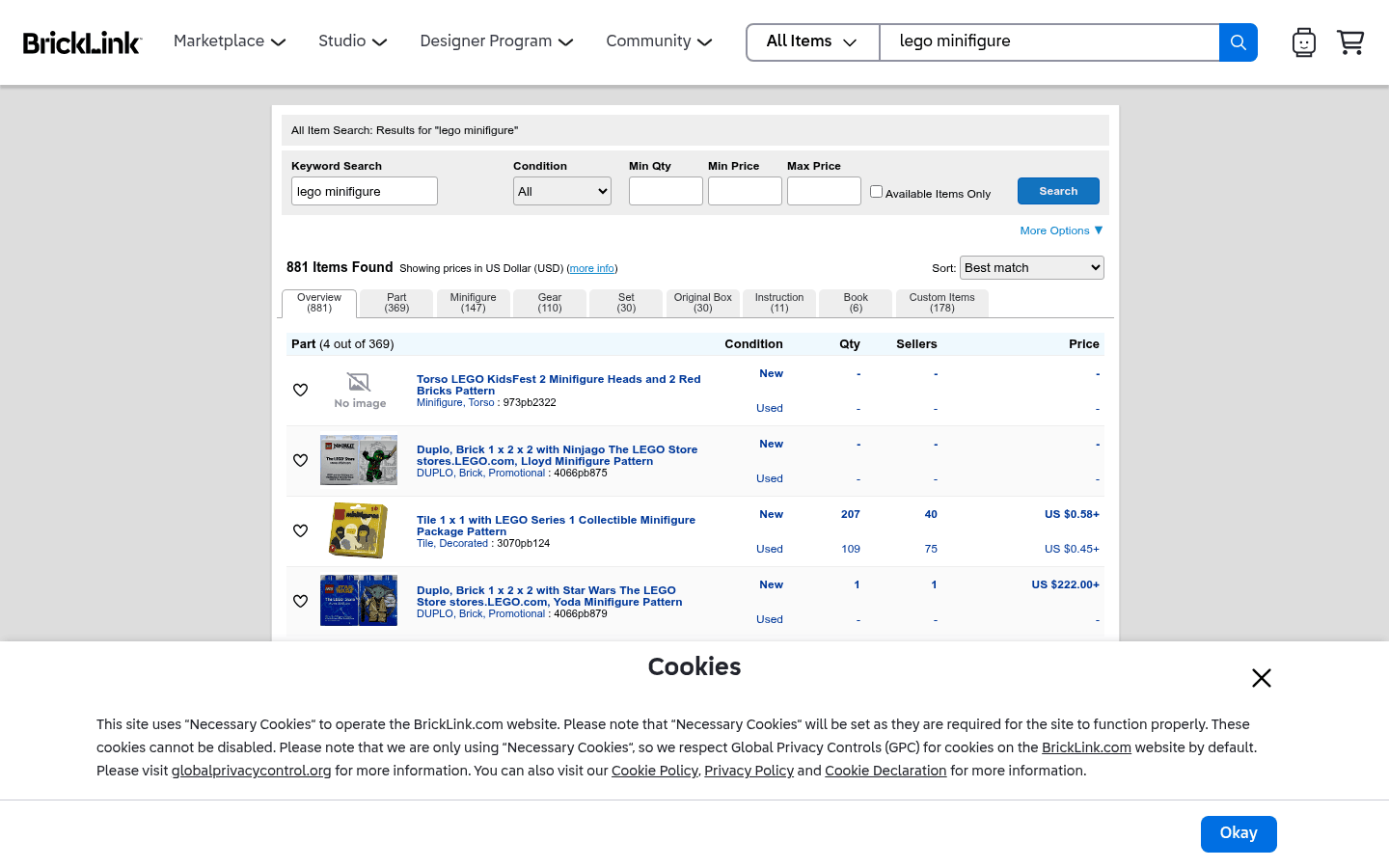
Before choosing where to sell, it helps to see the difference between a live-selling marketplace, a broad search marketplace, a LEGO-native catalog, and a social or local channel. These screenshots are visual references only. Platform interfaces, fees, and rules can change.
.png)

