

Yes, LEGO keychain minifigures can be worth something, but most of them are not rare. The typical keychain figure you get from a store promo or a boxed exclusive usually resells for a few dollars, while rare convention giveaways, movie tie-in exclusives, or limited retail bundles can bring in a lot more. If you are a reseller sitting on a pile of these, it pays to know the difference before you toss them into a bulk lot or list them for pennies.
I've bought and sold a lot of random LEGO over the years, and keychain figures are one of those categories people either ignore completely or wildly overvalue. In my experience the truth sits in the middle. Some are genuinely rare and collectible. Most are common giveaways that collectors already have five of sitting in a junk drawer.
- Most common LEGO keychain minifigures resell for roughly $3 to $8 in used condition, so verify current sold prices before you price yours.
- Rare promotional or exclusive keychains have sold for $30 to $60 or more based on past completed listings, but always check recent comps first.
- Whether the keychain loop is glued on or removable affects both the figure's value and how you should list it.
- BrickLink, eBay, Whatnot, and Facebook Marketplace each handle small, low dollar items like keychains differently.
- Checking a figure against a catalog before pricing it stops you from underselling a figure that is actually scarce.
Are LEGO Keychain Minifigures Worth Anything?
Yes, most LEGO keychain minifigures hold at least some resale value, typically $3 to $8 for common ones in good condition, while rare promotional exclusives have sold well above that based on past completed listings. The exact number depends on the character, how limited the release was, and whether the original keychain loop is still attached.
In my experience the biggest mistake sellers make is assuming every keychain figure is either junk or a hidden goldmine. Neither is usually true. I started treating keychain figures the same way I treat any other minifig: check the character, check the print, check if it was a wide retail release or a limited promo, and only then decide what bin it goes in. A generic City worker keychain is not worth the same thing as a licensed Star Wars or Marvel exclusive, and that gap can be the difference between a $3 sale and a $40 one.
What Makes a Keychain Minifigure Different From a Regular Minifig?
A LEGO keychain minifigure is a standard or near standard minifig body molded or fitted with a metal keychain loop, usually through the head or back, and sold as a standalone accessory rather than packed inside a boxed set. Some are exclusive sculpts or prints never released as a normal minifig, which is what drives collector interest.
From what I've seen, there are two broad types. The first is a keychain built from an otherwise ordinary minifig, just with a loop glued or clipped onto it. The second is a promotional exclusive, often tied to a movie release, a theme park, a LEGO Store opening, or a convention, where the print or accessory does not exist anywhere else. The second type is almost always the one worth real money, and it is the one sellers most often misidentify because the packaging gets lost over the years.
Which LEGO Keychain Minifigures Tend to Be Most Valuable?
The most valuable LEGO keychain minifigures are usually tied to high demand licensed themes, limited print runs, or event exclusives, not generic City or Friends releases. In my view, Star Wars and Marvel keychains consistently pull the strongest demand because the underlying character IP already has broad, built in collector interest.
Star Wars is one of the most liquid LEGO categories period, and that liquidity carries over into keychain variants of popular characters. Marvel is underrated in the same way, in my view it has a genuinely huge market that does not get talked about as much as Star Wars, but keychains tied to popular Marvel characters move well too. On the flip side, I would not expect much from a generic City or Friends keychain. City figures in general rarely sell for more than a couple dollars, and a keychain version is not going to break that pattern.
Here is a rough way I sort them when a bulk lot comes in:
| Signal | What it usually means |
|---|---|
| Licensed character (Star Wars, Marvel) with a print not seen on a normal minifig | Likely one of your higher value pieces, worth individual research before bulk pricing |
| Tied to a convention, movie premiere, or store opening event | Often limited run, can carry a real premium if demand is active |
| Generic City, Friends, or unbranded figure with a keychain loop | Usually low value, often best grouped into a bulk lot rather than listed solo |
| Loop is glued directly into a drilled head with glue residue visible | Harder to restore to normal minifig condition, which can lower value for collectors |
How Do You Identify a Rare LEGO Keychain Minifigure?
You identify a rare LEGO keychain minifigure by comparing the exact print, accessories, and release context against a reliable catalog rather than guessing from memory. A figure that looks ordinary at a glance can be a limited print variant, and the only way to know for sure is to check it against real reference data.
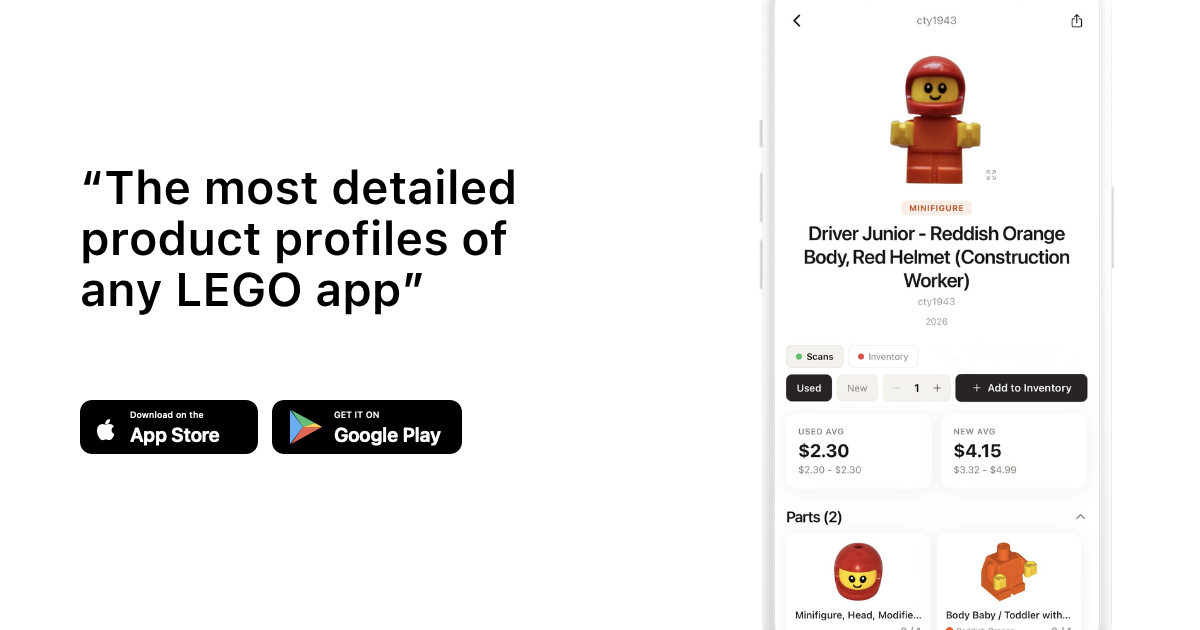
This is where a lot of sellers lose money without realizing it. I use the brick'em minifigure database to check prints and variants before I price anything I am not 100% sure about, because torso printing differences that look minor can separate a $4 figure from a $35 one. If you are scanning through a bulk lot of keychains, it is worth running anything unfamiliar through a scanner or database rather than eyeballing it, especially since keychain variants are not always documented as clearly as mainline minifigs.
- Check the torso, legs, and head prints against reference photos, not just memory
- Note whether the keychain clip is original factory applied or added later
- Look for any backstamp, event tag, or packaging you still have
- Search recent sold listings on BrickLink or eBay for the same exact print and accessories
- When unsure, treat it as a rare candidate and research before bulk pricing it
Should You Remove the Keychain Loop Before Selling?
In most cases you should not try to remove a glued on keychain loop, because forcing it off risks cracking the head or leaving visible damage that lowers the figure's value more than the loop itself does. If the loop is a simple clip or screw style attachment, removing it carefully is usually fine and can make the figure easier to sell as a standard minifig.
I've seen sellers try to pry glued loops out and end up with a cracked head, which tanks the value far more than just listing it honestly as a keychain figure would have. My recommendation, and this is just from what I've learned doing this myself, is to disclose the keychain attachment clearly in your listing rather than risk damaging the figure trying to make it look like something it is not. Buyers in the minifigure space generally know what they are looking at and will pay close to full value for a clean keychain variant if the print is desirable.
Where Should You Sell LEGO Keychain Minifigures?
BrickLink, eBay, Whatnot, and Facebook Marketplace all work for keychain minifigures, but each one fits a different kind of item. Low value common keychains do best in bulk lots or on BrickLink where buyers search by exact part, while rare exclusives do better on platforms with more eyeballs like eBay or Whatnot.
BrickLink is where I send a lot of my lower dollar, specific print items because the fees are much lower than other marketplaces, and buyers there are specifically searching for exact variants rather than browsing casually. People in this space sometimes call BrickLink the Wall Street of LEGO because its pricing data is the closest thing the hobby has to a market standard, and brick'em leans on that same BrickLink integrated pricing to help sellers price things more accurately.
eBay is the broadest demand engine I know of for LEGO. I've personally sold over $100,000 worth of LEGO there over the years, and in a strong niche, pricing 30 to 50 percent below market will usually move an item within 24 to 48 hours in my experience. The catch is promoted listings. To get real visibility on eBay today, a lot of sellers I know end up running promoted listings that can push total fees close to 25 percent of the sale price, so build that into your math on lower priced items like keychains.
Whatnot is the one I'd point beginners toward if they want to build an audience instead of just moving one item at a time. A seller I know, and honestly this was my own experience too, ran a first show with only about 10 people watching and still did over $500 in sales. I personally grew an account to 3,000 plus followers and $30,000 plus in sales within about 5 months without ever showing my face on camera. I recommend budgeting around $20 per show on boosted promotion early on to help with discovery, and keep an eye out for no seller fee days, which Whatnot runs periodically.
Facebook Marketplace is more of a sourcing tool than a selling tool for most resellers, in my experience, since it is a great place to find cheap bulk lots locally, often from people just clearing out an old collection. If you do sell there, there are no platform fees, which helps on low dollar items like keychains, just use common sense on meetup safety.
Is Buying LEGO Keychain Minifigures as an Investment a Good Idea?
LEGO keychain minifigures can hold value and occasionally appreciate, especially rare event exclusives, but I would not treat common retail keychains as a serious investment category the way some sealed sets or rare mainline minifigures can be. The upside on most keychains is modest compared to the time it takes to source, identify, and sell them individually.
From what I've learned following the broader minifigure market, rare figures in general can be a strong category because they are compact, story driven, and liquid compared to bulkier collectibles. Keychains borrow some of that appeal when the print is genuinely exclusive, but most keychain releases are not limited enough to behave like a true investment piece.
Heads up: This is not financial or legal advice. We're sharing what we've learned from the LEGO reselling community.
How Do You Price a Keychain Minifigure Before You List It?
Price a keychain minifigure by searching recent sold listings for the exact print and condition first, then adjusting for whether the keychain loop is still attached and intact. Do not price off active listings alone, since asking prices on low demand items like generic keychains are often far above what anything actually sells for.
When I'm sorting through a bulk lot that includes keychain figures, I run anything I am unsure about through a catalog first, then use a collection value calculator to get a realistic sense of what the whole lot is worth before I decide what to list individually versus bundle. If you picked up a big box lot that turned out to have a few keychains mixed in, a haul calculator can help you figure out whether the lot was worth what you paid for it once you account for the rare pieces versus the common filler.
Frequently Asked Questions
Do LEGO keychain minifigures go up in value over time?
Some do, particularly rare convention or movie tie-in exclusives with genuinely limited print runs, but most common retail keychains stay flat or appreciate very slowly. I would not count on meaningful appreciation from a generic keychain the way you might from a rare mainline minifigure or a retired sealed set.
Are glued keychain loops a dealbreaker for collectors?
Not usually, as long as the attachment is disclosed clearly and the figure is not visibly damaged. In my experience most buyers in this niche understand what a keychain variant is and will pay close to full value for a clean one, but they do discount for cracked heads or heavy glue residue.
Where is the best place to sell a rare LEGO keychain figure?
For genuinely rare exclusives, eBay and Whatnot tend to get the most eyeballs and the best prices, while common keychains often do better moved in bulk or through BrickLink where buyers search for exact parts. I recommend matching the platform to how rare the specific figure actually is rather than defaulting to one marketplace for everything.
How can I tell if my keychain minifigure is a rare exclusive?
Compare the exact torso, leg, and head prints against a reliable minifigure database, since small printing differences often separate common releases from limited exclusives. If you still have original packaging, an event tag, or a backstamp, that context can confirm rarity that the figure alone will not tell you.
Should beginners bother sorting keychain figures at all?
Yes, because a few minutes of checking can turn a figure you almost bulk priced at a dollar into a $30 or $40 individual sale. I started paying closer attention to keychains after nearly underselling one myself, and now I treat every unfamiliar keychain figure as worth a quick check before it goes into a bulk box.