

LEGO head mold types are the different physical head shapes LEGO has produced since 1978, and they matter because two minifigures with the identical printed face can be worth very different amounts if one uses a rare mold and the other uses the standard round head. If you buy, sell, or sort minifigures for resale, knowing your molds is just as important as knowing your prints.
In my experience sorting thousands of figures for brick'em, the head mold is one of the first things a seller should check, right after the torso and legs, because it is also one of the easiest details to miss on a quick glance. A stormtrooper head looks like a stormtrooper head until you notice it has no visible neck stud underneath the helmet, which changes what set it actually came from.
Key takeaways:
- LEGO has produced around eight distinct head mold families since the minifigure launched in 1978, including standard, flesh toned, alien, helmet compatible, dual molded, big head, baby, and novelty shapes.
- Mold type can affect compatibility, set identification, and resale value, sometimes more than the printed face does.
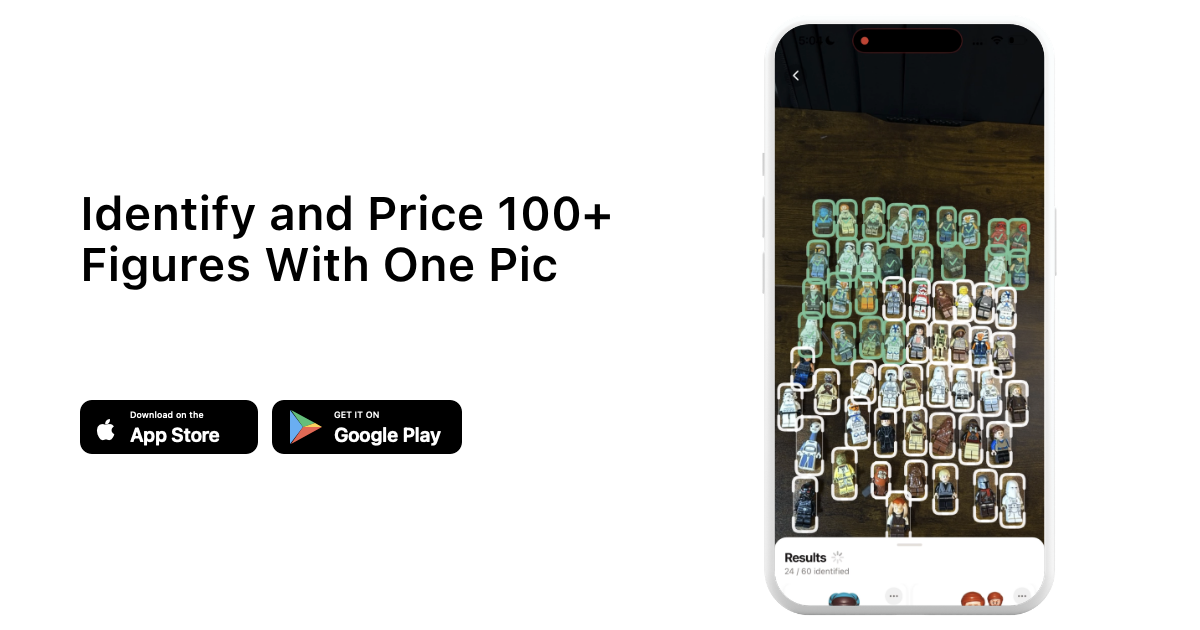
- Resellers can speed up identification with tools like brick'em's minifigure database instead of manually cross referencing every variant by eye.
What Exactly Counts as a LEGO Head Mold Type?
A LEGO head mold type is the physical shape the plastic head is molded into before any face print goes on, separate from the color or the printed expression. The standard round head with a single stud on top is one mold. An alien head with bulging eyes is a different mold. Two minifigures can share the exact same printed face but sit on completely different molds, and that difference is what collectors need to track.
This is where a lot of new resellers get tripped up. I've seen people list a figure as rare because the face print looks unusual, when really the print is common and only the head shape underneath is unusual, or the other way around. Knowing the mold family first, then the print, is the order that actually works.
How Did the Standard LEGO Minifigure Head Get Started?
The standard LEGO minifigure head debuted in 1978 as a smooth yellow sphere with a single connector stud on top, and that basic shape is still the backbone of most figures made today. It was designed to be generic enough to represent any character, which is part of why early LEGO figures all shared the same cheerful printed smile regardless of the set they came from.
From what I can tell looking at decades of sets, LEGO kept this mold almost untouched for years because it simply worked. The simplicity is also why it is the easiest mold to overlook. If you are sorting a bulk lot, treat standard heads as your baseline. Everything else on this list is a variation away from that baseline.
What Is the Difference Between Yellow Heads and Flesh Toned Heads?
Yellow heads use LEGO's traditional generic skin tone, while flesh toned heads are molded in a range of realistic skin colors that LEGO introduced for licensed characters starting in the early 2000s. The mold shape is usually the same round head, so the real difference here is color, not geometry, but collectors treat the two as separate categories because licensed flesh toned figures tend to carry more character specific value.
In my experience, flesh toned heads show up heavily in Star Wars, Harry Potter, and Marvel figures, which lines up with how liquid those themes tend to be on the resale market. A seller I know who focuses on Star Wars lots told me he checks skin tone before he even looks at the print, because a flesh toned head instantly tells him the figure is likely a licensed character worth researching further.
What Are Alien and Bug Eye Head Molds?
Alien and bug eye head molds are sculpted heads with exaggerated features like oversized eyes, antennae, or non-human skull shapes, and LEGO has used them across several science fiction and fantasy themes over the years. Unlike the standard round head, these molds are built for one specific character type and rarely get reused outside their original theme family.
These molds matter because they are mold exclusive. You will not find a bug eye alien head mold doing double duty as a regular human face in some other set, which makes them easier to identify but also means there are fewer of them floating around in bulk lots. When I sort through boxes, an alien mold almost always gets pulled out and researched individually rather than tossed into the general minifigure pile.
Why Do Some Minifigure Heads Have No Visible Neck?
Some minifigure heads are molded without a visible neck because they are designed to sit flush under a helmet, like a stormtrooper or a firefighter, instead of under a separate neck piece. LEGO calls this a helmet compatible head, and it changes how the figure looks once you remove the helmet, since there is often no neck detail underneath at all.
This mold type trips up a lot of casual sellers. If you pull a helmet off a figure and the head looks unusually plain or short, that is not a defect, it is the mold doing its job. I recommend checking for this before assuming a figure is missing a piece or was damaged, because a lot of listings get marked down in price over a mold feature that was never broken in the first place.
What Makes Dual Molded Heads Rare?
Dual molded heads are built from two different colored plastics fused together in a single mold, often used for characters with half masks, scars, or two toned skin, and they cost more to produce than a single color head. Because the tooling and manufacturing process is more complex, LEGO uses dual molding sparingly, which naturally limits how many of these heads end up in circulation.
These show up in themes with distinctive character designs where a flat print would not capture the look as well on its own. From what I've seen in reseller circles, dual molded pieces get picked out of bulk lots almost immediately because experienced buyers recognize the manufacturing cost behind them, even before checking any pricing guide.
What Are Big Head and Baby Head Molds?
Big head molds are oversized heads used for larger built figures, while baby head molds are small, simplified heads LEGO introduced to represent infant characters in family themed sets. Both are easy to tell apart from a standard minifigure head because the proportions are obviously different, either noticeably larger or noticeably smaller and rounder than the usual size.
Baby molds are newer additions to the LEGO minifigure family, and I've noticed they show up most often in City and licensed family sets rather than action themed ones. They are worth sorting separately because buyers searching for baby or toddler figures are a specific niche, and grouping them together makes your inventory easier to search and list.
What Other Novelty Head Shapes Should Resellers Know?
Novelty head shapes include skeleton skulls, ghost heads, pumpkin heads, and other seasonal or horror themed molds that replace the standard round shape entirely with something sculptural. These are usually tied to a specific holiday set, horror theme, or one off character, so they tend to be instantly recognizable even to buyers who are not deep LEGO collectors.
I personally like sorting these out first in any lot because they photograph well and tend to sell fast, especially around Halloween. A checklist helps here, so I've put together a quick reference table below for the mold families covered in this guide.
Quick Reference: LEGO Head Mold Types at a Glance
Use this table as a fast sorting checklist when you are going through a lot of loose heads or unfamiliar figures. It covers the shape to look for, where it typically shows up, and why it is worth separating from a standard pile.
| Head Mold Type | What To Look For | Common Theme Families | Why It Matters |
|---|---|---|---|
| Standard round | Smooth sphere, single top stud | Nearly every theme | Baseline mold, lowest scarcity on its own |
| Flesh toned | Realistic skin color, same round shape | Star Wars, Harry Potter, Marvel | Signals a likely licensed character |
| Alien or bug eye | Oversized eyes, antennae, non human skull | Space and fantasy themes | Mold exclusive, easy to identify, limited supply |
| Helmet compatible | Short or no visible neck detail | Military, firefighter, trooper figures | Often mistaken for damage if sold without the helmet |
| Dual molded | Two fused plastic colors on one head | Character driven, scarred, or masked figures | Costlier to produce, naturally scarcer |
| Big head | Oversized proportions for larger figures | Big built character sets | Easy to spot, niche buyer pool |
| Baby head | Small, simplified, rounded shape | City and family licensed sets | Specific niche demand, worth listing separately |
| Novelty shapes | Skulls, pumpkins, ghosts, seasonal molds | Horror and holiday sets | Fast sellers around themed shopping seasons |
How Much Does Head Mold Type Actually Affect Minifigure Value?
Head mold type can move a minifigure's value significantly, sometimes more than the printed face does, because mold exclusive shapes like alien heads or dual molded pieces are harder to source than a standard round head with a rare print. In my experience, a seller who only checks the printed face is leaving information on the table that a buyer who understands molds will absolutely use when negotiating.
I've seen complete rare figures, where the mold, print, and body all line up as an uncommon combination, change hands for $2,000 to $3,000, though figures at that level are the exception, not the rule. Most mold driven value differences are smaller but still real, often the gap between a figure selling quickly at a fair price and sitting unsold because it was priced like a common variant.
Heads up: This is not financial or legal advice. We're sharing what we've learned from the LEGO reselling community.
Before you price anything based on mold rarity alone, check current sold listings. A tool like brick'em's collection value calculator can help you sanity check a batch of figures against current pricing data instead of relying on memory or an old price you saw months ago.
Where Should You Research and Sell Mold Specific Minifigures?
BrickLink is the best place to research mold specific pricing because its catalog breaks figures down by exact part number, and that level of detail is exactly what you need when a print looks common but the mold underneath is not. eBay and Whatnot are both strong selling channels once you know what you have, each with a different buyer behavior worth understanding before you list.
On eBay, I recommend pricing confidently once you have verified the mold, since competitive or promoted listings can push a seller's effective take rate close to 25% of the sale, which eats into margin if you are also underpricing the item. Whatnot buyers tend to respond well to a seller who can explain on camera why a particular head mold is uncommon, since live audiences reward sellers who clearly know their inventory. Mercari and Facebook Marketplace are both worth checking too, especially for sourcing loose lots where mold variants are more likely to be hiding unnoticed by casual sellers.
If you are building out inventory from mixed lots, running everything through brick'em's minifigure database first will save you from manually identifying every head shape by eye, and you can use the haul calculator to see whether a lot is worth buying before you commit any money to it.
Frequently Asked Questions
How many LEGO head mold types are there?
There is no single official count, but collectors generally group LEGO heads into around eight main families, including standard, flesh toned, alien, helmet compatible, dual molded, big head, baby, and novelty shapes. Within each family there are further variations, so the practical number of distinct molds is much higher than eight.
Does head mold type affect minifigure price more than the print does?
It depends on the figure, but mold exclusive shapes like alien heads or dual molded pieces can carry more weight than the print because they are physically harder to produce and source. A common print on a rare mold is often worth more than a rare print on the standard round head, so checking both matters before you price anything.
How can I tell if a head is helmet compatible without removing the helmet?
You usually cannot tell for certain without removing the helmet, since the shortened neck design is the main visual clue and it is hidden underneath. If a figure is always shown wearing its helmet in official images, that is a reasonable hint the head mold is built specifically for that helmet rather than a standard piece.
Are dual molded heads always more valuable than single color heads?
Not always, but they tend to carry a premium because the manufacturing process is more complex and LEGO produces fewer of them. Value still depends on the character, theme popularity, and condition, so a dual molded head on a low demand theme can still sell for less than a standard head on a hot one.
Where is the best place to double check a head mold identification?
BrickLink's catalog is the most detailed public reference because it separates parts down to exact mold numbers, which is more precise than most general marketplaces. Cross referencing a figure there, or scanning it with a tool like brick'em's minifigure database, is the fastest way to confirm exactly what you are holding.