LEGO hair piece identification comes down to three things: the mold shape, the color, and how many sets or Collectible Minifigures Series used that specific piece. The pieces that pull real money on BrickLink and eBay are usually tied to a licensed character, molded in an unusual color, or both. A plain black ponytail mold that showed up in a hundred City sets is not worth sorting out of a bulk lot. A printed wig from a one-off Star Wars or Marvel figure might be.
I've spent a lot of hours sorting loose hair pieces out of bulk lots, and in my experience the biggest mistake new sellers make is assuming every piece of plastic hair is worth listing on its own. Most aren't. The ones worth your time usually share a few traits: an uncommon mold, a short production run, or a color LEGO only used a handful of times. I started treating hair pieces as their own inventory category after I noticed how often they got thrown in the junk bin during sorting, and that's cost sellers I know real money over the years.
- Mold shape and color together determine value, not color alone.
- Hair pieces tied to a licensed character (Star Wars, Marvel, Harry Potter) tend to hold value better than generic styles.
- BrickLink's price guide and BrickEconomy sold listings are the two best places to check what a hair piece has actually sold for.
- A scanning tool can speed up identification when you're sorting large bulk lots by hand.
- Condition (no fading, no bite marks, no excess mold flash) matters almost as much as rarity.
What Makes a LEGO Hair Piece Worth Identifying?
A LEGO hair piece is worth stopping to identify when it combines an uncommon mold with a color or print LEGO rarely used, especially if that mold is tied to a specific licensed minifigure rather than a generic City or Friends figure. Everything else can usually go in a bulk hair lot without much lost value.
From what I've seen sorting thousands of pieces, the market treats hair almost like its own micro collectible inside the minifigure hobby. A common dark brown swept-back mold might sit in a bulk lot forever. The same mold printed with a hairline detail, or molded in a color LEGO used in only one or two sets, can sell for several dollars on its own. When I sort a bulk lot now, I pull anything that is not black, brown, or blonde and set it aside for a closer look before I decide where it goes.
How Do I Identify a Rare LEGO Hair Piece Mold?
You identify a rare LEGO hair piece mold by comparing its shape, any texture lines, and its color against a reference catalog, since LEGO has reused some molds across hundreds of sets while retiring others after a single release. The mold shape is the first filter, and color is the second.
In my experience, the fastest way to do this without a reference book is to run the piece through a lookup tool and cross check it against the LEGO minifigure database, which lets you match a mold to the figures it originally came with. That context matters because a hair piece that only ever shipped with one licensed character is a very different item than a mold reused across a dozen generic figures. I also check BrickLink's catalog directly, since it tracks which sets and colors a given mold has appeared in going back decades.
Which Hair Piece Colors Are Hardest to Find?
The hardest colors to find are usually ones LEGO used for a short window or a single licensed theme, such as specific reds, dark tans, or metallic finishes, rather than the standard black, brown, blonde, and dark bluish gray that dominate most sets. A mold is common; a mold in an unusual color is not.
I personally keep a running mental list of colors that make me stop and check a piece twice: anything silver, anything printed with gray streaks, and any warm reddish brown that doesn't look like the standard reddish brown LEGO uses constantly. A seller I know who focuses heavily on Star Wars figures told me he separates hair and headwear by color before he even looks at the mold, because color alone filters out most of the low-value pieces fast.
| Hair or Headwear Type | Rarity Signal | Where to Verify the Price |
|---|---|---|
| Licensed character wig tied to one or two sets | Short production run | BrickLink price guide |
| Unusual color (not black, brown, or blonde) | Limited color release | BrickEconomy sold listings |
| Printed hair (texture, part lines, or highlights) | Mold plus print combination | BrickLink catalog |
| Hair molded with an attached accessory, like a headband | Harder to source loose | eBay sold listings |
Why Do Licensed Character Hair Pieces Sell for More?
Licensed character hair pieces sell for more because buyers are paying for the character connection, not just the plastic, and a wig mold that only ever came with one Marvel or Star Wars figure instantly becomes scarce once that set is retired. Generic hair from ongoing lines like City rarely gets that same demand.
This lines up with how I think about minifigures generally. A figure's story and character attachment drive a huge amount of resale demand, and hair pieces borrow some of that same effect when they're closely tied to how a specific character is recognized. I've noticed that buyers searching for a particular character's hairstyle will pay a premium even for a loose, unpackaged piece, because finding the exact right mold and color combination to complete a figure is genuinely hard.
How Are Hair Pieces Priced, and Where Should You Check?
Hair pieces are priced the same way most individual LEGO parts are: by checking recent sold listings for that exact mold and color, not the current asking prices, since asking prices are often inflated and don't reflect what buyers are actually paying. BrickLink's sold history and BrickEconomy are the two sources I trust most for this.
I never list a rare hair piece off a guess. I pull up BrickLink, filter by the mold and color, and look at what's actually sold in the last few months. BrickEconomy is useful for the same reason when I want a second data point or a longer price history. Fees matter here too, since they eat into what a rare piece is actually worth to you: eBay's total take rate lands around 13.25% once payment processing is added in, BrickLink runs closer to 3% plus PayPal fees, and Mercari charges about 10%, so where you sell changes your real margin before sourcing cost even comes into it. If you're trying to figure out what a whole box of sorted hair and parts might be worth, running the numbers through a LEGO collection value calculator can give you a faster ballpark than pricing every piece individually.
Heads up: This is not financial or legal advice. We're sharing what we've learned from the LEGO reselling community.
What Tools Help You Sort and Identify Hair Pieces Fast?
The tools that actually save time are ones that let you scan or photograph a piece and get a likely mold and color match back immediately, instead of flipping through a catalog page by page for every single item in a bulk lot. For high volume sorting, speed matters more than perfection on the first pass.
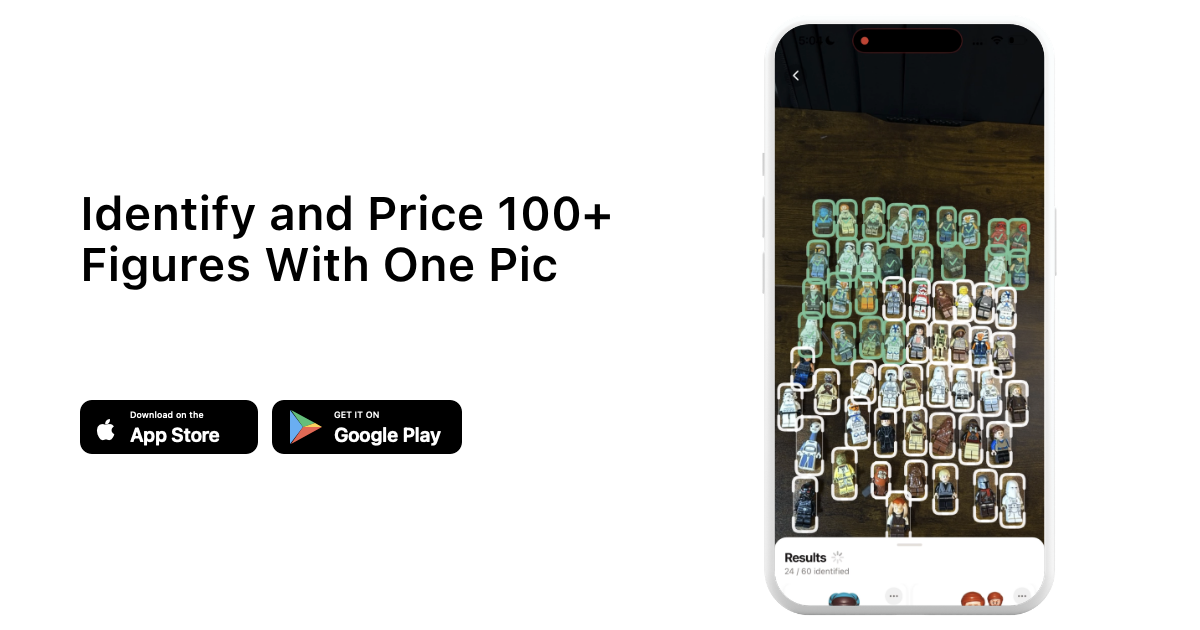
I use brick'em's scanner for exactly this when I'm working through a bulk lot, because it's built around identifying minifigures and parts quickly rather than making me search manually for every piece. The brick'em minifigure database alone now covers more than 18,686 cataloged minifigures, and it's free to search with no account needed. For incomplete sets where you're missing a specific hair piece to finish a figure, brick'em also has a Chrome extension that helps match your gaps to stores on BrickLink that are selling that exact part. If you want the full scanning and pricing workflow for bulk lots, you can start your 14-day free trial and run it against your own inventory.
Common Mistakes That Cost Sellers Money
The most common mistake is treating all hair pieces as interchangeable bulk filler, which means genuinely rare molds and colors get bagged and sold for pennies alongside common ones instead of being listed individually where they belong. The second most common mistake is pricing off asking prices instead of sold prices.
I learned this the hard way early on, before I started separating hair by color during every sort. I also see people skip checking Mercari and Facebook Marketplace sold listings entirely, which is a mistake since those platforms sometimes show different price points than BrickLink or eBay for the same item. Checking more than one source before you price something is rarely a waste of five minutes.
How Do You Source Rare Hair Pieces to Resell?
You source rare hair pieces mainly by buying bulk minifigure and parts lots on eBay and Facebook Marketplace, then sorting them carefully instead of reselling the lot whole, since most sellers who list bulk lots haven't separated out the valuable individual pieces themselves. That gap is where the margin lives.
Facebook Marketplace is a gold mine for this specifically because a lot of people listing old LEGO just want it gone and haven't sorted anything. When I sell the common hair and parts back out afterward, Whatnot and BrickLink both work well depending on the piece, Whatnot for bundles and character-driven lots, BrickLink for individual rare items where buyers are already searching by mold number. If you want to track whether a sourcing strategy like this is actually profitable over time, the LEGO investment calculator and the haul calculator are both built for running those numbers against what you paid.
Frequently Asked Questions
How do I identify a LEGO hair piece mold without a reference book?
Cross check the piece's shape and color against a catalog or scanning tool, then confirm which sets and figures it originally shipped with. A mold tied to one licensed character is far more valuable than one reused across dozens of generic sets, so that context matters as much as the shape itself.
Are rare LEGO hair pieces a good investment?
They can hold value, but this is not financial advice, just community experience. Licensed, low-production hair pieces in unusual colors tend to hold value better than common molds, though prices depend on ongoing demand for that specific character, so always verify current sold prices before assuming a piece will appreciate.
What's the fastest way to sort hair pieces out of a bulk lot?
Separate by color first, since black, brown, and blonde make up most common pieces, then inspect anything unusual for mold shape and printing. Using a scanning tool during this step speeds things up considerably when you're working through hundreds of loose pieces at once instead of checking each one manually.
Do printed LEGO hair pieces sell for more than plain colored ones?
Generally yes, because a printed detail combined with an uncommon mold is rarer than color alone, and printed hair pieces are harder for LEGO to reuse across unrelated sets. Still, always check sold listings for that exact mold, color, and print combination rather than assuming printing alone guarantees a higher price.
Where should I check real LEGO hair piece prices before I list one?
Check BrickLink's sold history and BrickEconomy first, since both track actual completed sales rather than asking prices. eBay and Mercari sold listings are useful secondary checks, especially for pieces that move in bundles rather than as standalone parts on the dedicated LEGO parts marketplaces.