Custom LEGO parts are aftermarket pieces, mostly minifigure weapons, armor, capes, and printed accessories, made by third-party companies like BrickArms, BrickWarriors, and Clone Army Customs to fit genuine LEGO minifigures. They aren't official LEGO products, the LEGO Group doesn't make or sell them, and mixing them into a lot without saying so is one of the fastest ways to get a return request from a buyer who assumed everything was genuine.
That's a different category from "clone brand" parts, which come from companies that copy LEGO's actual brick and figure designs, sometimes down to the stud pattern and box art. One is a legitimate accessory market that's been around for roughly two decades. The other sits in much murkier legal territory, and some marketplaces restrict or ban it outright. If you resell LEGO, you need to know which pile you're holding before you list it.
- Custom or third-party accessories (BrickArms, BrickWarriors, Eclipse Grafx, and similar brands) are generally treated as legal aftermarket products, similar to aftermarket car parts.
- Clone brand parts that copy LEGO's patented stud design or copyrighted sets are a separate, legally riskier category.
- Disclosing custom and third-party parts in your listings protects your feedback score and your account standing.
- Pricing varies a lot by brand, mold, finish, and character, so check current sold listings before you quote a price to a buyer.
What Are LEGO Custom Parts?
LEGO custom parts are accessories made by independent companies, not the LEGO Group, designed to click onto genuine LEGO minifigures and bricks. Think custom minifigure weapons, armor plates, capes, helmets, and printed torsos sold by brands like BrickArms, BrickWarriors, Clone Army Customs, and Eclipse Grafx.
These companies don't use LEGO's name or logo on their packaging, and they're not licensed by the LEGO Group. What they're selling is compatibility: parts engineered to the same stud and clip dimensions LEGO uses, so a custom BrickArms rifle snaps into a genuine minifig hand just like an official LEGO piece would. In my experience, this is one of the most overlooked corners of the hobby for new resellers, because a lot of bulk lots you buy will already have custom pieces mixed in from a previous owner who never separated them out.
Custom Parts vs. Clone Brand Parts: What's the Difference?
Custom parts are new accessories designed to be compatible with LEGO, while clone brand parts are bricks, minifigures, or sets that copy LEGO's own designs outright. The difference matters because it changes both the legal picture and how a marketplace will treat your listing.
A company like BrickArms is making something that didn't exist before: a new minifigure weapon mold, a new helmet shape, a new printed design. A clone brand, on the other hand, is reproducing LEGO's own stud-and-tube brick system and often copying specific set designs, box art, or minifigure prints wholesale. BrickLink, for example, treats the two categories very differently in its catalog and seller policies, and I'd recommend reading a platform's specific rules before you list either type in volume.
Is It Legal to Sell Third-Party LEGO-Compatible Parts?
Selling genuinely original third-party accessories, like a BrickArms weapon or a BrickWarriors helmet, is generally legal because those companies design their own molds and don't copy LEGO's patented brick geometry. LEGO's original interlocking stud-and-tube patent was filed back in 1958 and expired decades ago, which is part of why a whole compatible-parts industry was able to grow around it.
Clone brand parts are a different story. If a product copies a specific LEGO set, minifigure print, or packaging design, that can run into copyright and trademark issues, separate from whether the underlying brick shape is still patent-protected. I'm not a lawyer and this isn't legal advice, but from what I've seen in the reselling community, sellers who stick to well-known third-party accessory brands and avoid obvious set clones run into far fewer account and buyer problems.
Heads up: This is not financial or legal advice. We're sharing what we've learned from the LEGO reselling community.
How Much Are BrickArms and Other Custom Accessories Worth?
Custom accessory values swing widely, from under a dollar for a common weapon mold to well over $20 for a rare, limited-run BrickArms piece in an unusual color. Rarity, color, and whether the piece is still in production all drive the price more than the brand name alone.
I personally use sold listing history rather than asking prices whenever I'm valuing third-party parts, because asking prices on these pieces are often wishful. Here's a rough sense of how different categories tend to shake out, based on what I've seen change hands over the years. Always verify current sold prices before you quote one to a buyer.
| Part type | Typical range | What drives the top end |
|---|---|---|
| Common BrickArms weapon (current production) | $0.50 to $2 | Low rarity, widely stocked |
| Discontinued or limited color weapon | $3 to $15 | Short production runs, color exclusives |
| Custom printed torso or helmet | $5 to $25 | Licensed character art, small batch size |
| Rare early-run accessory in original packaging | $20 and up | Age, collector demand, scarcity |
How Can You Tell Genuine LEGO From Custom or Clone Parts?
You can usually tell genuine LEGO apart from custom or clone parts by checking for LEGO's logo stamp on stud tops, the quality and consistency of the plastic, and the weight and clutch power of the piece. Genuine LEGO elements almost always carry a small LEGO logo molded into the top of each stud, while most third-party and clone parts either skip this or use their own maker's mark instead.
I noticed early on in my own reselling that the fastest way to build this skill is to handle a lot of pieces, not just look at pictures. A checklist helps until that becomes second nature:
- Check stud tops for the LEGO logo. No logo usually means third-party or clone.
- Compare plastic finish. Genuine LEGO plastic has a specific matte, slightly glossy finish that's hard for clone brands to match exactly.
- Test clutch power. Genuine LEGO connections feel snug but not stiff; some clone bricks feel loose or gritty.
- Look for maker marks on custom accessories, such as a small "BA" stamp on some BrickArms molds.
- When unsure, scan the piece or run it against a reference database instead of guessing from memory.
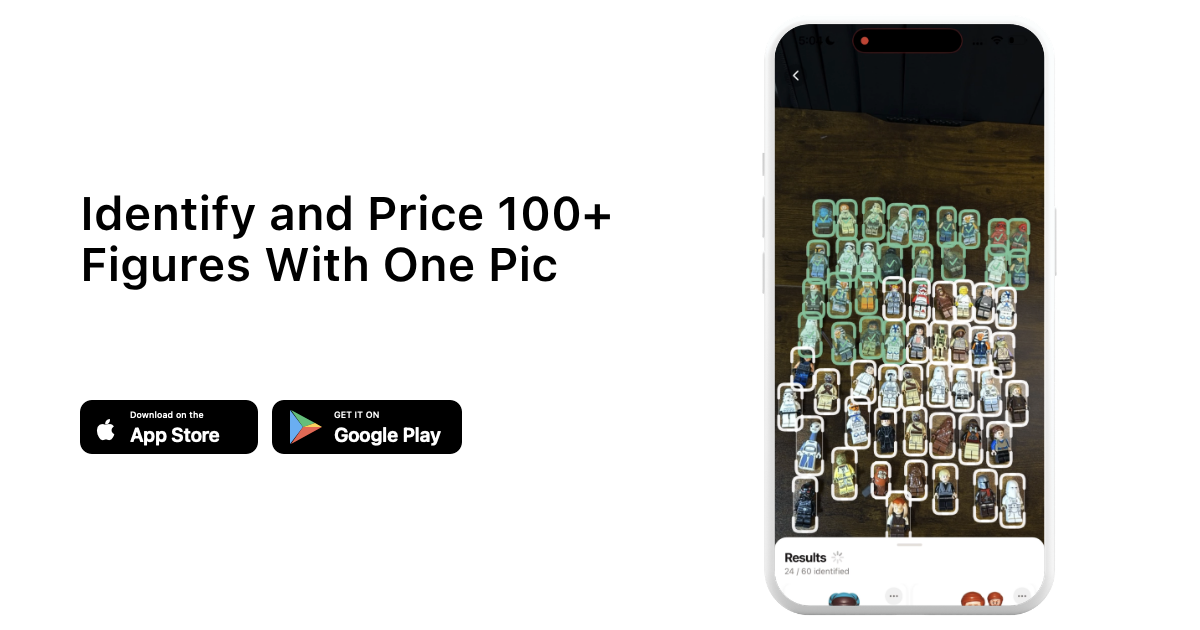
This is exactly the kind of sorting problem brick'em's LEGO minifigure database is built for. When I sort a bulk lot, I'll pull questionable pieces aside and check them individually rather than assuming the whole bag is genuine.
Where Do Resellers Buy and Sell Custom Parts?
Resellers mostly buy and sell custom LEGO parts on BrickLink, Brick Owl, eBay, and in bulk lots on Facebook Marketplace, with each platform serving a different part of the market. BrickLink and Brick Owl are the dedicated parts marketplaces where buyers specifically search for things like custom weapons or printed accessories.
BrickLink in particular functions as the pricing backbone for the whole secondhand LEGO world. I've called it the Wall Street of LEGO before, because that's genuinely how I use it: as a reference point before I price anything, custom parts included. eBay and Whatnot move more volume for mixed lots and finished, built-up minifigures that happen to include custom accessories, but buyers there are less likely to be shopping specifically for a part number the way a BrickLink buyer would.
Should You List Custom Parts Separately From Genuine LEGO?
Yes, you should always disclose when a minifigure or lot includes non-LEGO custom or clone parts, listed separately or clearly flagged in the description. Buyers in this hobby care a lot about originality, and an undisclosed custom weapon or helmet is a common source of negative feedback and return requests.
A seller I know learned this the hard way after a buyer discovered a custom BrickArms rifle mixed into what was listed as an "all genuine" lot, and it turned into a refund and a bad review over a part worth a dollar or two. In my view, that's never worth the risk. I recommend a simple habit: separate custom pieces into their own small lots, label them clearly as third-party or custom, and let buyers who specifically want them find them.
Are Custom Parts a Good Investment for Resellers?
Custom LEGO parts can be a decent, low-capital niche for resellers, but they aren't the strongest investment category compared with sealed sets or rare genuine minifigures. The market is real and steady, just smaller and less liquid than the core LEGO resale market.
From what I've learned running the numbers on my own inventory, the appeal of custom parts is less about big appreciation and more about turning something that costs almost nothing, loose weapons and accessories pulled from bulk lots, into small, consistent sales. If you're weighing custom parts against other categories, it helps to run your actual numbers through a LEGO collection value calculator rather than guess, since the margin on a $1 to $2 item disappears fast once shipping and fees are factored in.
Heads up: This is not financial or legal advice. We're sharing what we've learned from the LEGO reselling community.
How Should Beginners Start Sourcing and Selling Custom Parts?
Beginners should start by sorting bulk lots carefully, setting aside anything that looks non-LEGO, and researching sold prices before listing a single piece. Most new sellers lose money on custom parts not because the parts are worthless, but because they're priced blind or lumped in with genuine LEGO by mistake.
When I sort inventory now, I treat custom and clone identification as step one, before pricing and before photography. If you're just getting your workflow together, it's worth setting up an account through brick'em so identification and pricing happen in the same pass instead of as two separate chores.
Frequently Asked Questions
Is BrickArms an official LEGO brand?
No. BrickArms is an independent company that designs its own minifigure weapon and accessory molds to be compatible with genuine LEGO minifigures. It isn't licensed by, affiliated with, or endorsed by the LEGO Group, even though its parts are built to snap onto real LEGO figures.
Are clone brand LEGO sets illegal to resell?
It depends on what's being copied and where you're selling. Clone brands that reproduce specific LEGO set designs or packaging raise copyright and trademark concerns, and many marketplaces restrict or remove these listings. This isn't legal advice, so check current platform policy and local law before reselling clone brand inventory.
How do I know if a minifigure weapon is genuine LEGO or third-party?
Check the stud or handle for a LEGO logo stamp, compare the plastic finish and clutch power to a known genuine piece, and look for a maker's mark some third-party brands include. When you're not confident, scan or look up the piece rather than guessing, since visual differences can be subtle.
Do custom parts hurt the resale value of a minifigure?
They can, if undisclosed. A collector buying a figure expecting all-genuine parts will often return it or leave negative feedback if they discover a custom weapon or accessory later. Disclosed custom parts usually just mean a lower price for that specific item, not a lost sale.
Where is the best place to sell custom LEGO accessories?
BrickLink and Brick Owl are generally the strongest fit because buyers there are specifically searching catalogs for parts, including third-party accessories. eBay and bulk-lot sales on Facebook Marketplace work better for mixed inventory where custom parts are a small part of a larger listing.