

Can LEGO actually work as an emergency fund? In my experience, yes, but only if you treat it like a real asset and not a toy box. The LEGO alternative savings investment approach means holding sealed sets, minifigures, and bulk lots that you could convert to cash in days if you had to, instead of locking money into a bank account that pays almost nothing. I've built a chunk of my own financial cushion this way, and I've watched other sellers in the LEGO reselling community do the same thing with mixed results depending on what they bought and how fast they needed the money.
This only works if you're honest about liquidity. A sealed modular building might be worth more a year from now, but it won't sell in 24 hours the way a well priced Star Wars minifigure lot will on eBay or Whatnot. From what I've seen, the sellers who treat LEGO as a real line item in their financial plan are the ones who track value regularly and know exactly what they'd sell first if cash got tight.
- LEGO can act as a liquid, tangible alternative to a portion of a cash savings account, not a replacement for one.
- Minifigures and sealed sets tend to hold and move value better than used, incomplete, or City theme sets.
- Selling speed varies a lot by platform: Facebook Marketplace and Whatnot can move inventory in days, BrickLink and eBay can take longer depending on pricing.
- Promoted listing fees on platforms like eBay can eat into returns, so build that into your math before you call something "liquid."
- Track your collection's value with a tool like the brick'em LEGO collection value calculator so you're not guessing what your emergency stash is actually worth.
Can LEGO Really Work as an Emergency Fund?
Yes, LEGO can function as part of an emergency fund if you hold the right mix of inventory and know how to sell it fast, but it should never be your only safety net. I personally keep a portion of my LEGO inventory specifically set aside as a "sell first if needed" stash, made up of items I know move quickly. The key word is liquidity, not just value on paper.
A sealed set that's appreciated 40% since release only helps you in an emergency if you can actually find a buyer this week. That's why I separate my collection mentally into two buckets: long term holds and fast movers. The fast movers are what I'd call my actual LEGO emergency fund.
Why Some Resellers Treat LEGO Inventory Like a Side Savings Account
Resellers lean on LEGO as a side savings account because, unlike a stock portfolio, you can physically hold it, sell small pieces of it at a time, and convert it to cash through multiple different marketplaces. I started doing this almost by accident. I'd sell a few minifigures off my shelf whenever I needed quick cash, and I noticed the inventory I'd built up functioned a lot like a flexible fund I could draw from piece by piece.
That flexibility is the real advantage over a single lump investment. You don't have to liquidate everything at once. You can sell one bulk lot, three minifigures, or a single sealed set depending on exactly how much cash you need that month.
Heads up: This is not financial or legal advice. We're sharing what we've learned from the LEGO reselling community.
Sealed Sets vs. Minifigures: Which Holds Value Better for an Emergency Stash?
For an emergency stash, minifigures generally edge out sealed sets because they're smaller, easier to store in volume, and faster to sell individually or in small batches. Sealed sets can appreciate well over time, sometimes outperforming stocks, bonds, or gold over long stretches according to collector research, but that's a long term thesis, not something you can count on hitting in a 48 hour cash crunch.
In my view, minifigures are the better emergency fund building block specifically because of story and character value. A minifigure tied to a popular franchise carries demand that a generic set piece doesn't, and rare figures can be worth $2,000 to $3,000 even though they're only about two thirds the size of an index finger. That kind of value density in a small, easy to store item is hard to beat when you need options.
| Inventory Type | Typical Liquidity | Best For |
|---|---|---|
| Minifigures | High, especially popular themes | Fast, small cash needs |
| Sealed sets | Moderate, depends on buyer pool | Longer term value growth |
| Bulk lots | High on marketplaces like eBay | Quick bulk cash conversion |
| Used/incomplete sets | Low to moderate | Slow, often discounted sales |
How Fast Can You Actually Turn LEGO Into Cash?
If you price items 30 to 50% below current market value, well photographed minifigures and small lots in a strong niche like LEGO are almost certain to sell within 24 to 48 hours on eBay, based on what I've consistently seen in my own listings. That speed is exactly why this works as an emergency fund strategy at all. Slower platforms can still work, they just require more patience and better pricing discipline.
Facebook Marketplace and Whatnot tend to move faster for local or live audience sales, while BrickLink and eBay are better for precise, market rate pricing when you're not in a rush. I've sold LEGO on eBay for over $100,000 total, and the fastest sales were always the ones priced to move, not the ones priced to maximize profit.
What Are the Risks of Using LEGO as Savings?
The biggest risk is treating LEGO like it's as safe as cash in a bank account when it isn't, since there's no insurance, no guaranteed price floor, and resale value depends entirely on finding a willing buyer. Promoted listing fees on eBay can push your effective take rate close to 25% of the sale price, which cuts directly into what you thought your "savings" were worth.
A lot of sellers I know also underestimate how much condition and completeness matter. An incomplete set or a beat up minifigure can sell for a fraction of the catalog value, so your actual emergency fund might be worth less than your spreadsheet says until you've verified current sold prices yourself.
How Do You Track the Value of Your LEGO Emergency Fund?
You track it the same way you'd track any other asset: regularly, using real sold price data, not just listing prices or gut feel about what your collection "should" be worth. I personally check my inventory's value every few weeks rather than assuming it's stayed flat, because prices on minifigures and sets shift more than people expect.
Tools built for this make it much easier than manually cross referencing BrickLink listings. I use the brick'em LEGO investment calculator and the collection value calculator to get a current snapshot instead of guessing, and I'd recommend any reseller treating LEGO as savings do the same before they count on a specific dollar figure being there when they need it.
Which Marketplaces Should You Use to Cash Out Fast?
For speed, Facebook Marketplace and Whatnot are usually your best first stops, with eBay and BrickLink as backups when you have a little more time to price precisely. Facebook Marketplace lets you avoid platform selling fees entirely, which matters when every dollar of your emergency fund counts, though I'd always recommend meeting in a safe public location, like a police station parking lot, for larger transactions.
BrickLink has much cheaper selling fees than the bigger marketplaces, so it's genuinely useful for liquidating smaller, lower dollar items that wouldn't be worth the hassle on a platform where shipping costs eat the margin. eBay still reaches the widest buyer pool of anywhere I sell, which matters most when you need something to move no matter what.
Building Your LEGO "Rainy Day" Inventory the Right Way
Start by setting aside a specific, separate portion of your inventory that you mentally label as your emergency fund, made up of items you know sell fast rather than your rarest, slowest moving pieces. When I started treating part of my collection this way, I picked popular, broadly recognized minifigures and small bulk lots specifically because I knew I could move them quickly if I had to.
Avoid loading your "rainy day" stash with niche or illiquid categories. From what I've learned, something like general City theme minifigures rarely sell for more than a couple dollars each, which makes them a poor choice for a fund you're counting on in a pinch.
- Set aside a specific shelf, bin, or inventory tag for your "emergency" LEGO, separate from long term holds.
- Prioritize minifigures and small lots from high demand themes over slow moving or niche categories.
- Know your 2 to 3 fastest selling platforms before you need to use them, not during the emergency.
- Re-check real sold prices every month or two instead of relying on old estimates.
- Keep a small amount of true cash savings too. LEGO should supplement an emergency fund, not replace one entirely.
A Simple Checklist for Starting a LEGO-Based Emergency Fund
The fastest way to start is to inventory what you already own, separate your fast moving items from your long term holds, and price a test listing or two to confirm real world demand before you count on the money being there. I'd recommend doing this with a small batch first rather than assuming your whole collection is equally liquid.
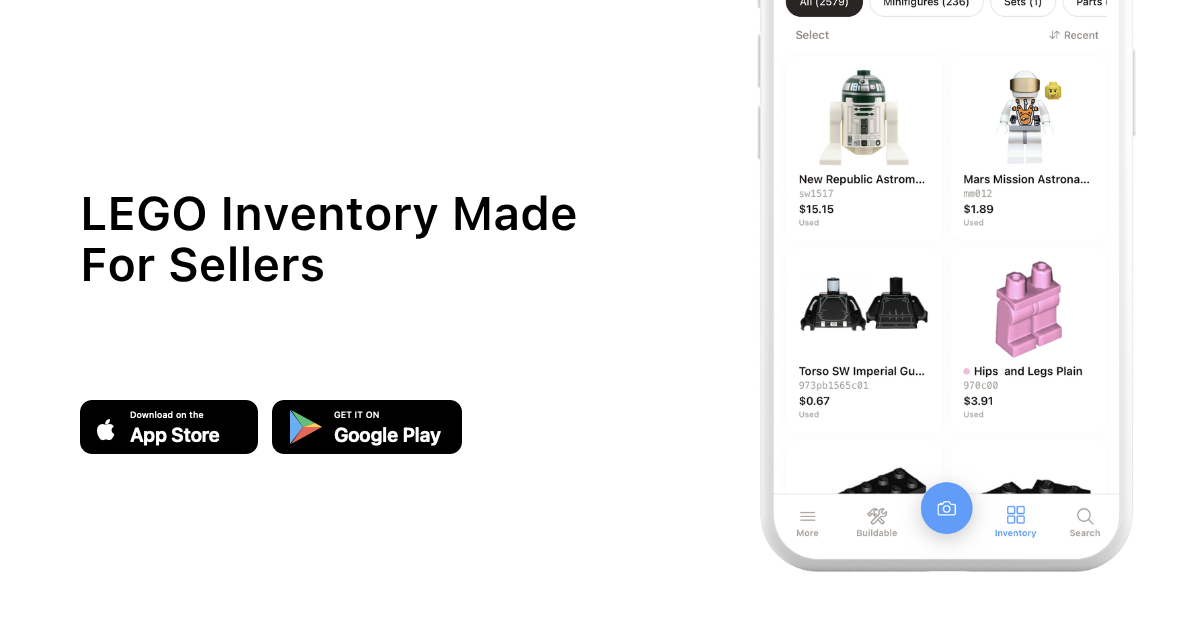
- Inventory your current LEGO using a scanning or tracking tool so you have an accurate count.
- Separate items into "fast mover" and "long term hold" categories.
- Check current sold listings on BrickLink or similar sites for a handful of your fast movers.
- Pick your top 2 to 3 selling platforms based on what you actually have to sell.
- Set a target dollar amount for your LEGO emergency fund and track progress monthly.
If you're starting from scratch, the brick'em haul calculator is a quick way to estimate what a lot or collection is worth before you decide what stays in your long term holds and what becomes part of your fast moving emergency stash. You can also browse the LEGO minifigure database to double check which figures in your collection actually carry real demand.
Frequently Asked Questions
Is LEGO a good alternative to a traditional savings account?
LEGO can work as a supplement to a traditional savings account, not a full replacement, since it lacks insurance and guaranteed liquidity. In my experience, it works best as one part of a broader financial cushion, specifically for sellers who already understand how to price and move inventory quickly across multiple platforms.
How much of my emergency fund should be in LEGO?
There's no universal number, but many sellers I know keep LEGO as a smaller supplement alongside, not instead of, actual cash savings. A common sense approach is to only count the portion of your collection you're confident you could sell within a week or two at a fair price.
Which LEGO items sell the fastest in an emergency?
Popular minifigures from high demand themes and well priced bulk lots tend to sell the fastest, especially on marketplaces like eBay and Whatnot. Sealed sets can be valuable but often take longer to find the right buyer, so they're better suited to long term holds than next week cash needs.
Do selling fees eat into my LEGO emergency fund?
Yes, and they can be significant. Promoted listings on eBay can push your effective fees close to 25% of the sale price, while platforms like Facebook Marketplace and BrickLink tend to have lower costs, which matters a lot when you're counting on a specific amount of cash.
How do I know what my LEGO collection is actually worth right now?
Check current sold prices on marketplaces like BrickLink or BrickEconomy rather than relying on old estimates or listing prices. Using a dedicated tool to track value over time, instead of guessing, gives you a much more realistic picture of what you could actually convert to cash if you needed it.