

A LEGO selling brand is what happens when buyers remember your name before they remember the item you listed. It means consistent photos, a recognizable voice across eBay, Whatnot, and BrickLink, and a reputation for fair grading that makes people buy from you before they even compare prices elsewhere. In my experience, the sellers who treat their store like a brand instead of a pile of listings are the ones who eventually get to charge a little more and still sell faster.
I've watched this play out from both sides, as a buyer scrolling listings and as someone building my own LEGO reselling history from scratch. A seller I know started with a single folding table at a local meet and now runs a four figure a month side business, almost entirely because buyers trust his grading and keep coming back. None of that happened by accident. It happened because he treated his first fifty sales like an audition for the next five hundred.
- A LEGO brand is built on consistent photos, honest grading, and a recognizable voice across every platform you sell on.
- Trust compounds. Buyers who had one good experience with you are far more likely to skip comparison shopping next time.
- Your packaging, your bio, and your follow up messages are all part of the brand, not just your listing photos.
- Scanning, pricing, and inventory tools like brick'em let you stay consistent at volume instead of slowing down as you grow.
- Picking a niche, whether that's Star Wars minifigures or modular sets, makes your brand easier to remember and easier to search for.
What Does It Actually Mean to Build a LEGO Selling Brand?
Building a LEGO selling brand means your listings, photos, grading, and communication are consistent enough that buyers recognize you across platforms. It's the difference between being "a random eBay listing" and being "that seller who always grades minifigures accurately." Once buyers trust your name, they stop shopping around every time, and that is worth real money over hundreds of sales.
In my view, most new resellers skip this step entirely. They list items as fast as possible, which makes sense early on, but it means every sale starts from zero trust. A brand lets you skip that step on sale number two hundred. I personally noticed the shift once my photos, descriptions, and grading language stopped changing from listing to listing. Buyers started leaving comments that referenced past purchases, which almost never happened in my first few months.
Why Do Buyers Pay More From a Seller They Trust?
Buyers pay more from trusted sellers because the risk of a bad surprise drops to almost zero. When someone has bought from you before and the minifigure matched the listing exactly, they stop haggling as hard and stop comparing five other listings before clicking buy. Trust removes friction, and removing friction is worth a price premium almost every time.
This shows up clearly on Whatnot, where Luka's first show had only about 10 people watching but still did over $500 in sales. That early trust, built show after show, is part of how he grew to over 3,000 followers and more than $30,000 in sales within 5 months, without ever showing his face on camera. The brand was the consistency of the show itself, not a personality on screen.
How Do You Pick a LEGO Niche That Builds Your Brand Faster?
You pick a niche by choosing a theme or category you already understand well and can talk about with specifics, not just enthusiasm. A focused niche like Star Wars minifigures, Ninjago figures, or modular sets gives buyers a reason to remember you for one thing, which is far easier to build a reputation around than being a generalist from day one.
From what I've seen, Star Wars and Ninjago are great starting lanes because demand is broad and familiar, which makes it easier to get your first repeat buyers fast. Modular sets are a slower, higher capital lane, but in my view they're one of the most underrated long term collector categories in the entire hobby. Castle and Pirates sets tend to attract nostalgic collectors who will pay well for the right piece, even though neither theme moves as quickly as character driven lines. Pick one lane, get good at pricing and grading it, then expand.
What Makes Your Photos and Listings Look Like a Real Brand?
Professional looking listings use the same background, lighting setup, and angle every single time, so your storefront looks intentional instead of thrown together. Buyers associate visual consistency with trustworthiness, even if they can't articulate why. A few small habits, repeated on every listing, do more for your brand than any single great photo ever will.
I use the same light box and the same three angles for every minifigure I list, and I grade condition the same way every time using plain language instead of vague terms like "good shape." When I sort through a new bulk lot, I separate figures by condition first and theme second, which keeps my listing quality consistent even when I'm moving through dozens of pieces in one sitting. Buyers notice that consistency faster than you'd expect.
How Do You Build Reputation Across eBay, Whatnot, and BrickLink?
You build reputation across platforms by keeping your grading standards, descriptions, and response times identical no matter where someone finds you. A buyer who sees you on Whatnot and later finds your eBay store should feel like they're dealing with the same seller, not a different business entirely. That consistency is what actually travels between platforms, since reviews and follower counts don't transfer.
eBay puts your brand in front of the broadest possible audience, which Luka has used to sell over $100,000 worth of LEGO over the years, though promoted listings can push your effective take rate close to 25% when you need extra visibility. Whatnot rewards consistency and personality over raw reach, and spending around $20 per show on boosted promotion near the start of a stream tends to help new sellers get discovered. BrickLink is less about personality and more about being known as accurate and fair on pricing, which matters because it functions as the pricing backbone collectors actually trust, something close to the Wall Street of LEGO. A seller I know built his entire reputation there just by consistently matching his listed condition to the real condition, every single time.
Should You Brand Your Packaging and Shipping Experience?
Yes, branded packaging and shipping are worth the small extra effort because unboxing is the last impression you leave before a buyer decides whether to come back. A clean, well protected package with a simple thank you note costs very little but signals that a real business, not a random stranger, packed that order.
I've started including a small printed card with my store name and a note thanking the buyer, and I've had multiple people mention it in messages weeks later when they came back for a second purchase. It doesn't need to be fancy. Bubble wrap that actually protects a minifigure's accessories and a legible hand written note do more brand building than people expect from something that costs a few cents per order.
How Do You Turn One Time Buyers Into a Loyal Following?
You turn one time buyers into repeat buyers by staying visible after the sale, through a short message, a follow back, or a mention in your next show or post. Most sellers stop the relationship the moment the package ships, which means they're constantly chasing brand new buyers instead of selling again to people who already trust them.
Instagram has been the fastest version of this for me. I can post a story to a few hundred followers and have items sold within minutes, because those buyers already know my grading is consistent. On one occasion I posted a single story and sold around $700 worth of LEGO to 3 different buyers inside 20 minutes. That only works because the trust was already built somewhere else first, usually on Whatnot or eBay, and Instagram just activated it quickly.
What Tools Help You Scale Your Brand Without Slowing Down?
The right tools help you scale by keeping your grading, pricing, and listing quality consistent even as your volume goes up, which is exactly where most sellers start cutting corners. Consistency at ten sales a week is easy. Consistency at a hundred sales a week requires a system, not just good intentions.
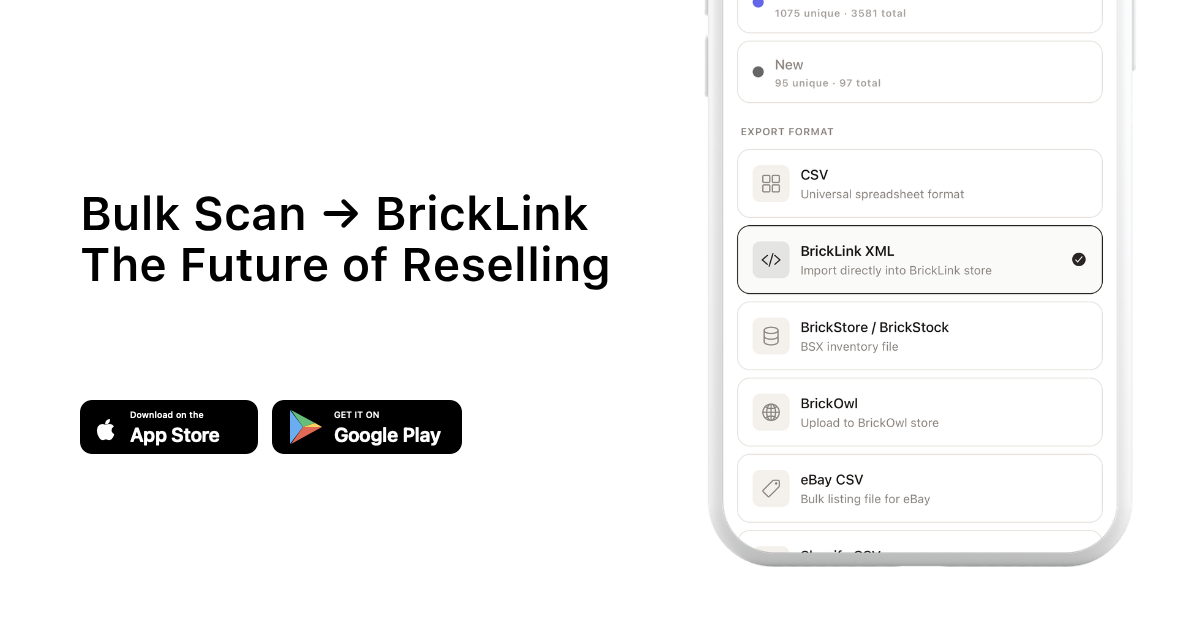
This is where brick'em fits into the workflow I actually use. Bulk scanning and identifying minifigures means I'm not manually typing out character names and set numbers for every single piece, which is usually where quality and consistency start slipping as volume grows. If you want to see how your current collection stacks up before you start building a storefront around it, the LEGO collection value calculator is a solid starting point, and pairing it with the LEGO minifigure database helps you double check names and variants before you ever write a listing. Getting your pricing and identification right before you post is part of the brand too, since mislabeled listings are one of the fastest ways to lose a buyer's trust for good.
| Brand Building Task | Why It Matters |
|---|---|
| Consistent photo setup and angles | Buyers recognize your storefront instantly across platforms |
| Same grading language every listing | Reduces disputes and builds trust for repeat buyers |
| Pick one theme or niche to start | Easier to be remembered and to rank for in search |
| Follow up message or thank you note | Keeps the relationship alive after the sale ships |
| Accurate identification before listing | Prevents mislabeled items that damage your reputation fast |
| Consistent presence across eBay, Whatnot, BrickLink | Reputation compounds instead of resetting on each platform |
Common LEGO Branding Mistakes to Avoid
The most common branding mistakes come from inconsistency, not from a lack of effort. A seller can work hard and still look unprofessional if their grading language, photo quality, or response time changes from one sale to the next. In my experience, fixing these small things does more for long term sales than any single marketing push.
- Grading the same condition differently depending on how badly you want the sale.
- Changing photo backgrounds or lighting so your storefront looks inconsistent at a glance.
- Ignoring messages for days, then wondering why repeat buyers stopped coming back.
- Listing without double checking identification, which leads to returns and bad reviews.
- Spreading across too many themes too early instead of becoming known for one or two.
Heads up: This is not financial or legal advice. We're sharing what we've learned from the LEGO reselling community.
If you're ready to put a system behind your brand instead of managing it all by memory, you can start your 14-day free trial of brick'em and start scanning and pricing your inventory the same way every time. It's a small habit that pays off every single time a buyer decides whether to trust your next listing, and it's a lot easier to keep reading our other guides on the brick'em blog than to rebuild a damaged reputation later.
Frequently Asked Questions
How long does it take to build a recognizable LEGO selling brand?
Most sellers start seeing recognition after 50 to 100 consistent sales, though it depends heavily on platform and niche. Whatnot sellers often see it faster because repeat viewers watch multiple shows, while eBay and BrickLink reputation tends to build more slowly through reviews and feedback over several months of steady listings.
Do I need a logo or business name to start branding my LEGO store?
No, a logo helps but it's not required to start. Consistent grading, photos, and communication build trust faster than visual branding alone. A simple, memorable store name across eBay, Whatnot, and BrickLink matters more early on than a polished logo, which you can always add once you have a track record worth branding.
Which LEGO theme is easiest to build a beginner brand around?
Star Wars and Ninjago tend to be the easiest for beginners because demand is broad, familiar, and consistent across platforms. Both themes make it simple to find buyers quickly while you're still learning grading and pricing, which matters more early on than chasing a niche with higher ceiling but thinner day to day demand.
Should I sell on multiple platforms at once while building my brand?
Selling on two platforms at once is usually manageable once your grading and photo process is consistent, since the workload is mostly repeating the same habits in a different place. I'd avoid starting on three or more at once, since inconsistent response times across too many platforms can hurt the exact trust you're trying to build.
How much does branded packaging actually cost per order?
Basic branded packaging, like a printed thank you card and proper protective wrap, typically costs a few cents to around a dollar per order depending on materials. It's a small cost relative to the repeat business it can generate, though the bigger driver of repeat buyers is still accurate grading and consistent communication.