

Running a LEGO reselling business from home can pay off if you know what you're doing. Focus on popular themes and smart sourcing to turn your LEGO hobby into steady income. Start by researching valuable themes, sourcing inventory wisely, and picking the right platforms to sell on.
Heads up: This is not financial or legal advice. We're sharing what we've learned from the LEGO reselling community. Your situation may be different. Talk to a professional if you need specific guidance.
- Look for profitable LEGO themes like Star Wars and Creator Expert.
- Source sets from retail sales, online marketplaces, and garage sales.
- Sell on platforms like eBay, BrickLink, and Whatnot.
- Track finances and understand tax obligations.
What is a LEGO Reselling Business?
A LEGO reselling business involves buying LEGO sets and minifigures at retail or discounted prices and selling them later at a profit. This business leverages the appreciation in value of LEGO products after they are retired from production, thanks to their limited runs and dedicated collector base.
How to Start a LEGO Reselling Business?
Begin by researching profitable themes. Popular themes like Star Wars, Creator Expert, and Harry Potter often see significant value appreciation post-retirement. Acquire inventory through retail clearance, online marketplaces, and garage sales. Efficiently sort and identify valuable pieces to maximize profits.
What Platforms are Best for Selling LEGO?
Choose platforms based on your inventory. eBay is great for reaching a broad audience, BrickLink is ideal for specialized LEGO parts, and Whatnot offers live auction opportunities. Each platform has its strengths, so align your strategy with your inventory type.
How to Source LEGO Inventory Effectively?
Inventory sourcing is key. Focus on clearance sales at major retailers, check online marketplaces like Facebook Marketplace, and hit garage sales for underpriced collections. This strategic sourcing can significantly boost your profit margins.
How to Manage Finances and Taxes for LEGO Reselling?
Keep detailed records of all transactions. Understand platform fees, like eBay's 13% and BrickLink's 3% plus PayPal fees. Consult a tax professional for income and sales tax guidance. Proper financial management ensures your business remains profitable.
Concrete LEGO Reseller Example
Consider a reseller focusing on Star Wars sets. By purchasing discounted sets from retail sales and selling on eBay, they might double their investment over a year. This strategy highlights the potential of strategic theme selection and platform use.
Common Mistakes to Avoid
Avoid overinvesting in unpopular themes, ignoring market trends, or underestimating shipping costs. These mistakes can erode your profits and hinder your business growth.
When to Use and When Not to Use This Approach
This approach is ideal if you're passionate about LEGO and willing to invest time in research and sourcing. If you're not interested in tracking market trends or managing finances, this might not be the right venture for you.
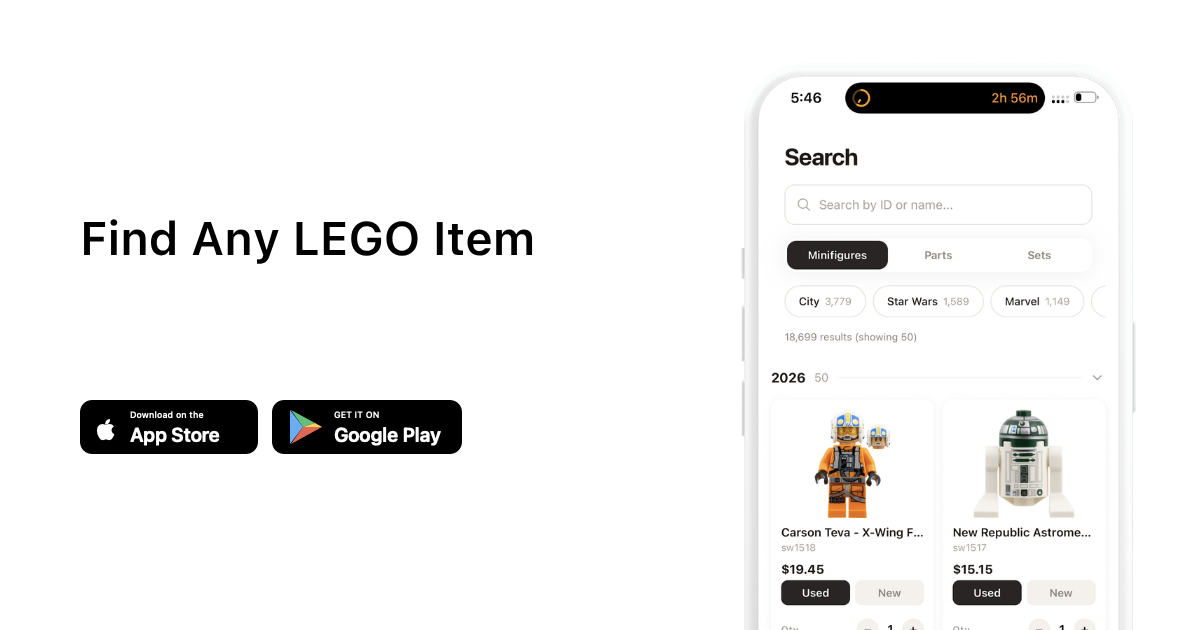
Streamline your reselling business with brick'em's scanning and pricing tools.
A practical home-based LEGO reselling workflow
How to Build a Profitable LEGO Reselling Business From Home is not built by guessing which sets are hot. It is built by repeating a simple workflow: source inventory below market value, identify exactly what you bought, separate fast-moving items from slow collectibles, price against real market data, list on the right marketplace, ship cleanly, and track what actually made money. The goal is not to make every LEGO item feel like treasure. The goal is to create a system where each buy gets processed the same way, so mistakes become rarer and good buys become easier to spot.
For most beginners, the cleanest starting lane is minifigures and smaller lots. They take less space than sealed sets, ship cheaply, photograph quickly, and can be sold across marketplaces like BrickLink, eBay, Whatnot, Mercari, and Facebook Marketplace. Bulk bricks can still be useful, but they require more sorting time and more patience. Sealed sets can be strong, but they tie up more capital and storage. A home reseller should start with the lane that creates feedback quickly: buy, identify, price, list, sell, review the numbers, then repeat.
What to track before calling it profitable
Revenue is not profit. A LEGO reseller needs to track purchase cost, selling fees, payment processing fees, shipping materials, postage, refunds, missing parts, storage supplies, and the time spent sorting and listing. If a lot sells for more than you paid but takes five hours to clean, identify, photograph, and ship, it may be a worse business decision than a smaller lot that sells quickly with less work. Treat time as a real input, especially if the goal is to build a repeatable side business instead of a hobby that occasionally pays for itself.
| Metric | Why it matters | Beginner target |
|---|---|---|
| Buy cost | Determines your margin before fees and shipping | Record every purchase immediately |
| List value | Shows what the inventory could sell for if priced correctly | Use recent market data, not wishful asking prices |
| Sell-through speed | Separates liquid inventory from long-tail collectibles | Prefer items with proven buyer demand |
| Time to process | Reveals whether the workflow is scalable from home | Track sorting/listing time for each lot |
| Net profit | The actual result after fees, supplies, and shipping | Review after each batch, not once a year |
Beginner sourcing rules for home resellers
Good sourcing is the difference between a business and a pile of plastic. Start by looking for lots where the seller has not fully identified the value: mixed minifigure bins, childhood collections, incomplete sets with valuable figures, underpriced Facebook Marketplace listings, garage sale finds, and local lots where convenience matters more than perfect market pricing. Avoid buys that require heroic assumptions. If you only make money when every set is complete, every figure is authentic, and every rare part is present, the deal is probably too thin for a beginner.
- Buy when you can identify enough value before paying, not after hoping.
- Prioritize lots with visible licensed minifigures, clean condition, and recognizable themes.
- Be careful with smoke smell, heavy yellowing, broken clips, bite marks, and missing accessories.
- Separate quick-flip inventory from collector inventory so slow items do not distort your cash flow.
- Keep a simple no-buy list for themes, conditions, or lot types that repeatedly waste your time.
How to process a LEGO lot at home
The fastest home workflow is batch-based. First, dump nothing permanently; take photos of the lot as purchased so you can reference what came together. Second, pull out minifigures, animals, printed parts, stickered panels, and obvious set-defining pieces. Third, identify minifigures and high-value parts before sorting common bricks. Fourth, group items by selling path: BrickLink inventory, eBay singles, Whatnot stream lots, Facebook local bundles, and parts that are better held for completing future sets. This prevents the common beginner mistake of spending hours sorting low-value bricks while valuable figures sit unidentified.
Use the primary keyword naturally here: a LEGO reselling business becomes much easier when scanning, pricing, and inventory tracking are part of the workflow instead of an afterthought. Tools like brick'em are useful because they help you move from “I think this figure is worth something” to “this is the figure, this is the market context, and this is where it belongs in my selling plan.” Streamline your reselling business with brick'em's scanning and pricing tools
Marketplace strategy: where each item should go
No single marketplace is best for every LEGO item. BrickLink is strong when buyers know exactly what they want and search by part, set, or minifigure. eBay is strong for broad demand, bundles, and shoppers who may not know BrickLink. Whatnot can be powerful for liquid inventory and live-selling energy, especially when the seller can move many small items quickly. Facebook Marketplace is useful for bulky lots, local pickup, and avoiding shipping complexity. The business improves when each item is routed intentionally instead of cross-posted everywhere with no plan.
| Inventory type | Best-fit channel | Reason |
|---|---|---|
| Known minifigures with clear IDs | BrickLink or eBay | Buyers search for exact figures and compare condition |
| Fast-moving lower-priced figures | Whatnot | Live auctions can move volume when starting bids are smart |
| Large mixed lots | Facebook Marketplace | Local pickup reduces shipping and packing work |
| Incomplete sets with valuable figs | eBay or part-out workflow | Story and photos can explain what is included |
| Common parts | BrickLink or future completion bins | Value depends on organization and patience |
Common mistakes that kill margins
The most common mistake is buying too much before building a repeatable process. New resellers often think more inventory means more profit, but unprocessed inventory is just a backlog. Another mistake is using asking prices as market value. A figure listed for a high number does not mean buyers are paying that number. Condition mistakes are also expensive: cracked torsos, loose arms, wrong heads, swapped accessories, and fake parts can turn an exciting find into a refund risk. Finally, many sellers forget that platform fees, shipping supplies, and time can erase what looked like a good spread.
- Do not price from one high active listing; check recent market context where possible.
- Do not mix unidentified figures into bulk lots until you know what they are.
- Do not promise completeness unless you verified parts and figures.
- Do not ignore tax and bookkeeping questions; ask a qualified professional for personal tax advice.
- Do not scale paid sourcing until your first few batches prove real net profit.
A simple first 30-day plan
For the first month, keep the business intentionally small. Week one: learn the marketplaces, create accounts, set up a basic inventory sheet, and process items you already own. Week two: buy one small local lot with visible minifigure value and record every cost. Week three: list the best items, test pricing, and document how long each step takes. Week four: review what sold, what sat, and what was harder than expected. The goal of the first 30 days is not to become a full-time reseller. The goal is to prove that you can turn one batch into clean listings and measurable results without creating chaos at home.
If the system works, then increase deal flow slowly. Add better storage, improve photography, standardize titles, and build marketplace-specific templates. A profitable home operation is usually boring in the best way: same intake process, same pricing process, same listing checklist, same shipping station, and the same review rhythm every week.
FAQ
Can you really build a LEGO reselling business from home?
Yes, but it works best when treated like a small inventory business, not a treasure hunt. Profit depends on sourcing discipline, accurate identification, realistic pricing, marketplace fit, and consistent processing.
What is the easiest LEGO category for beginners?
Minifigures are often the easiest starting point because they are small, liquid, searchable, and cheaper to ship than sealed sets or large built collections. They still require authentication and condition checks.
Is LEGO reselling taxable?
Tax treatment depends on your location, activity level, and personal situation. Keep records from the beginning and talk with a qualified tax professional instead of relying on generic internet advice.
How does brick'em help?
brick'em helps with the identification, pricing, and organization parts of the workflow: scan figures, look up values, track inventory, and make better listing decisions before inventory turns into a backlog.
Related reading
- LEGO Reseller Bookkeeping: Ditch the Spreadsheet Chaos
- Make $1000/Month Selling LEGO Minifigures: Real Math & Workflows
- How to Calculate LEGO Reselling COGS (Free Formula)
Download our LEGO reseller checklist to streamline your business setup.