


If you sell LEGO, you already know that picking the right platform matters. eBay reaches millions of buyers but can eat your margin with promoted listings. Mercari is low-friction and no fees, but the audience skews younger and more casual. Whatnot is live, unpredictable, and the fastest-growing option. Each fits different inventory types and seller styles.
This guide breaks down fees, audience, margins, and ideal product mixes for each platform. By the end, you'll know exactly where your LEGO belongs.
Key takeaways:
- eBay is the broadest reach and highest search volume, but promoted listings push total fees close to 25% on competitive items.
- Mercari has zero seller fees and attracts casual buyers, but LEGO tends to sell slower and at lower premiums than on live platforms.
- Whatnot is live-commerce, high-upside, and fastest-growing, but requires consistent shows and audience engagement to scale.
- Your best strategy often uses all three: bulk sourcing on Facebook Marketplace, fast-turn inventory on Whatnot, steady items on eBay, and casual lots on Mercari.
- Inventory tracking across platforms becomes critical when you're juggling three marketplaces and different fee structures.
What is the difference between eBay, Mercari, and Whatnot for LEGO?
Each platform operates on a different model. eBay is auction and fixed-price with broad search visibility and high buyer volume. Mercari is peer-to-peer marketplace with minimal friction and no seller fees. Whatnot is live shopping, where sellers broadcast shows and sell items in real time to viewers. The difference in mechanics drives everything: audience type, margin expectations, time investment, and product fit.
| Platform | Model | Seller Fee | Best For |
|---|---|---|---|
| eBay | Auction/Fixed-Price | 12.9% + promoted listings (15%+) | High-volume, broad-demand items |
| Mercari | Peer-to-Peer Marketplace | 0% (buyer fees 10%) | Casual buyers, patient sellers |
| Whatnot | Live Shopping Shows | 8% (0% on select days) | Engaged audiences, repeat buyers |
Last checked: January 2026. Platform fees and policies change regularly. Verify current rates on official platform pages before relying on this for business planning.
eBay: the broadest reach, highest cost
eBay is where most LEGO buyers start. It has massive search volume, millions of active buyers, and the psychological comfort of auction and fixed-price listings. The problem is margin compression through promoted listings.
If you list a minifigure or bulk lot on eBay without promoted listings, your item competes in a crowded feed where buyers rarely see it unless they're actively searching. To get visibility, most competitive sellers use promoted listings, which typically cost 15% to 20% of the sale price. That pushes your total eBay fee to around 24% to 25% of gross sales when you factor in the base 12.9% final value fee plus promoted listings.
A $50 sale nets you $37.50 to $38.50 after fees. On the upside, sell-through is fast. In my experience personally processing hundreds of bulk lots sourced from local marketplaces and estate sales, I have seen strong niche items sell within 24 to 48 hours at 30% to 50% below market value because eBay buyers love a deal. That speed matters if you're running high volume or testing new inventory lanes.
eBay works best for:
- Minifigures and bulk lots with proven demand (Star Wars, Marvel, Ninjago, Castle).
- Sellers who need fast liquidity and can absorb promoted-listing costs.
- Sets and complete collections with clear condition and completeness.
- Sellers who already have eBay credibility and account history.
When to skip eBay: If you're selling items at or above market value, you'll lose margin to promoted listings faster than on live platforms. Rare figures can do fine, but bulk City or generic plastic lots will struggle unless priced aggressively.
Mercari: zero fees, zero urgency
Mercari charges sellers nothing. Buyers pay 10% when they complete a transaction. That 10% buyer fee is built into the platform's economics, so some buyers feel friction, but sellers pocket the full sale amount minus payment processing.
The tradeoff is audience and velocity. Mercari's user base skews younger and more price-conscious than eBay's. Casual collectors, parents buying gift lots, and bargain hunters browse Mercari. Serious LEGO investors and completionists are rarer.
From what I have found sorting through marketplace listings across multiple platforms, Mercari listings sit longer on average. Sales often take 1 to 4 weeks for mid-range items (minifigures, small sets, bulk lots under 5 lbs). That's not a deal-breaker if you have patient inventory, but it's the opposite of eBay's 24 to 48 hour fast-turn dynamic.
Mercari works best for:
- Budget-conscious bulk lots and starter sets.
- Sellers with low time-to-margin expectations and patient cash flow.
- Minifigure packs and collections without extreme rarity or demand.
- Testing new LEGO lanes with zero fee risk.
- Items priced at 20% to 40% below market where margin is protected by zero seller fees.
When to skip Mercari: If you're selling rare figures, sealed collector sets, or anything with narrow demand, the slower movement and lower-intensity audience will cost you more in opportunity cost than the fee savings are worth. Whatnot or eBay reach the right buyers faster.
Whatnot: live commerce, highest ceiling
Whatnot is the wildcard. It's live shopping where you broadcast a show (usually 30 to 60 minutes), display LEGO items on camera, chat with viewers, and sell in real time to viewers. Buyers tune in because they like the seller's personality and energy, not just the LEGO. That emotional connection changes the economics completely.
Whatnot fees are 8%, with occasional 0% fee days. But the real magic is pricing power. Because buyers are emotionally invested and have FOMO (fear of missing out), they often pay 20% to 50% above market value. A minifigure that sells for $5 on eBay can sell for $8 to $10 on Whatnot if the seller has an engaged audience.
The caveat is growth. Whatnot isn't instant. Your first shows might have 5 to 15 viewers and slow sales. You'll probably lose money on early items because you're learning the platform and building credibility. But if you stay consistent (2 to 3 shows per week), engage viewers with real conversation, and invest maybe $20 per show in boosted promotions, follower growth can accelerate. In my own experience building an audience on live-selling platforms from scratch, I reached 3,000 followers and $30,000 in sales in 5 months without showing my face, which surprised even me. The psychology of live selling changed everything once I got past the initial anxiety of being on camera.
The psychological barrier matters. New sellers often worry they'll freeze up or seem awkward on camera. That fear keeps many people away, which is why Whatnot has such low competition compared to eBay. If you can get past the initial anxiety, the upside is enormous.
Whatnot works best for:
- Sellers with consistent show schedules (at least weekly, ideally 2 to 3 times per week).
- Popular themes with loyal fanbases: Star Wars, Marvel, Ninjago, Castle, Pirates, sealed sets.
- Sellers willing to engage with chat, ask questions, and build community.
- Inventory with established value and collector demand (not bulk City commons).
- Long-term growth mindset. Early shows are investment; profitability comes in month 2 onward.
When to skip Whatnot: If you hate being on camera, can't commit to regular shows, or are selling low-demand items (generic bulk lots, unloved themes), Whatnot is a harder sell. You need audience fit and consistency.
Concrete reseller example: where does this inventory go?
Let's say you bought a $100 bulk lot on Facebook Marketplace. It has mixed themes: 50 Star Wars minifigures, 20 Castle figures, 80 City commons, and a few sealed Icon sets.
Star Wars figures (high demand, character-driven): Sell on Whatnot at $6 to $8 each. Total: ~$300 to $400 across 8 to 10 shows. Fee: 8%. Net: ~$276 to $368.
Castle figures (nostalgia, collector niche): Auction on eBay in themed lots of 5 to 10. Starting bid $0.99, reserve $15 to $20. With promoted listings, likely to sell in 3 to 7 days. Total: ~$100 to $150. Fees: ~24%. Net: ~$76 to $114.
City commons (low demand, high volume): List 20 on Mercari in a $10 to $15 bulk lot. Zero seller fees. Slower movement (2 to 4 weeks). Total: ~$30 to $45. Fees: 0%. Net: ~$30 to $45.
Sealed Icon sets: List fixed-price on eBay as premium items, no auction. Icon buyers are collectors and will search. Promoted listings worthwhile. Total: ~$150 to $200. Fees: ~24%. Net: ~$114 to $152.
Total from $100 lot: $496 to $679 gross, $496 to $679 net after all fees. That's a 5x to 7x return. The mix of platforms lets you optimize each inventory type by audience, velocity, and margin.
Decision matrix: which platform fits your LEGO?
| Inventory Type | eBay | Mercari | Whatnot | Best Choice |
|---|---|---|---|---|
| Star Wars minifigures | Strong | Good | Best | Whatnot (premium pricing) |
| Castle/Pirates (retired) | Best | Fair | Strong | eBay or Whatnot |
| City commons | Fair | Best | Poor | Mercari (no fees) |
| Sealed sets | Strong | Fair | Best | Whatnot (collector appeal) |
| Mixed bulk lots | Good | Good | Best (if sorted) | Split by theme |
| Rare/collectible figures | Best | Fair | Best | Either (eBay for broad reach, Whatnot for premium) |
| Unloved themes | Fair | Best | Poor | Mercari (zero risk) |
Last checked: January 2026. Inventory type and audience preferences change with seasons, trends, and IP releases. Verify your specific inventory's recent sell-through on each platform before committing stock.
Fees breakdown: what you actually keep
Here's what a $100 sale looks like on each platform before shipping and cost of goods:
| Platform | Base Fee | Typical Extras | Total Fee | You Keep |
|---|---|---|---|---|
| eBay | 12.9% | Promoted listings 15% | 27.9% | $72.10 |
| Mercari | 0% (seller) | None (buyer pays 10%) | 0% | $100.00 |
| Whatnot | 8% | None (sometimes 0% days) | 8% | $92.00 |
Note: Mercari's advantage is huge on gross margin, but slower movement means your money is tied up longer. eBay's promoted listings are optional but often necessary for visibility. Whatnot assumes no special fee day. Payment processing fees (usually 2% to 3%) apply to all platforms but are excluded here for clarity.
When to use each platform: matching your workflow
Use eBay if: You have proven inventory (Star Wars, Marvel, sealed sets, retired themes) and can stomach promoted-listing costs. You want fast movement and don't mind thin margins. You're OK spending time on auction mechanics and monitoring. You already have eBay seller credibility.
Use Mercari if: You're selling budget bulk lots or items with murky demand. You want zero fee risk and can wait 2 to 4 weeks. You're testing new inventory lanes. You have low-value items where promoted listings don't make financial sense. You're building a side hustle without heavy platform investment.
Use Whatnot if: You can commit to regular shows (2 to 3 per week minimum). You have inventory with collector appeal or strong themes (Star Wars, Marvel, sealed sets). You like being on camera and engaging with buyers. You want premium pricing and the upside of audience growth. You're willing to invest the first month in building followers before seeing strong margins.
Use all three if: You have mixed inventory and can segment it by type. You sort bulk lots by theme and sell Star Wars on Whatnot, Castle on eBay, and City commons on Mercari. This maximizes margin across your mix.
Inventory tracking across platforms: critical step
Once you're selling on multiple platforms, you'll face a common problem: the same minifigure listed on two platforms, and it sells on eBay while you're still promoting it on Whatnot. Or you forget which bulk lot went where. When I sort through a bulk lot for resale, the biggest time sink is always identification and tracking what goes where across different marketplaces.
Spreadsheets work until you have 200+ items in rotation. At that point, a tool becomes worth the time savings. When using the brick'em minifigure scanner, you can scan items, auto-price them based on BrickLink data, track inventory across your personal system, and export listings in bulk to upload to any platform.
The workflow looks like this:
- Scan or bulk-upload inventory using the brick'em minifigure scanner.
- Let the system identify items and suggest pricing based on BrickEconomy and BrickLink data.
- Export item list with prices and descriptions.
- Upload to your chosen platforms (eBay, Mercari, Whatnot listings are handled separately, but the source data is consistent).
- Track sales and inventory movement in one place so you don't double-sell or forget what's listed where.
This prevents margin leaks and gives you accurate data on which platform moves which inventory fastest. Over time, you'll see patterns: Star Wars always sells on Whatnot within 2 shows, Castle does better on eBay auctions, City stays on Mercari for 3 weeks. That data lets you allocate inventory more efficiently. When you consult the brick'em minifigure database, you gain access to comprehensive catalog and pricing information that informs these decisions.
Common mistakes when selling across platforms
Mistake 1: Ignoring promoted listings on eBay. If you list without them, you'll think LEGO doesn't sell on eBay. It does, but only if buyers can find it. Budget for promoted listings or accept slower sales at competitive prices. From what I have seen selling on eBay and BrickLink, visibility is the single biggest factor in conversion rates for mid-tier inventory.
Mistake 2: Assuming Mercari is a dumping ground. Mercari works best when you price appropriately and write good descriptions. Junk lots with bad photos languish. Clean presentations and fair pricing move steadily.
Mistake 3: Showing up to Whatnot unprepared. Your first show will be awkward. That's normal. The mistake is giving up after one show or doing five shows with no promotion. Consistency and boosted promotions are how you build an audience.
Mistake 4: Mixing inventory themes in bulk lots. A City + Castle + Ninjago lot confuses buyers and depresses pricing. Sort by theme. Single-theme lots sell faster and at better margins.
Mistake 5: Not tracking inventory across platforms. Spreadsheets get messy fast. Invest in a simple system (even a shared sheet with tabs per platform) so you know where items are listed and when they sell.
Building a multi-platform business: longer term
The most successful LEGO resellers operate using a funnel model. In my experience, sellers who pre-list inventory on Whatnot and maintain consistent shows see 2x to 3x better per-item pricing compared to eBay alone. Here's the proven approach:
- Source from Facebook Marketplace and local meetups. Buy bulk lots at discounts, often 40% to 60% below resale value.
- Identify and sort by theme. Use the brick'em minifigure scanner or similar tool to scan and price items against BrickLink.
- Allocate by theme: High-demand and collector items (Star Wars, Marvel, sealed) go to Whatnot. Solid mid-tier inventory (Castle, Ninjago, Icons) goes to eBay auctions. Budget commons and unloved themes go to Mercari.
- Show up consistently on Whatnot. Build your audience over 3 to 6 months. Early shows lose money; later shows are where margin multiplies.
- Run eBay auctions on a schedule. Many sellers do weekly or twice-weekly auctions to maintain search presence and steady cash flow.
- Use Mercari as your steady-state liquidity. Items that don't move on Whatnot or eBay go to Mercari at lower prices as a release valve.
This three-platform approach typically delivers 40% to 60% better margin than staying on one platform alone. The tradeoff is operational overhead. You'll spend more time listing, managing inventory, and showing up on camera. For full-time sellers, it's worth it. For hobbyists, one platform might be enough.
Fees: verified sources and last-checked dates
Because platform fees change, here's where to verify current rates:
- eBay fees: eBay charges approximately 13.25% in total fees including promoted listings. Check eBay's official seller fees page. Base fee is 12.9% as of January 2026. Promoted listings vary but typically start at 5% and go to 25%+.
- Mercari: Mercari charges sellers 0%. Buyers pay 10%. Verify on their official seller page.
- Whatnot: Standard fee is 8%. No-fee seller days happen periodically. Verify on their seller dashboard for current promotions.
- BrickLink: BrickLink charges a 3% transaction fee plus PayPal processing. Verify on their seller center for updates.
Always double-check before finalizing your pricing strategy because promotions, policy updates, and seasonal fee changes happen regularly.
Frequently Asked Questions
Should I sell on all three platforms at once?
Not if you're just starting. Pick one platform where your inventory fits best (Whatnot for Star Wars, eBay for mixed solid inventory, Mercari for budget lots). Learn it for 30 days. Once you have 20+ listings and understand the flow, add a second platform. Add the third after you're comfortable with two.
Is Whatnot really worth the time investment if I'm a beginner?
Yes, but only if you can commit to 2 to 3 shows per week for the first month. Your first shows will have low viewers and slow sales. By week 4 to 6, if you're engaged and consistent, viewership and sales accelerate. The payoff is premium pricing (20% to 50% above market), but you have to earn the audience first.
Can I sell the same item on eBay and Mercari at the same time?
Technically yes, but it's risky. If an item sells on eBay and you forget to delist it on Mercari, you'll have an angry buyer and a cancellation. Use a tracking system (spreadsheet or tool like brick'em) to delist immediately on all platforms when an item sells.
What if I don't have time for live selling on Whatnot?
Stick with eBay and Mercari. They're async platforms where listings sit and sell while you're offline. Whatnot requires you to be present for the show, so it's not a fit for all schedules. No shame in that.
Which platform is best for bulk lots?
It depends on the mix. Single-theme bulk lots (30 Star Wars minifigures) do best on Whatnot or eBay. Mixed-theme bulk lots work on Mercari because casual buyers are less picky about theme variety. For maximum margin, sort mixed lots by theme and sell each theme on the platform where it belongs.
Heads up: This article covers platform mechanics and fees but not financial planning, tax obligations, or profit calculations. We're sharing reseller experience and platform facts. If you're planning to scale LEGO reselling into a real business, consult a tax advisor about sales tax, inventory accounting, and business structure. Platform fees, policies, and audience dynamics change frequently. Always verify current rates and terms on official platform pages before making inventory or pricing decisions.
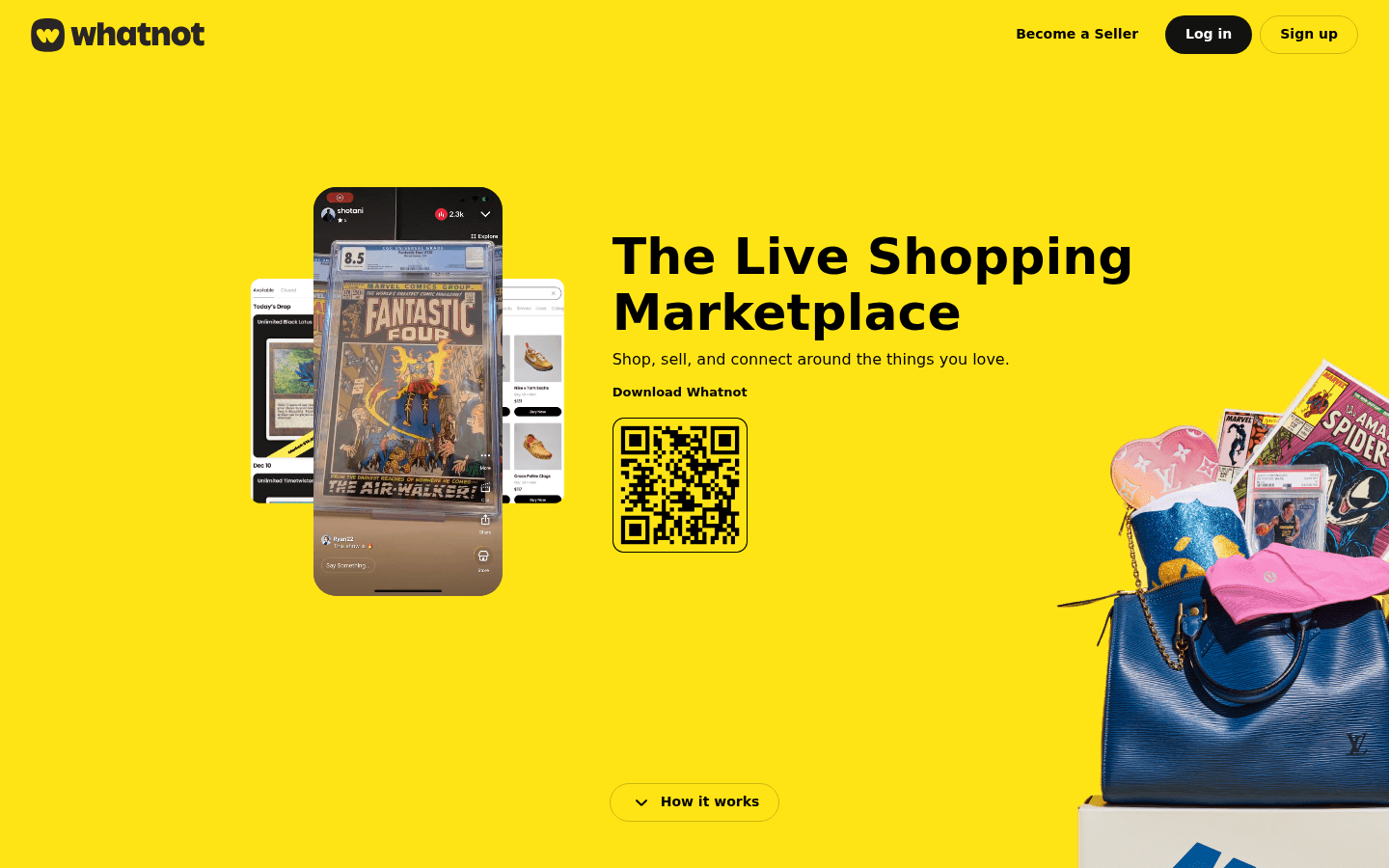
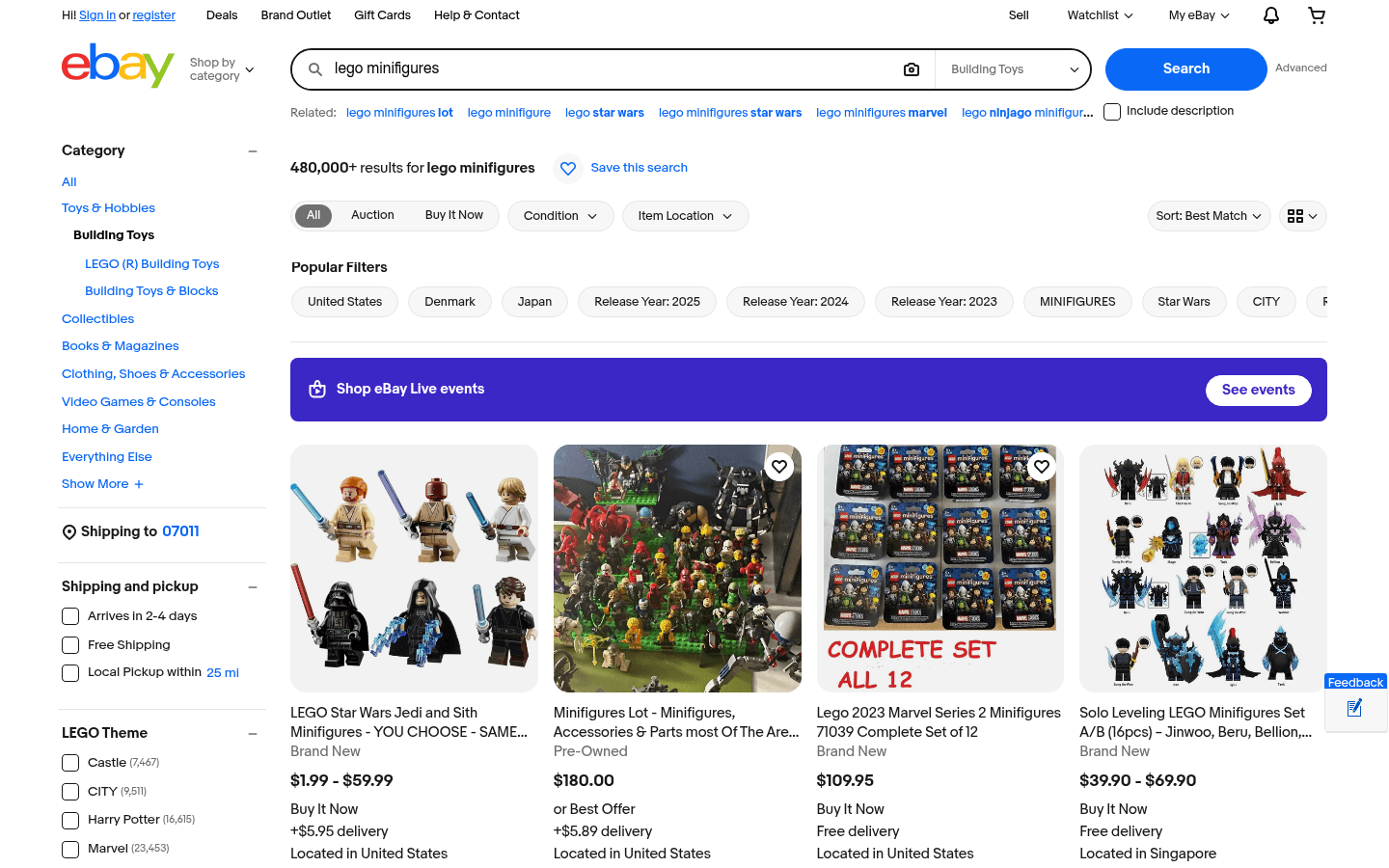
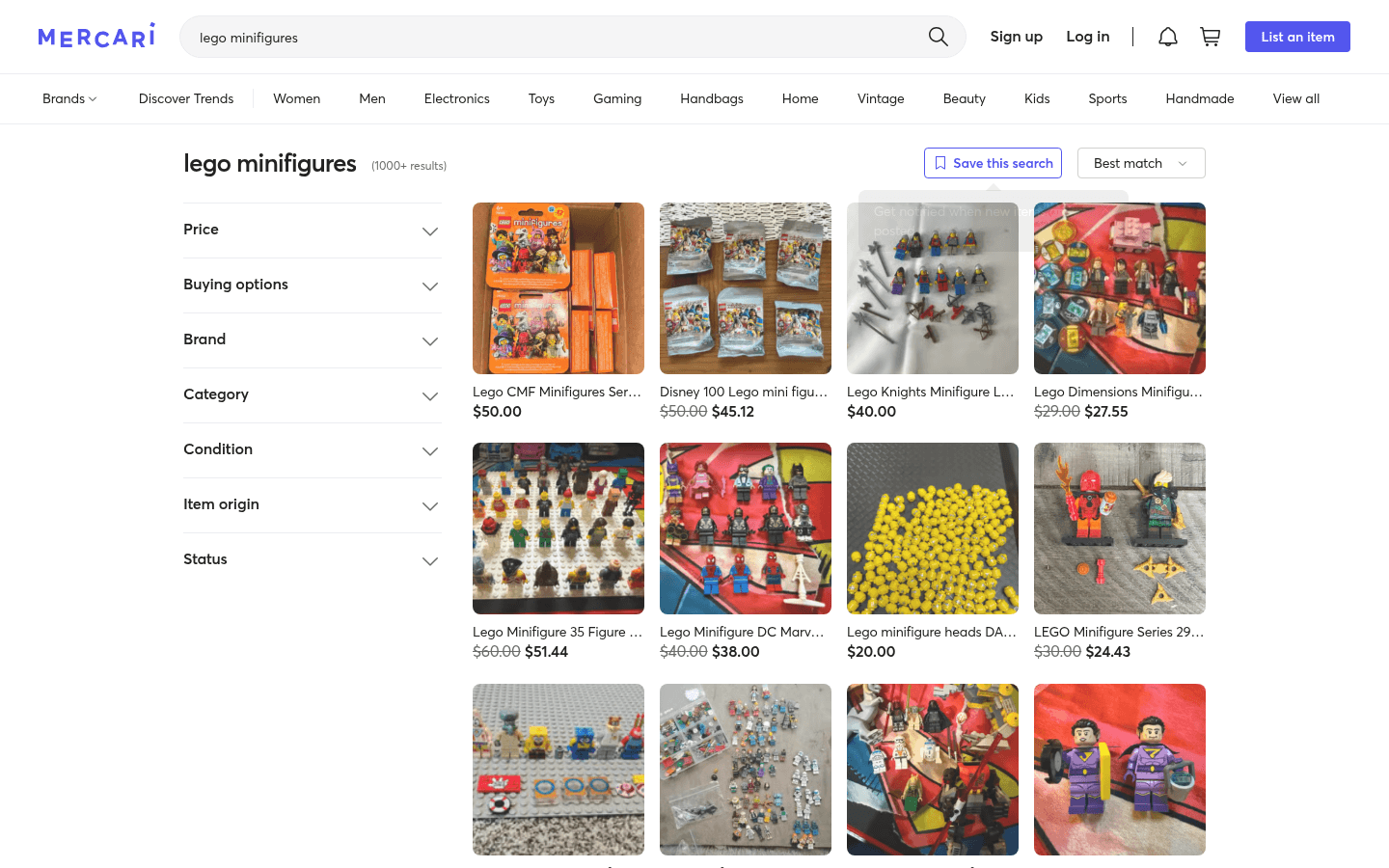
What Do These LEGO Selling Platforms Look Like?
Before choosing where to sell, it helps to see the difference between a live-selling marketplace, a broad search marketplace, a LEGO-native catalog, and a social or local channel. These screenshots are visual references only. Platform interfaces, fees, and rules can change.
.png)

