


Last updated: June 1, 2026. Platform fees and policies change often, so use the linked official fee pages before listing high-value inventory.
Looking for the best places to sell LEGO in 2026? The short answer is this: use BrickLink for catalog-perfect LEGO inventory, Whatnot for live volume, eBay for broad demand, Facebook Marketplace for local bulk, and StockX for sealed collector sets. The right choice depends less on the platform logo and more on what you are selling: sealed sets, used sets, minifigures, parts, or unsorted bulk.
My operator take: do not start by asking “where should I sell this?” Start by asking “what kind of inventory is this, how clean is my catalog data, and how much work am I willing to do before the listing goes live?” That one question prevents most beginner mistakes. A rare minifigure, a 25-pound mixed bin, and a sealed retired set should not all go to the same marketplace.
Key Takeaways: Where Should You Sell LEGO?
- Best overall for serious LEGO resellers: BrickLink, because buyers understand part numbers, variants, condition, and wanted lists.
- Best for moving volume: Whatnot, especially if you can sort inventory before a live stream and keep the show moving.
- Best broad marketplace: eBay, because sold comps are easy to research and buyer demand is massive.
- Best for local bulk: Facebook Marketplace, because local pickup can avoid shipping and marketplace fees on heavy bins.
- Best for sealed collector sets: StockX and eBay, depending on whether the set has strong collector demand and clear condition.
- Best for parts: BrickLink first, Brick Owl second, if your inventory is identified and organized.
Quick Fee Comparison for LEGO Selling Platforms
Fees below are practical seller estimates, not legal or financial advice. They were last checked in June 2026 against public platform fee pages or current seller help pages. Always verify current terms before you price a large lot, because marketplaces change final value fees, payment processing, shipping labels, and category rules.
| Platform | Best For | Typical Seller Cost | Operator Note |
|---|---|---|---|
| BrickLink | Parts, minifigs, used sets, AFOL buyers | About 3% marketplace fee, plus payment processing | Best when your item IDs, variants, and condition notes are clean. |
| Whatnot | Live auctions, minifig lots, fast inventory turns | Often around 8% selling fee plus payment processing around 2.9% + $0.30 | Great for volume, but weak prep creates chaotic shows and missed value. |
| eBay | Sets, rare minifigs, sealed inventory, bulk lots | Commonly around 13% to 14% total final value/payment fees for many toy sales | Fees are higher, but sold comps and buyer reach are hard to beat. |
| Facebook Marketplace | Local bulk, used sets, quick pickup sales | Local cash sales are usually fee-free; shipped orders can carry platform fees | Best when the item is heavy, lower margin, or not worth shipping. |
| Brick Owl | Parts, minifigs, secondary LEGO-native channel | About 2.5% commission, plus payment processing | Useful as a second catalog marketplace once inventory data is already clean. |
| StockX | Sealed collector sets with strong demand | Tiered transaction fees plus payment processing, often starting near 10% before seller tiers improve | Only use it when the set is sealed, recognizable, and already liquid on StockX. |
| Mercari | Simple fixed-price sets, bundles, casual buyers | Fee model changes have varied by period; check Mercari's current seller fee page before listing | Good for easy listings, but do not assume specialist LEGO buyers will find every variant. |
| Bricks & Minifigs / local stores | Instant cash, bulk liquidation, no shipping | No marketplace fee, but buy offers are wholesale and below retail resale value | Useful when speed matters more than extracting every dollar. |
| Shopify / own website | Repeat buyers, brand control, larger reseller operations | Monthly plan plus card processing, with Shopify listing card rates from 2.9% + $0.30 on entry plans | Best after you already have traffic or a customer list. |
| Reddit / Instagram / community drops | Trust-based sales, niche collectors, social proof | No standard marketplace fee, but payment processor and shipping costs still apply | Works best after you have reputation, clean photos, and clear rules. |
Best Platform by LEGO Inventory Type
This is the section most “best places to sell LEGO” lists miss. Sellers do not start with a platform. They start with a bin, a sealed box, a pile of minifigures, or a parts drawer. Match the inventory to the channel before you write the listing.
| Inventory Type | Best First Choice | Good Backup | Why |
|---|---|---|---|
| Rare minifigures | BrickLink or eBay | Whatnot | Variant accuracy and sold comps matter. Use Whatnot when you want live demand. |
| Unsorted bulk LEGO by the pound | Facebook Marketplace | Local stores or Whatnot | Heavy shipping kills margins. Local pickup often beats online complexity. |
| Sealed retired sets | eBay or StockX | BrickLink | Collectors care about condition, box quality, and clear market comps. |
| Used complete sets | eBay | BrickLink or Facebook Marketplace | Buyers want photos, completeness notes, and confidence that the set is real. |
| Individual parts | BrickLink | Brick Owl | Parts need catalog structure. Broad marketplaces are too slow for tiny inventory. |
| Lower-value bundles | Mercari or Facebook Marketplace | Whatnot | Keep listing time low. Do not spend 30 minutes optimizing a $12 bundle. |
Data Points That Matter Before You Pick a Platform
LEGO is not a normal used-toy category. A frequently cited Higher School of Economics paper found that retired LEGO sets appreciated about 11% annually on average over the period studied, which is why sealed sets and retired themes behave more like collectibles than garage-sale clutter. That does not mean every set goes up. It means platform choice matters because the buyer pool can change the realized price.
Bulk LEGO is different. A mixed bin might be worth only a few dollars per pound if it is dirty, incomplete, or full of common parts. The same bin can produce much better returns if it contains Star Wars minifigures, rare accessories, retired colors, or completeable sets. This is why I treat identification as the first step, not the last. If you do not know what is in the lot, you cannot know whether to list it locally, part it out, stream it, or cherry-pick the best figures for eBay and BrickLink.
Fees matter, but speed matters too. Paying a higher fee on eBay can still beat a lower-fee channel if the item sells in two days instead of sitting for six months. Paying a local store wholesale can make sense if the alternative is sorting 40 pounds of unsorted inventory you do not have time to process. The best seller is not always the seller with the lowest fee. It is the seller who matches inventory, time, and buyer demand correctly.
The 10 Best Places to Sell LEGO in 2026
1. BrickLink
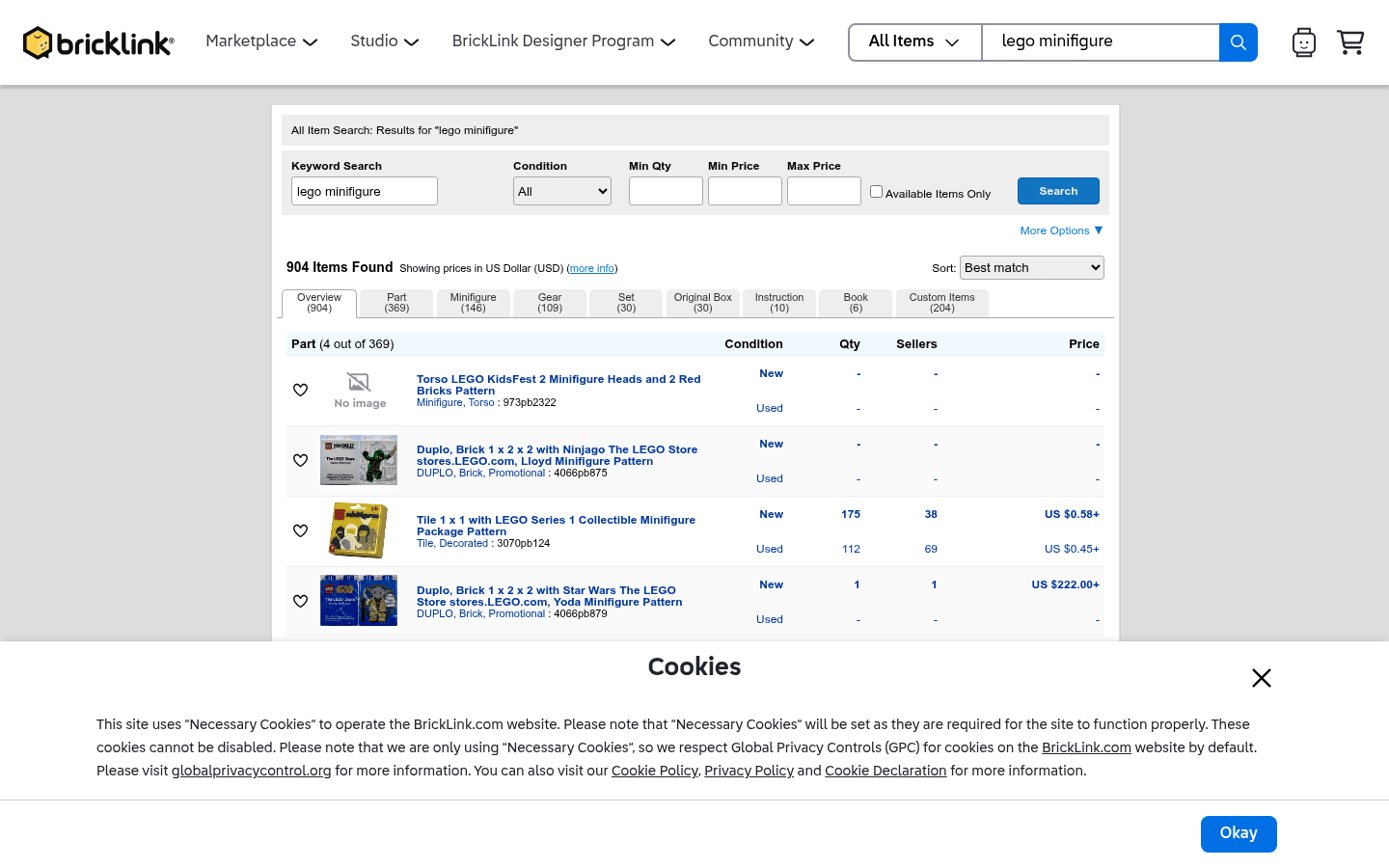
BrickLink is the best platform for serious LEGO sellers with organized inventory. It is LEGO-native, catalog-driven, and built around exact part, set, and minifigure IDs. That makes it especially strong for minifigures, individual parts, used sets, and buyers who already know exactly what they want.
My take: BrickLink is worth the learning curve when your inventory is clean. If I have a minifigure with a specific BrickLink ID, correct condition notes, and a known current value, BrickLink buyers understand what they are looking at. The downside is that sloppy inventory gets punished. Wrong variants, missing accessories, weak condition notes, or slow shipping can hurt trust quickly.
Who should use it: sellers with sorted parts, identified minifigures, and enough process discipline to keep inventory accurate. Who should avoid it: sellers who have one mixed bin and do not want to identify anything before selling.
2. Whatnot
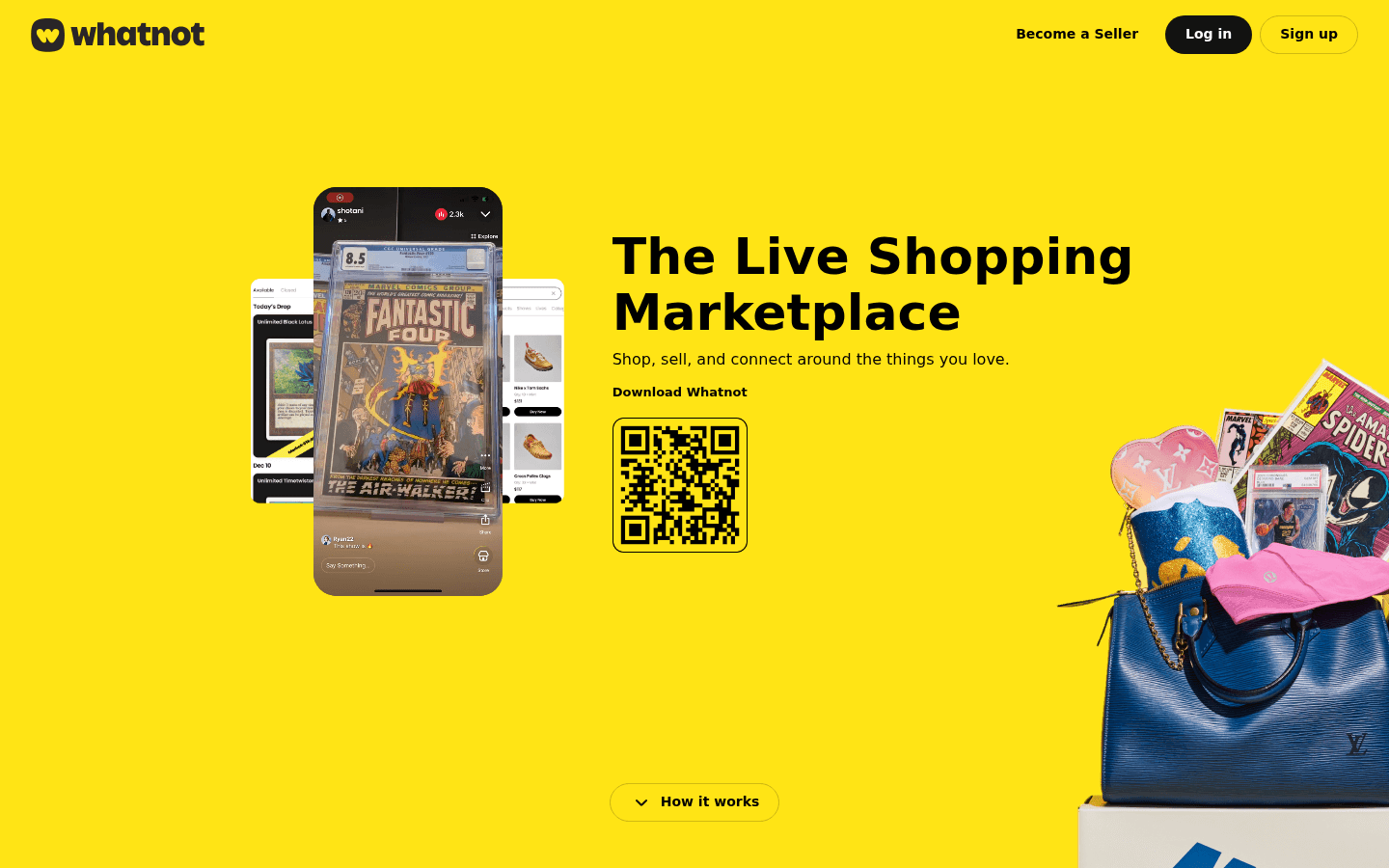
Whatnot is the strongest platform for live LEGO selling when you want to move volume and build a buyer audience. It works well for minifigure lots, themed bundles, live auctions, and inventory that benefits from being shown on camera instead of described in a static listing.
My take: Whatnot rewards preparation. If a seller enters a show with clean trays, clear starting prices, and inventory already sorted by value, live bidding can work. If the seller is still trying to identify figures on stream, the show slows down and money leaks out. Whatnot is not magic. It is a sales channel that amplifies good prep or exposes bad prep.
Who should use it: sellers who can stream consistently and want faster inventory turns. Who should avoid it: sellers who dislike live interaction or cannot prep inventory before the show.
3. eBay
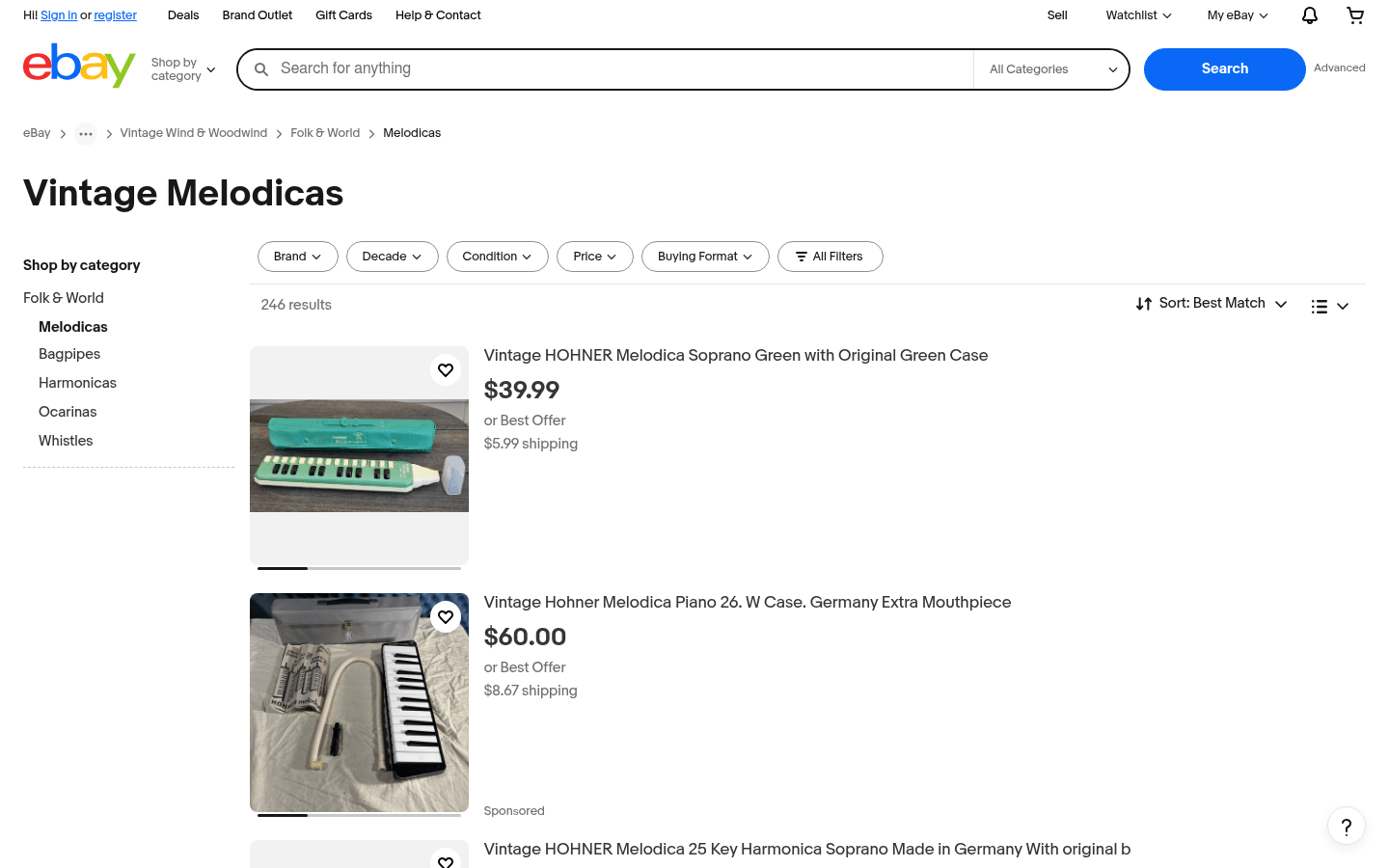
eBay is still the broadest marketplace for LEGO sets, rare minifigures, sealed inventory, and bulk lots. The biggest advantage is demand. The second advantage is research: eBay sold listings are one of the fastest ways to see what buyers recently paid.
My take: eBay is where I want clean photos, accurate titles, and specific item IDs. It is not always the lowest-fee option, but it often has enough buyer reach to justify the cost. For rare figures or sealed sets, the right buyer may simply be on eBay instead of a smaller LEGO-native marketplace.
Who should use it: sellers with high-value items, sealed sets, complete used sets, and minifigures with clear comps. Who should avoid it: sellers who cannot handle returns, shipping standards, or detailed listings.
4. Facebook Marketplace
Facebook Marketplace is the best place to sell LEGO locally, especially heavy bulk lots. If you have a 30-pound tote, shipping can destroy the margin. Local pickup keeps the transaction simple and lets the buyer inspect the lot in person.
My take: Facebook Marketplace is where I would start with messy bulk, incomplete sets, and lots that are not worth itemizing yet. The tradeoff is buyer quality. You will deal with low offers, no-shows, and vague messages. Price accordingly and keep communication simple.
Who should use it: sellers moving bulk by the pound, used sets, or local collections. Who should avoid it: sellers who want marketplace-level buyer protection or clean checkout flows.
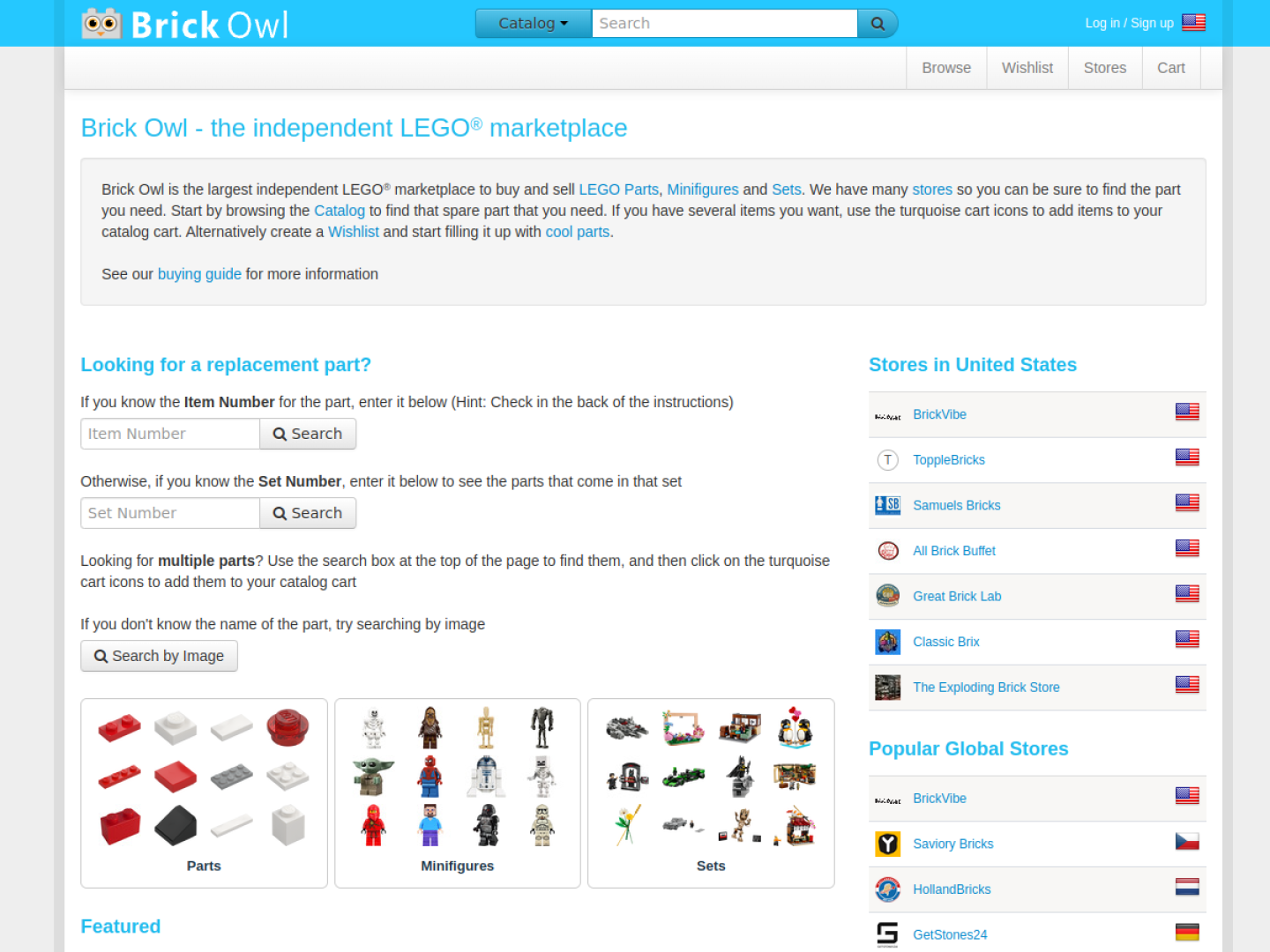
5. Brick Owl
Brick Owl is a LEGO-native marketplace with a cleaner interface than many sellers expect. It is smaller than BrickLink, but that can be useful if your inventory is already cataloged and you want another place for parts and minifigures to sell.
My take: I see Brick Owl as a secondary catalog channel, not a replacement for BrickLink. If you already did the hard work of identifying parts and minifigs, the marginal effort of cross-listing can make sense. If your inventory is still messy, fix the inventory first.
Who should use it: sellers with clean catalog data and parts inventory. Who should avoid it: sellers who need the biggest possible audience for one-off high-value sets.
6. StockX
StockX is the notable platform many LEGO selling lists now need to consider. It is strongest for sealed, collector-friendly sets where condition, authenticity, and market-style pricing matter. Think sealed retired sets, hype collaborations, and items with enough demand to create a visible bid/ask market.
My take: StockX is not where I would send loose parts, used sets, or minifigure lots. It is a sealed-set channel. If the set is new, desirable, and already trading there, StockX can be worth checking against eBay sold comps. If the set has box damage or needs explanation, eBay may give you more room to tell the condition story.
Who should use it: sellers with sealed collector sets. Who should avoid it: sellers with used, incomplete, loose, or condition-sensitive inventory.
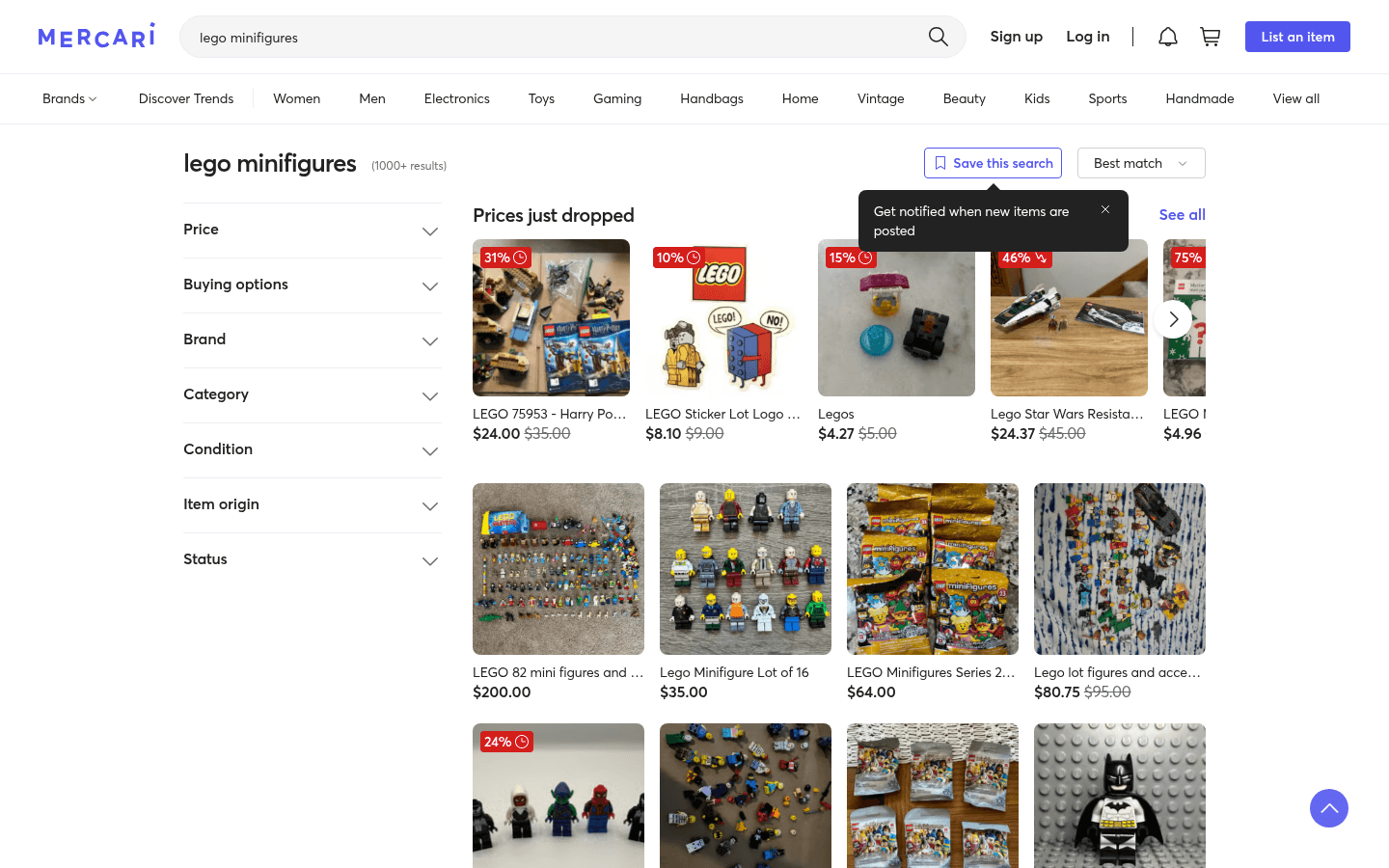
7. Mercari
Mercari is useful for simple fixed-price LEGO listings: bundles, used sets, minifigure groups, and casual toy buyers. The app is easier than eBay for many beginners, and listing speed can be a real advantage.
My take: Mercari is a “move it without overthinking it” platform. I would not depend on it for rare variant-aware buyers, but I would use it for clean bundles where the value is obvious from photos. Because Mercari fee models and buyer/seller charges have changed over time, check the current terms before pricing.
Who should use it: sellers with bundles and straightforward listings. Who should avoid it: sellers who need deep LEGO catalog accuracy.
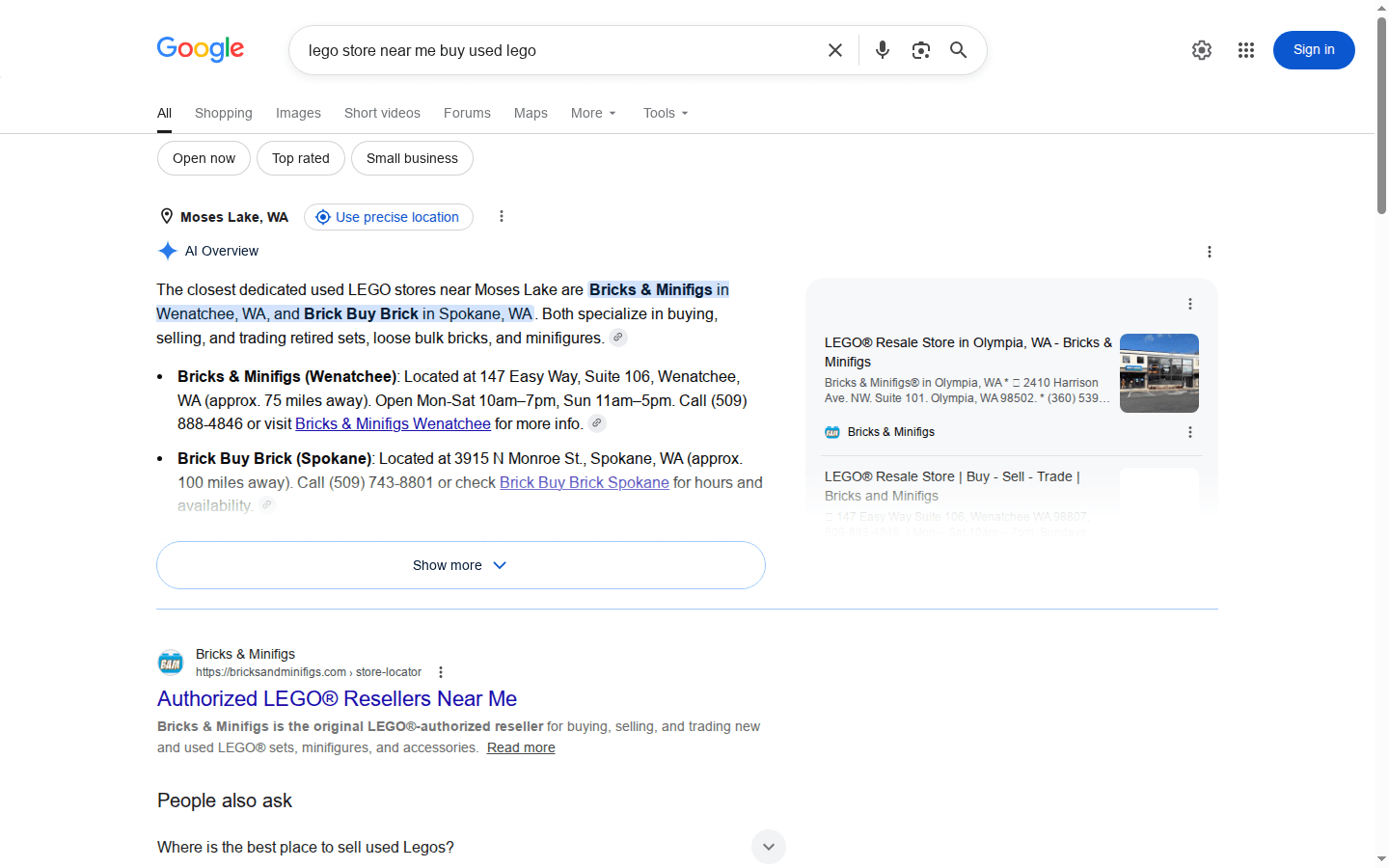
8. Bricks & Minifigs, Local LEGO Stores, and Toy Shows
Bricks & Minifigs, independent LEGO stores, toy shows, and local collector events are best for speed and trust. You usually trade maximum price for instant payment, no shipping, and less listing work.
My take: I like local stores for inventory that is too annoying to process or too low-margin to ship. The key is accepting the business model: a store has to resell your inventory, so the offer will be wholesale. That is not unfair. It is the price of speed.
Who should use it: sellers who want fast cash or need to clear space. Who should avoid it: sellers trying to extract full retail value from every minifigure or set.
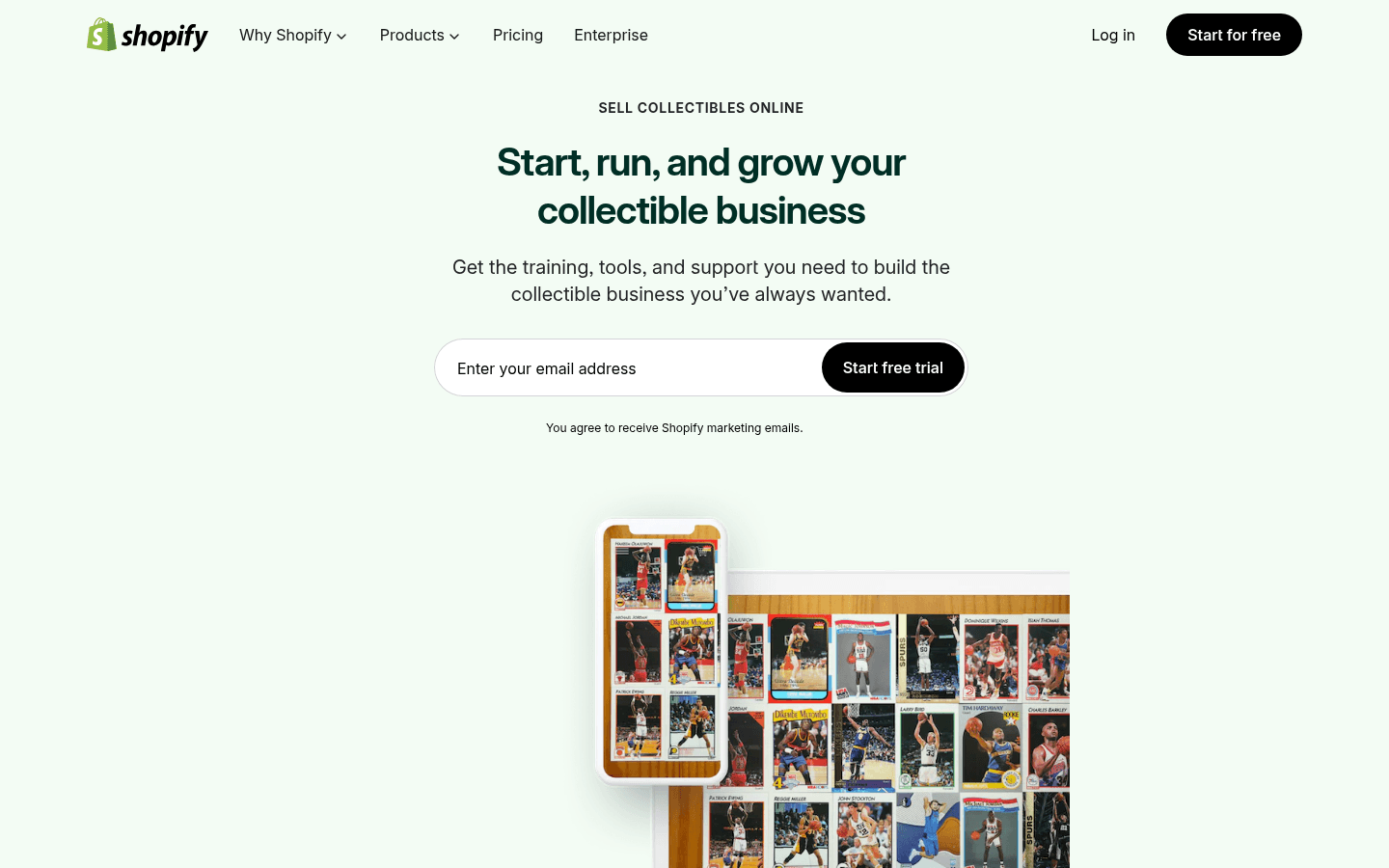
9. Shopify or Your Own Website
Shopify or your own website gives you the most control over branding, repeat buyers, email lists, bundles, and customer experience. It also gives you the most responsibility. You have to bring traffic, handle support, and earn trust without marketplace discovery doing the work.
My take: a standalone store is not the first move for most LEGO sellers. It becomes powerful after you have repeat buyers from Whatnot, Instagram, eBay, shows, or a niche catalog. If you already have an audience, a site can protect margin and create a better long-term business.
Who should use it: established sellers with repeat buyers. Who should avoid it: beginners who have not proven demand yet.
10. Reddit, Instagram, Discord, and Community Drops
Reddit's r/legomarket, Instagram, Discord groups, and private community drops are trust channels more than pure marketplaces. They can work well for minifigures, niche collectors, custom builds, and seller reputation, but they require clear rules and careful communication.
My take: community selling is powerful after people know you. It is less forgiving for beginners because reputation is the product. Use clear timestamps, condition notes, payment terms, and shipping rules. If you are not organized, community channels can create more friction than they solve.
Who should use it: sellers with reputation, niche inventory, and strong photos. Who should avoid it: sellers who want a platform to manage checkout, policies, and buyer expectations.
Where Do OfferUp, WeBuyBricks, Decluttr, and Amazon Fit?
These are worth knowing, but they did not make my main top 10 for most LEGO resellers. OfferUp can work like a local overflow channel, especially for bulk and used sets. Buyback services such as WeBuyBricks or similar bulk buyers can be useful when you want speed, but they usually cap upside because they need resale margin. Decluttr is convenience-first, not usually the best LEGO-specialist value path. Amazon can work for some sealed retail arbitrage sellers, but gating, competition, fees, and fulfillment rules make it a poor beginner recommendation.
The practical rule: use overflow channels when the inventory is simple and the main channels are not worth the effort. Do not let them replace BrickLink, eBay, Facebook Marketplace, or Whatnot for serious resale inventory.
Common Mistakes LEGO Sellers Make When Choosing a Platform
- Starting with the marketplace instead of the inventory. A sealed set, a rare minifigure, and a bulk bin need different channels.
- Ignoring fees until after the sale. A 13% fee on a high-value eBay sale might be worth it. The same fee on a low-margin bundle might erase profit.
- Listing unidentified minifigures too cheaply. One rare torso, head, or accessory can change the economics of the whole lot.
- Using local marketplaces for collector-grade items. Local buyers often want deals. Serious collectors may pay more on BrickLink or eBay.
- Trying to run Whatnot without prep. Live selling rewards speed. If you are still identifying figures during the show, you are leaking money.
5-Step Decision Framework for LEGO Resellers
- Identify the inventory first. Separate sealed sets, used sets, minifigures, parts, and bulk. Do not list the whole lot blindly.
- Check recent comps. Use eBay sold listings, BrickLink price history, and platform-specific search before choosing a price.
- Estimate fees and shipping. Write down the platform fee, payment fee, label cost, packaging cost, and expected return risk.
- Match buyer intent. AFOL parts buyers behave differently from local parents, Whatnot viewers, and sealed-set collectors.
- Track results. If one channel consistently sells faster or higher for your inventory type, make that your default.
What Do These LEGO Selling Platforms Look Like?
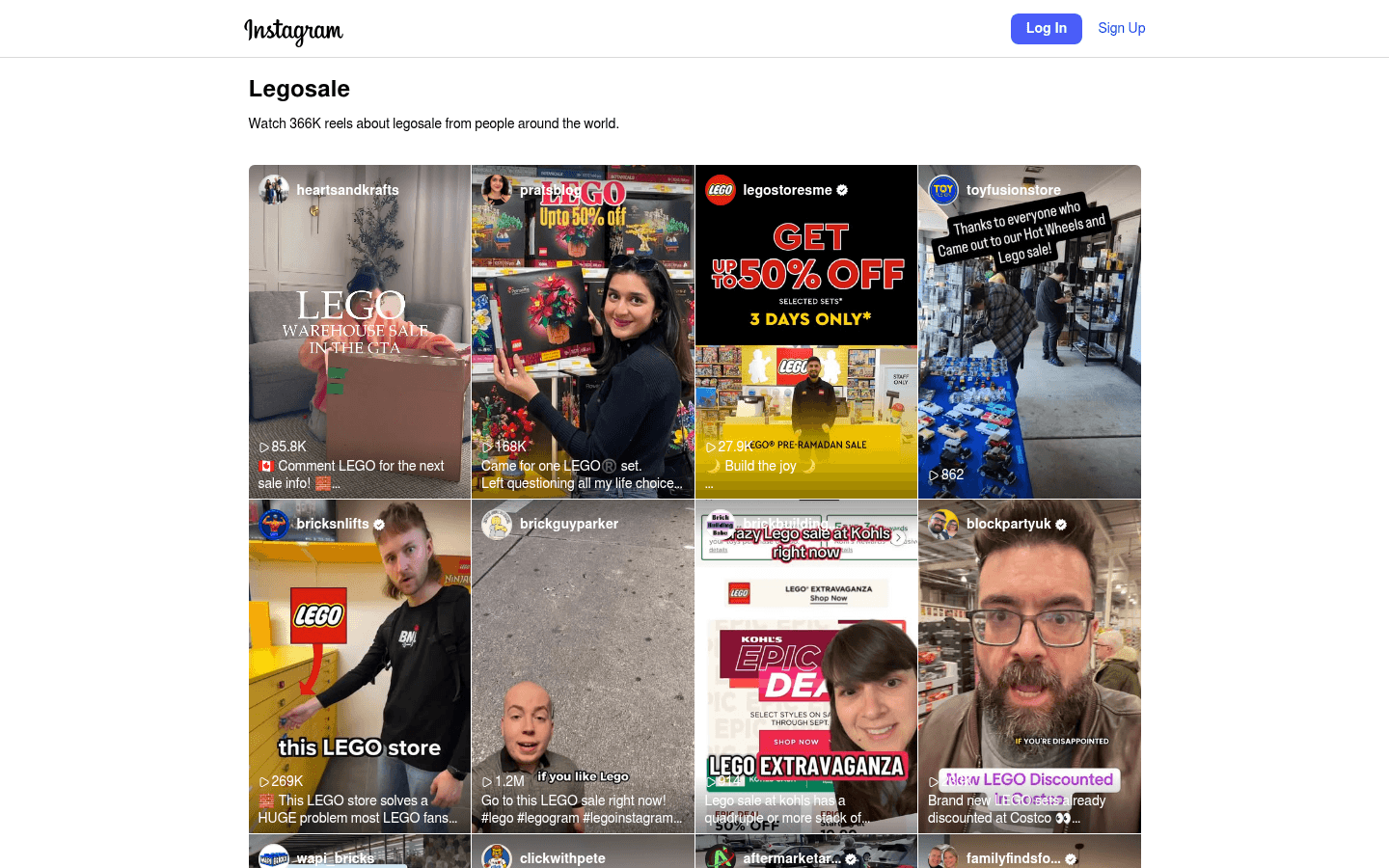
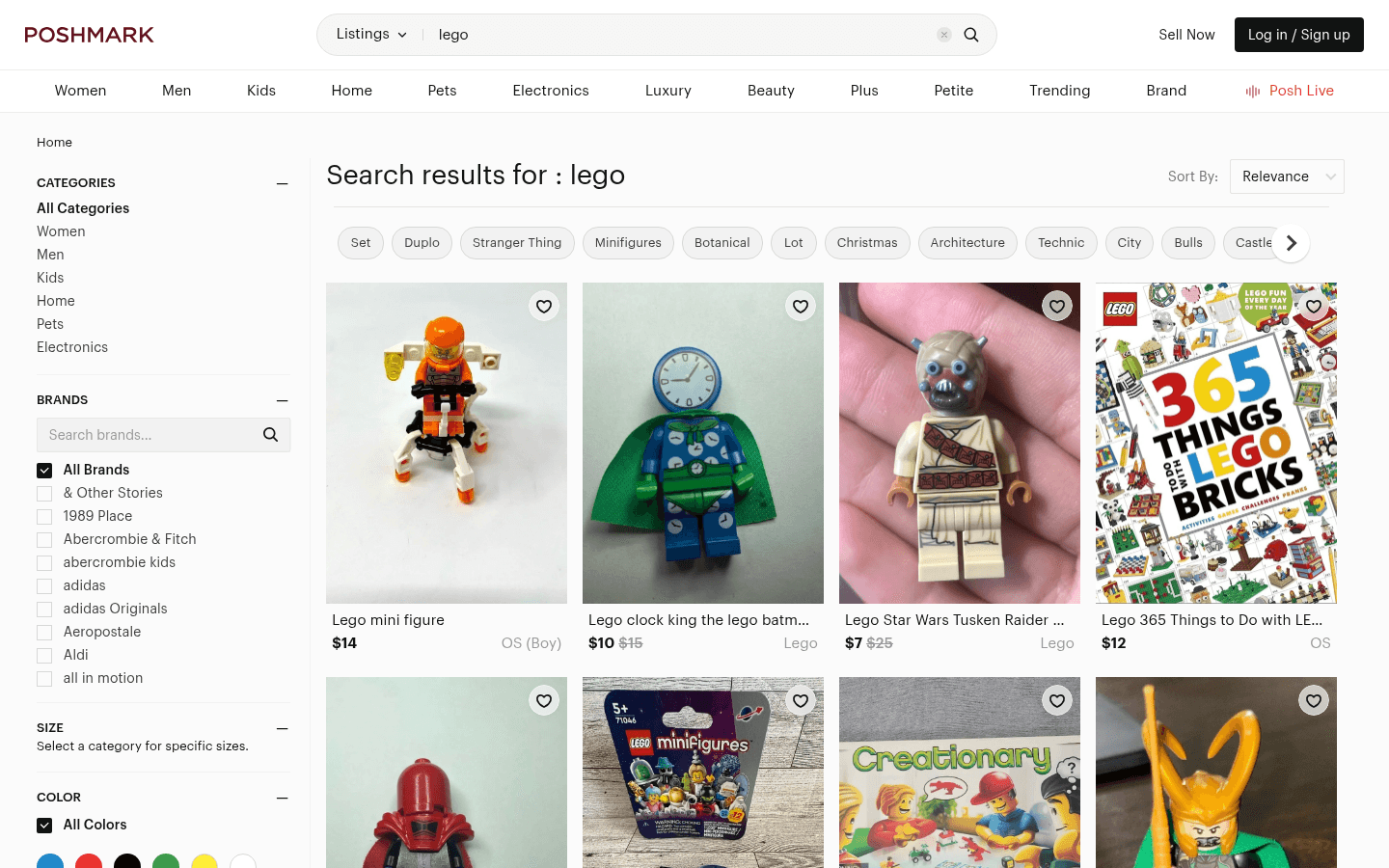
Before choosing where to sell, it helps to see the difference between a live-selling marketplace, a broad search marketplace, a LEGO-native catalog, and a social or local channel. These screenshots are visual references only. Platform interfaces, fees, and rules can change.
Frequently Asked Questions About Selling LEGO Online
What is the best place to sell LEGO sets?
For sealed or collectible sets, start with eBay, StockX, or BrickLink. eBay gives the broadest demand and sold comps. StockX works when the set is sealed and actively traded. BrickLink works when the buyer needs exact LEGO catalog confidence.
Where should I sell bulk LEGO by the pound?
Facebook Marketplace is usually the easiest first stop for bulk LEGO by the pound because local pickup avoids shipping costs. Local stores and toy shows are good backups if you want speed. If you find valuable minifigures in the bin, pull those before selling the rest as bulk.
Where should I sell LEGO minifigures?
Use BrickLink for catalog-specific minifigures, eBay for rare figures with strong sold comps, and Whatnot for groups of figures that can perform well in live auctions. The key is identification. A minifigure is worth much less when the seller cannot name the exact figure ID.
Are LEGO selling platform fees worth it?
Platform fees are worth it when the buyer demand, speed, or sale price offsets the cost. A higher-fee eBay sale can beat a lower-fee local sale if the item sells for much more. Always calculate fee, shipping, packaging, and return risk before listing.
Can I sell LEGO on multiple platforms at once?
Yes, but only if your inventory tracking is clean. Cross-listing can increase sell-through, but double-selling creates refunds and trust problems. Serious sellers should keep one source of truth for item IDs, quantities, condition, and marketplace status.
.png)

